
The Onboarding Paradox
Why Faster ≠ Better in African Fintech
Summary
African fintechs obsess over speed. Sign up in under five minutes. Verify identity instantly. Get to value before the user blinks. Yet despite faster onboarding flows, user dropout remains brutal across the region. PalmPay maintains an 80% customer retention rate, serving over 13 million customers monthly, while other fintech platforms struggle with far lower retention despite equally aggressive speed optimization.
The real paradox is not about speed versus trust—it's about regulatory integration versus compliance liability. In markets like Kenya and Nigeria, where financial trauma, fraud, and systemic bank failures are lived experiences, moving fast without regulatory alignment often triggers penalties that halt growth entirely. This piece breaks down why faster onboarding is not automatically better, how African fintechs like OPay, PalmPay, M-KOPA, Safaricom (M-Pesa), and Moniepoint navigate this tension, and provides a practical framework for designing onboarding that satisfies both regulatory requirements and user conversion.
The Africa Reality
The Core Difference: Offline-First Versus Digital-Native
To understand African fintech onboarding, you must first understand that the problem is fundamentally different from Western fintech. While American fintechs like Revolut and Cash App built for digital natives with existing banking relationships, African fintechs built for unbanked populations with limited digital literacy and deep mistrust of digital finance.
In Nigeria, both OPay and PalmPay expanded aggressively by onboarding unbanked users with lower KYC requirements, leveraging over 1 million agent merchants and physical touchpoints to reach customers who've never had a bank account. This is not incidental to their business model—it's foundational. PalmPay built a vast on-the-ground network of over 1 million small businesses and agent merchants who serve more than 10 million customers monthly through the PalmPay Business app and point-of-sale devices for cash-in, cash-out services.
The contrast with Revolut or Cash App is stark. Those apps assume users have smartphones with reliable data, familiarity with digital payments, and trust in digital systems. Africa's fintech assumes the opposite: users coming through agents, requiring offline access, needing physical touchpoints to feel safe, and making their first digital financial transaction ever.
Why the Standard Onboarding Paradox Breaks in Africa
The global narrative suggests a clean tradeoff: faster onboarding sacrifices trust-building, while slower onboarding kills momentum. But this framework collapses in African markets for a specific reason: onboarding wasn't digital-first to begin with.
Consider Kenya's mobile money market. Kenya achieved 91% market penetration in mobile money by June 2025, with 47.7 million active subscriptions. Yet M-Pesa processes 61 million transactions daily and serves more than 50 million active users in Kenya alone. How did M-Pesa achieve this without the 60% onboarding dropout that plagues Western fintech?
Because M-Pesa's onboarding was literal—you went to an agent, showed ID, got registered. The agent relationship predated the app. Physical touchpoints built trust before digital was even introduced.
OPay was stopped from onboarding customers by the CBN in April 2024 due to increased scrutiny of KYC processes, but the restriction was lifted in June 2024. Yet despite this compliance setback, by mid-2025, OPay reported over 50 million registered users in Nigeria, with around 10 million daily active users. This growth didn't happen because of speed—it happened because agents made onboarding trustworthy, and reliability made users stick.
The real insight: The "onboarding paradox" doesn't apply to OPay or PalmPay because they designed for hybrid friction—light digital onboarding plus agent touchpoints for trust-building. Revolut made onboarding 10-15 minutes digitally. OPay made it one conversation with an agent plus a quick app registration. Both work, but for completely different reasons.
I’ve had the opportunity to work with major players in Nigeria’s fintech ecosystem, including Moniepoint (2025–present) and PalmPay, as well as smaller companies like Rank (formerly Moni). I’ve also worked with MoneyHash, a leading payments platform, where I helped craft product experiences across East Africa (Kenya) and the broader MENA region.
At Rank (formerly Moni): I defined the end-to-end UX for onboarding, KYC, risk tiers, and core financial flows, increasing user acquisition by 35% while maintaining 100% regulatory compliance.
At PalmPay: I redesigned loan application and repayment flows, achieving a 95% positive usability rating. I also designed a merchant dashboard that doubled revenue within three months by improving clarity and operational efficiency for businesses.
At MoneyHash: I led localization and workflow adaptation for North African markets, aligning design patterns with regional user behavior and regulatory requirements.
At Moniepoint: While metrics are still evolving, my work has focused on improving onboarding quality and reducing friction in complex financial workflows at scale.
Working across these organizations has given me a clear insight: faster onboarding does not automatically mean better user experience. Clarity, trust, and regulatory alignment matter more for long-term adoption
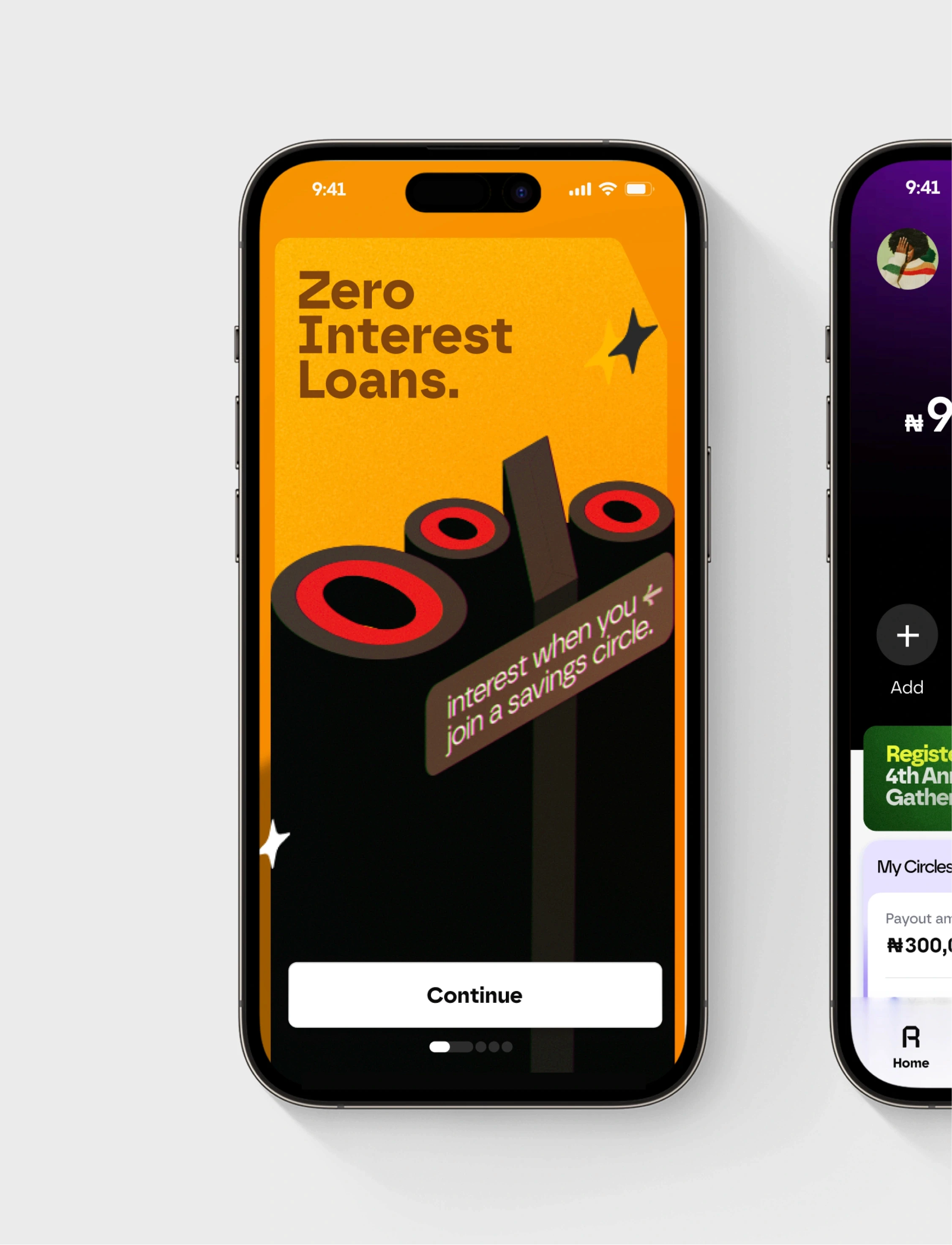

Africa Onboarding Problem
The Regulatory Speed Trap
The real paradox in Africa is the inverse of what designers typically optimize for: slow digital onboarding is killing growth, but faster onboarding without trust signals causes regulatory backlash and license suspension.
In April 2024, the CBN ordered a freeze on new customer onboarding for several fintech platforms, including OPay, PalmPay, and Paga, as well as non-MMO fintechs such as Moniepoint and Kuda Bank. The ban was imposed over concerns that these platforms were being exploited for illegal forex transactions linked to cryptocurrency trading. The suspension was lifted after about a month.
Let's be clear about what this means. OPay was fined ₦1 billion after an audit revealed compliance issues. During the same period, PalmPay and OPay introduced facial recognition for first-time users, large transactions, and transfers to new beneficiaries.
Here's the real constraint facing African fintech designers:
Move fast without compliance integration = get fined, lose license, get onboarding ban (which stops all growth immediately).
Move slowly with over-engineered compliance = users don't stick because competitors are faster and less friction-heavy.
Move fast AND maintain compliance = this is the design problem nobody is writing about, but it's the actual constraint.
When the CBN froze onboarding in April 2024, both OPay and PalmPay had to make a choice. They chose to integrate compliance directly into onboarding flows rather than treating it as a separate friction point. The outcome: PalmPay's managing director disclosed that the firm processes 15 million daily transactions with a 99.5% success rate. This is not just a reliability metric—it's proof that integrating compliance into design doesn't slow you down if you do it right.
Your Frame: Regulatory Speed, Not User Speed
In Africa, onboarding isn't about how fast users can tap through screens. It's about how fast you can satisfy regulatory requirements without making the flow feel like compliance theater.
Example from Nigeria: Each banking failure pushed more Nigerians toward OPay or PalmPay. That steady shift helped drive mobile money transactions to ₦20.71 trillion ($13.49 billion) in the first quarter of 2025, according to the Nigeria Inter-Bank Settlement System. This represents a 1,518.64% increase from ₦1.28 trillion ($833.43 million) recorded in Q1 2021.
The growth wasn't driven by onboarding speed—it was driven by reliability. And reliability is a function of compliance integration, not speed optimization
3 Approches, 3 Lessons
OPay: Fast Conversion, Compliance Backlash, Mid-Course Correction
What OPay did: OPay offered free transfers until June 2023, and by October 2023, OPay was Nigeria's most-downloaded app. Speed was the strategy. Aggressive incentives drove acquisition. The onboarding was minimal—get in, get free transfers, start moving money.
The numbers: OPay reported 10 million daily active users and 100 million daily transaction volumes in 2024. By mid-2025, OPay reported over 50 million registered users in Nigeria, with around 10 million daily active users. OPay processes an astonishing volume of transactions—over $12 billion per month in payment value as of early 2024, which equates to roughly ₦9 trillion monthly.
The problem: OPay was fined ₦1 billion after an audit revealed compliance issues. The April 2024 onboarding freeze hit OPay hard because their onboarding was speed-optimized but compliance-light.
The correction: OPay and PalmPay introduced facial recognition for first-time users, large transactions, and transfers to new beneficiaries. This wasn't friction they wanted to add—it was compliance friction they had to integrate into the design to survive regulatory scrutiny.
Design lesson: Speed gets users in the door. But if those users were onboarded into an untrustworthy system (from a regulatory perspective), you lose your door. OPay's pivot shows that as of 2025, both OPay and PalmPay have achieved unicorn status, reflecting investor confidence in their market leadership for payments in Nigeria. But they got there by integrating compliance, not by staying fast.
PalmPay: Fast Conversion, Compliance-Clean, Sustained Growth
What PalmPay did: PalmPay launched with instant onboarding, zero transfer fees, and services tailored to underbanked consumers and small businesses, all optimized for the realities of Africa's informal economy. Like OPay, speed was the strategy. But unlike OPay, PalmPay engineered compliance into the onboarding from day one.
The numbers: PalmPay's revenue rose to $63.90 million in 2023, a 31,850% increase from $0.20 million in 2020. PalmPay hits 15 million daily transactions in Q1 2025, with 35 million users and an 80% customer retention rate, serving over 13 million customers monthly via its network of more than 1 million mobile money agents and merchants.
That 80% retention rate is the differentiator. Each user makes an average of 50 transactions per month. This isn't because PalmPay's onboarding is slower—it's because every step of their onboarding simultaneously satisfies compliance and builds trust.
Design lesson: You don't have to choose between speed and compliance. PalmPay shows that if you design onboarding flows where compliance is the trust signal (not friction added on top), you can move fast without regulatory risk.
M-Pesa: Agent-First, Digital-Second, Unparalleled Scale
What M-Pesa did: M-Pesa was launched on March 6, 2007 by Safaricom in partnership with Vodafone. By late 2009 it had 8.3 million registered customers, 57% of Safaricom's customer base. Last year the Central Bank of Kenya recorded 82 million mobile accounts, predominantly M-Pesa, in a population of 56 million.
M-Pesa's onboarding was agent-first. You didn't download an app and get verified online. You went to an agent, showed ID, and got registered in a physical ledger. The digital part came later.
The numbers: For the financial year 2023/24, the value of M-Pesa transactions was 40 trillion Kenyan shillings (KES), equivalent to $309 billion, across 28 billion transactions. Monthly active M-PESA customers grew by 10.5% to 35.8 million in FY25, while chargeable transactions per user rose by over 20%, reflecting increased consumer reliance on digital payments.
M-Pesa has a vast network of over 300,000 agents nationwide, ensuring that even remote areas have access to financial services. The platform supports over 1.5 million micro, small, medium, and large enterprises through its merchant payment options.
Design lesson: M-Pesa didn't have to fight regulatory battles because agents were the compliance layer. Agents knew customers. Agents prevented fraud. Agents were trusted. When M-Pesa finally digitized, the trust was already earned.
Rentention Through Reliability
When Banks Fail, Fintechs Win
The onboarding story in Africa isn't complete without understanding what happened after users signed up. The real retention driver wasn't features—it was reliability in the face of banking system failures.
When the CBN's naira redesign exposed fragility in banks' systems, transaction failures spiked, ATMs ran dry, and banking apps crashed. OPay and PalmPay benefited heavily from these glitches. Customers flocked to their extensive agent networks to get cash or make deposits when bank ATMs were empty—OPay's agents grew to over 500,000 by 2023, while PalmPay's agent network exceeded 500,000 as well.
Even after the cash crisis abated, Nigerian banks continued to suffer high-profile tech outages. In late 2024, a major bank's core banking system migration led to multi-day network downtime, leaving customers unable to access funds and delaying salary payments by up to 72 hours. Each bank outage or slow reversal (which can take over a week for failed transactions) drives more people toward the fintech platforms.
This is the retention story that matters: By the first half of 2025, Nigeria's licensed mobile money providers had processed around ₦50 trillion in transactions. Not because fintech onboarding was faster, but because fintech systems didn't fail when you needed them most.
Infrastructure as a Retention Signal
PalmPay understood this early. PalmPay's managing director stated, "Mobile money wasn't always perceived as viable, but we identified a core problem: system reliability, especially for simple things like free and seamless transfers". This isn't a feature—it's infrastructure. And infrastructure decisions made after onboarding directly affect whether users stay.
In 2025, PalmPay's managing director disclosed that the firm processes 15 million daily transactions with a 99.5% success rate. That 99.5% success rate is what users remember. It's the reason PalmPay maintains an 80% customer retention rate.
In Kenya, M-Pesa evolved differently. M-PESA contributed 44.2% of Safaricom's total revenue in FY25. Business payments grew by 27.4% and were the biggest contributor to year-over-year growth. But this growth didn't come from more aggressive onboarding—it came from reliability and ecosystem expansion.
Global Benchmark
The Global Onboarding Dropout Baseline To contextualize African fintech, we need to understand what "normal" fintech looks like globally. Mobile money transaction values rose by 15% to $227 billion in 2024, with Sub-Saharan Africa still the epicentre of growth.
But retention data is stark. Industry reports indicate that 50-60% of users drop during onboarding in financial apps globally. Exact percentages vary by region and product, but the pattern is consistent. More than a third of new active accounts in 2023 came from West Africa, driven by Nigeria, Ghana, and Senegal. Unlike East Africa, where telcos like Safaricom's M-Pesa led growth, West Africa's fintech boom has largely been driven by non-MNO players like OPay and PalmPay.
The fact that PalmPay maintains an 80% retention rate while global fintech struggles with 40-50% retention suggests something fundamental: African fintech solved a different problem.
Designing For Regulatory Spped Onboarding
The Five Principles of Regulatory-Speed Onboarding
Rather than optimizing for user speed, design for regulatory speed. Here's what this looks like:
1. Risk Perception First
Ask not "How do we make this fast?" but "What does the user fear losing?" In Africa, the answers are:
Money (fraud, system failure, disappearing funds) Identity (SIM swap, impersonation, account takeover) Trust (is this company real, licensed, solvent?)
Design to neutralize each fear explicitly. Don't hide compliance—make it visible. When PalmPay introduced facial recognition, it was a response to customers fearing fraud and money laundering concerns. But it can be designed as a trust signal, not friction.
2. Progressive Commitment, Not Upfront Walls
Don't ask for everything at onboarding. Stage it:
Low risk (KYC name and ID) → immediate access to basic transfer Medium risk (phone verification, biometrics) → higher limits High risk (source of funds, tax compliance) → unlock merchant or large-value features
This is what M-Pesa understood early. In 2007, only 26% of Kenyans had a bank account and bank branches were few and far between outside cities. Cash was King. M-Pesa's fee structure was set so that it was worth consumers paying the fee compared to taking a day off work. By removing the friction of branches, M-Pesa made financial access possible. By staging KYC, they made it trustworthy.
3. Visible Guarantees
Users need to know:Who regulates you (CBN, CBK, CMA) What happens if something fails (reversal process, customer protection limits) How your system prevents fraud (monitoring, freezing, alerts)
PalmPay reported that it has prioritised security and risk management, implementing measures such as real-time transaction monitoring, multi-factor authentication, and account lock features to protect user accounts and transactions. This isn't hidden in a help center—it should appear during onboarding as a reassurance signal.
4. Contextual Education, Not Help Center Dumping
Explain why you need data at the moment you ask not in a buried help center:
"We need your ID to comply with CBN KYC rules. This protects both you and us."
"We require a selfie to prevent SIM swap fraud. This takes 10 seconds and unlocks instant transfers."
This is what separates compliance friction from designed clarity.
5. Human Fallback, Especially in Africa
In developed markets, "chat with our support team" is an afterthought. In Africa, it's essential. PalmPay's managing director stated they need to build for every Nigerian, including access points such as their app, agents, USSD, and now cards. This isn't weakness—it's strength. Knowing there's a person (agent, chat, phone) matters more than UI polish.
Retention Metric that Matters
Beyond DAU/MAU: What Retention Means in African Fintech
PalmPay's 80% customer retention rate, serving over 13 million customers monthly, with each user making an average of 50 transactions per month, tells a different story than vanity metrics.
The relevant questions for African fintech retention:
Activation retention: Do users complete their first transaction? When banking failures hit, users turned to OPay or PalmPay not just to onboard—but to immediately solve a problem (accessing salary, moving money from failed bank). Activation retention is highest when onboarding solves an urgent problem.
Reliability retention: Does the system work when the user needs it most? PalmPay's 99.5% success rate is a retention metric—users stay because they know their money won't disappear.
Agent retention: Do users trust the physical network? M-Pesa's 300,000+ agent network nationwide isn't a cost center—it's the retention engine. Knowing there's someone who can help locally is why users stay.
Compound usage retention: Does usage grow over time? PalmPay users making an average of 50 transactions per month shows compound growth—they didn't just sign up, they became habitual.
What Changes This View
Public cohort retention data by onboarding style, broken down by:
Compliance-heavy vs. compliance-light flows Agent-supported vs. pure digital Different regulatory environments (CBN vs. CBK vs. others)
Controlled experiments isolating trust signals from speed optimizations
Data on whether facial recognition adoption increases retention or creates drop-off
Conclusion
Fast onboarding gets users in.
Trustworthy onboarding keeps them there.
Reliable systems cement loyalty.
In Kenya and Nigeria, the best fintechs don't win by being the fastest—they win by making risk feel manageable and then proving they're reliable when it matters most.
Speed without trust is a leaky bucket. Trust without momentum is friction. Infrastructure failure destroys both. But reliability that's visible in design and proven in uptime—that's what builds the fintech giants emerging from Africa.
References
NIBSS data on mobile money transactions in Nigeria 2024
OPay CBN regulatory action and lifting of restrictions
OPay and PalmPay scale metrics, transaction volumes, and regulatory responses
Banking failures in Nigeria 2023-2025 and fintech migration
PalmPay Q1 2025 report on daily transactions, retention rate, and user activity
M-Pesa transaction volume, user base, agent network in Kenya
M-Pesa revenue contribution and growth metrics in Safaricom FY25
Kenya mobile money penetration rate June 2025
All data cited from official company reports, regulatory announcements, and verified fintech industry sources dated between 2024-2025.
Next

Product-Led Growth in African Fintech
Design Driven Growth in African Fintech in African Market
Product-Led Growth in African Fintech
Design Driven Growth in African Fintech in African Market
Product-Led Growth in African Fintech
Design Driven Growth in African Fintech in African Market
The Retention Pipeline
Designing for User Retention in African Fintech ( M-Pesa & M-Kopa Case)
The Retention Pipeline
Designing for User Retention in African Fintech ( M-Pesa & M-Kopa Case)
The Retention Pipeline
Designing for User Retention in African Fintech ( M-Pesa & M-Kopa Case)

The Convenience Threshold
How Kenya Crossed Into Cashlessness while Nigeria Remains Hybrid
The Convenience Threshold
How Kenya Crossed Into Cashlessness while Nigeria Remains Hybrid
The Convenience Threshold
How Kenya Crossed Into Cashlessness while Nigeria Remains Hybrid
The Onboarding Paradox
The Onboarding Paradox
Why Faster ≠ Better in African Fintech
Summary
African fintechs obsess over speed. Sign up in under five minutes. Verify identity instantly. Get to value before the user blinks. Yet despite faster onboarding flows, user dropout remains brutal across the region. PalmPay maintains an 80% customer retention rate, serving over 13 million customers monthly, while other fintech platforms struggle with far lower retention despite equally aggressive speed optimization.
The real paradox is not about speed versus trust—it's about regulatory integration versus compliance liability. In markets like Kenya and Nigeria, where financial trauma, fraud, and systemic bank failures are lived experiences, moving fast without regulatory alignment often triggers penalties that halt growth entirely. This piece breaks down why faster onboarding is not automatically better, how African fintechs like OPay, PalmPay, M-KOPA, Safaricom (M-Pesa), and Moniepoint navigate this tension, and provides a practical framework for designing onboarding that satisfies both regulatory requirements and user conversion.
The Africa Reality
The Core Difference: Offline-First Versus Digital-Native
To understand African fintech onboarding, you must first understand that the problem is fundamentally different from Western fintech. While American fintechs like Revolut and Cash App built for digital natives with existing banking relationships, African fintechs built for unbanked populations with limited digital literacy and deep mistrust of digital finance.
In Nigeria, both OPay and PalmPay expanded aggressively by onboarding unbanked users with lower KYC requirements, leveraging over 1 million agent merchants and physical touchpoints to reach customers who've never had a bank account. This is not incidental to their business model—it's foundational. PalmPay built a vast on-the-ground network of over 1 million small businesses and agent merchants who serve more than 10 million customers monthly through the PalmPay Business app and point-of-sale devices for cash-in, cash-out services.
The contrast with Revolut or Cash App is stark. Those apps assume users have smartphones with reliable data, familiarity with digital payments, and trust in digital systems. Africa's fintech assumes the opposite: users coming through agents, requiring offline access, needing physical touchpoints to feel safe, and making their first digital financial transaction ever.
Why the Standard Onboarding Paradox Breaks in Africa
The global narrative suggests a clean tradeoff: faster onboarding sacrifices trust-building, while slower onboarding kills momentum. But this framework collapses in African markets for a specific reason: onboarding wasn't digital-first to begin with.
Consider Kenya's mobile money market. Kenya achieved 91% market penetration in mobile money by June 2025, with 47.7 million active subscriptions. Yet M-Pesa processes 61 million transactions daily and serves more than 50 million active users in Kenya alone. How did M-Pesa achieve this without the 60% onboarding dropout that plagues Western fintech?
Because M-Pesa's onboarding was literal—you went to an agent, showed ID, got registered. The agent relationship predated the app. Physical touchpoints built trust before digital was even introduced.
OPay was stopped from onboarding customers by the CBN in April 2024 due to increased scrutiny of KYC processes, but the restriction was lifted in June 2024. Yet despite this compliance setback, by mid-2025, OPay reported over 50 million registered users in Nigeria, with around 10 million daily active users. This growth didn't happen because of speed—it happened because agents made onboarding trustworthy, and reliability made users stick.
The real insight: The "onboarding paradox" doesn't apply to OPay or PalmPay because they designed for hybrid friction—light digital onboarding plus agent touchpoints for trust-building. Revolut made onboarding 10-15 minutes digitally. OPay made it one conversation with an agent plus a quick app registration. Both work, but for completely different reasons.
I’ve had the opportunity to work with major players in Nigeria’s fintech ecosystem, including Moniepoint (2025–present) and PalmPay, as well as smaller companies like Rank (formerly Moni). I’ve also worked with MoneyHash, a leading payments platform, where I helped craft product experiences across East Africa (Kenya) and the broader MENA region.
At Rank (formerly Moni): I defined the end-to-end UX for onboarding, KYC, risk tiers, and core financial flows, increasing user acquisition by 35% while maintaining 100% regulatory compliance.
At PalmPay: I redesigned loan application and repayment flows, achieving a 95% positive usability rating. I also designed a merchant dashboard that doubled revenue within three months by improving clarity and operational efficiency for businesses.
At MoneyHash: I led localization and workflow adaptation for North African markets, aligning design patterns with regional user behavior and regulatory requirements.
At Moniepoint: While metrics are still evolving, my work has focused on improving onboarding quality and reducing friction in complex financial workflows at scale.
Working across these organizations has given me a clear insight: faster onboarding does not automatically mean better user experience. Clarity, trust, and regulatory alignment matter more for long-term adoption
Africa Onboarding Problem
The Regulatory Speed Trap
The real paradox in Africa is the inverse of what designers typically optimize for: slow digital onboarding is killing growth, but faster onboarding without trust signals causes regulatory backlash and license suspension.
In April 2024, the CBN ordered a freeze on new customer onboarding for several fintech platforms, including OPay, PalmPay, and Paga, as well as non-MMO fintechs such as Moniepoint and Kuda Bank. The ban was imposed over concerns that these platforms were being exploited for illegal forex transactions linked to cryptocurrency trading. The suspension was lifted after about a month.
Let's be clear about what this means. OPay was fined ₦1 billion after an audit revealed compliance issues. During the same period, PalmPay and OPay introduced facial recognition for first-time users, large transactions, and transfers to new beneficiaries.
Here's the real constraint facing African fintech designers:
Move fast without compliance integration = get fined, lose license, get onboarding ban (which stops all growth immediately).
Move slowly with over-engineered compliance = users don't stick because competitors are faster and less friction-heavy.
Move fast AND maintain compliance = this is the design problem nobody is writing about, but it's the actual constraint.
When the CBN froze onboarding in April 2024, both OPay and PalmPay had to make a choice. They chose to integrate compliance directly into onboarding flows rather than treating it as a separate friction point. The outcome: PalmPay's managing director disclosed that the firm processes 15 million daily transactions with a 99.5% success rate. This is not just a reliability metric—it's proof that integrating compliance into design doesn't slow you down if you do it right.
Your Frame: Regulatory Speed, Not User Speed
In Africa, onboarding isn't about how fast users can tap through screens. It's about how fast you can satisfy regulatory requirements without making the flow feel like compliance theater.
Example from Nigeria: Each banking failure pushed more Nigerians toward OPay or PalmPay. That steady shift helped drive mobile money transactions to ₦20.71 trillion ($13.49 billion) in the first quarter of 2025, according to the Nigeria Inter-Bank Settlement System. This represents a 1,518.64% increase from ₦1.28 trillion ($833.43 million) recorded in Q1 2021.
The growth wasn't driven by onboarding speed—it was driven by reliability. And reliability is a function of compliance integration, not speed optimization
3 Approches, 3 Lessons
OPay: Fast Conversion, Compliance Backlash, Mid-Course Correction
What OPay did: OPay offered free transfers until June 2023, and by October 2023, OPay was Nigeria's most-downloaded app. Speed was the strategy. Aggressive incentives drove acquisition. The onboarding was minimal—get in, get free transfers, start moving money.
The numbers: OPay reported 10 million daily active users and 100 million daily transaction volumes in 2024. By mid-2025, OPay reported over 50 million registered users in Nigeria, with around 10 million daily active users. OPay processes an astonishing volume of transactions—over $12 billion per month in payment value as of early 2024, which equates to roughly ₦9 trillion monthly.
The problem: OPay was fined ₦1 billion after an audit revealed compliance issues. The April 2024 onboarding freeze hit OPay hard because their onboarding was speed-optimized but compliance-light.
The correction: OPay and PalmPay introduced facial recognition for first-time users, large transactions, and transfers to new beneficiaries. This wasn't friction they wanted to add—it was compliance friction they had to integrate into the design to survive regulatory scrutiny.
Design lesson: Speed gets users in the door. But if those users were onboarded into an untrustworthy system (from a regulatory perspective), you lose your door. OPay's pivot shows that as of 2025, both OPay and PalmPay have achieved unicorn status, reflecting investor confidence in their market leadership for payments in Nigeria. But they got there by integrating compliance, not by staying fast.
PalmPay: Fast Conversion, Compliance-Clean, Sustained Growth
What PalmPay did: PalmPay launched with instant onboarding, zero transfer fees, and services tailored to underbanked consumers and small businesses, all optimized for the realities of Africa's informal economy. Like OPay, speed was the strategy. But unlike OPay, PalmPay engineered compliance into the onboarding from day one.
The numbers: PalmPay's revenue rose to $63.90 million in 2023, a 31,850% increase from $0.20 million in 2020. PalmPay hits 15 million daily transactions in Q1 2025, with 35 million users and an 80% customer retention rate, serving over 13 million customers monthly via its network of more than 1 million mobile money agents and merchants.
That 80% retention rate is the differentiator. Each user makes an average of 50 transactions per month. This isn't because PalmPay's onboarding is slower—it's because every step of their onboarding simultaneously satisfies compliance and builds trust.
Design lesson: You don't have to choose between speed and compliance. PalmPay shows that if you design onboarding flows where compliance is the trust signal (not friction added on top), you can move fast without regulatory risk.
M-Pesa: Agent-First, Digital-Second, Unparalleled Scale
What M-Pesa did: M-Pesa was launched on March 6, 2007 by Safaricom in partnership with Vodafone. By late 2009 it had 8.3 million registered customers, 57% of Safaricom's customer base. Last year the Central Bank of Kenya recorded 82 million mobile accounts, predominantly M-Pesa, in a population of 56 million.
M-Pesa's onboarding was agent-first. You didn't download an app and get verified online. You went to an agent, showed ID, and got registered in a physical ledger. The digital part came later.
The numbers: For the financial year 2023/24, the value of M-Pesa transactions was 40 trillion Kenyan shillings (KES), equivalent to $309 billion, across 28 billion transactions. Monthly active M-PESA customers grew by 10.5% to 35.8 million in FY25, while chargeable transactions per user rose by over 20%, reflecting increased consumer reliance on digital payments.
M-Pesa has a vast network of over 300,000 agents nationwide, ensuring that even remote areas have access to financial services. The platform supports over 1.5 million micro, small, medium, and large enterprises through its merchant payment options.
Design lesson: M-Pesa didn't have to fight regulatory battles because agents were the compliance layer. Agents knew customers. Agents prevented fraud. Agents were trusted. When M-Pesa finally digitized, the trust was already earned.
Rentention Through Reliability
When Banks Fail, Fintechs Win
The onboarding story in Africa isn't complete without understanding what happened after users signed up. The real retention driver wasn't features—it was reliability in the face of banking system failures.
When the CBN's naira redesign exposed fragility in banks' systems, transaction failures spiked, ATMs ran dry, and banking apps crashed. OPay and PalmPay benefited heavily from these glitches. Customers flocked to their extensive agent networks to get cash or make deposits when bank ATMs were empty—OPay's agents grew to over 500,000 by 2023, while PalmPay's agent network exceeded 500,000 as well.
Even after the cash crisis abated, Nigerian banks continued to suffer high-profile tech outages. In late 2024, a major bank's core banking system migration led to multi-day network downtime, leaving customers unable to access funds and delaying salary payments by up to 72 hours. Each bank outage or slow reversal (which can take over a week for failed transactions) drives more people toward the fintech platforms.
This is the retention story that matters: By the first half of 2025, Nigeria's licensed mobile money providers had processed around ₦50 trillion in transactions. Not because fintech onboarding was faster, but because fintech systems didn't fail when you needed them most.
Infrastructure as a Retention Signal
PalmPay understood this early. PalmPay's managing director stated, "Mobile money wasn't always perceived as viable, but we identified a core problem: system reliability, especially for simple things like free and seamless transfers". This isn't a feature—it's infrastructure. And infrastructure decisions made after onboarding directly affect whether users stay.
In 2025, PalmPay's managing director disclosed that the firm processes 15 million daily transactions with a 99.5% success rate. That 99.5% success rate is what users remember. It's the reason PalmPay maintains an 80% customer retention rate.
In Kenya, M-Pesa evolved differently. M-PESA contributed 44.2% of Safaricom's total revenue in FY25. Business payments grew by 27.4% and were the biggest contributor to year-over-year growth. But this growth didn't come from more aggressive onboarding—it came from reliability and ecosystem expansion.
Global Benchmark
The Global Onboarding Dropout Baseline To contextualize African fintech, we need to understand what "normal" fintech looks like globally. Mobile money transaction values rose by 15% to $227 billion in 2024, with Sub-Saharan Africa still the epicentre of growth.
But retention data is stark. Industry reports indicate that 50-60% of users drop during onboarding in financial apps globally. Exact percentages vary by region and product, but the pattern is consistent. More than a third of new active accounts in 2023 came from West Africa, driven by Nigeria, Ghana, and Senegal. Unlike East Africa, where telcos like Safaricom's M-Pesa led growth, West Africa's fintech boom has largely been driven by non-MNO players like OPay and PalmPay.
The fact that PalmPay maintains an 80% retention rate while global fintech struggles with 40-50% retention suggests something fundamental: African fintech solved a different problem.
Designing For Regulatory Spped Onboarding
The Five Principles of Regulatory-Speed Onboarding
Rather than optimizing for user speed, design for regulatory speed. Here's what this looks like:
1. Risk Perception First
Ask not "How do we make this fast?" but "What does the user fear losing?" In Africa, the answers are:
Money (fraud, system failure, disappearing funds) Identity (SIM swap, impersonation, account takeover) Trust (is this company real, licensed, solvent?)
Design to neutralize each fear explicitly. Don't hide compliance—make it visible. When PalmPay introduced facial recognition, it was a response to customers fearing fraud and money laundering concerns. But it can be designed as a trust signal, not friction.
2. Progressive Commitment, Not Upfront Walls
Don't ask for everything at onboarding. Stage it:
Low risk (KYC name and ID) → immediate access to basic transfer Medium risk (phone verification, biometrics) → higher limits High risk (source of funds, tax compliance) → unlock merchant or large-value features
This is what M-Pesa understood early. In 2007, only 26% of Kenyans had a bank account and bank branches were few and far between outside cities. Cash was King. M-Pesa's fee structure was set so that it was worth consumers paying the fee compared to taking a day off work. By removing the friction of branches, M-Pesa made financial access possible. By staging KYC, they made it trustworthy.
3. Visible Guarantees
Users need to know:Who regulates you (CBN, CBK, CMA) What happens if something fails (reversal process, customer protection limits) How your system prevents fraud (monitoring, freezing, alerts)
PalmPay reported that it has prioritised security and risk management, implementing measures such as real-time transaction monitoring, multi-factor authentication, and account lock features to protect user accounts and transactions. This isn't hidden in a help center—it should appear during onboarding as a reassurance signal.
4. Contextual Education, Not Help Center Dumping
Explain why you need data at the moment you ask not in a buried help center:
"We need your ID to comply with CBN KYC rules. This protects both you and us."
"We require a selfie to prevent SIM swap fraud. This takes 10 seconds and unlocks instant transfers."
This is what separates compliance friction from designed clarity.
5. Human Fallback, Especially in Africa
In developed markets, "chat with our support team" is an afterthought. In Africa, it's essential. PalmPay's managing director stated they need to build for every Nigerian, including access points such as their app, agents, USSD, and now cards. This isn't weakness—it's strength. Knowing there's a person (agent, chat, phone) matters more than UI polish.
Retention Metric that Matters
Beyond DAU/MAU: What Retention Means in African Fintech
PalmPay's 80% customer retention rate, serving over 13 million customers monthly, with each user making an average of 50 transactions per month, tells a different story than vanity metrics.
The relevant questions for African fintech retention:
Activation retention: Do users complete their first transaction? When banking failures hit, users turned to OPay or PalmPay not just to onboard—but to immediately solve a problem (accessing salary, moving money from failed bank). Activation retention is highest when onboarding solves an urgent problem.
Reliability retention: Does the system work when the user needs it most? PalmPay's 99.5% success rate is a retention metric—users stay because they know their money won't disappear.
Agent retention: Do users trust the physical network? M-Pesa's 300,000+ agent network nationwide isn't a cost center—it's the retention engine. Knowing there's someone who can help locally is why users stay.
Compound usage retention: Does usage grow over time? PalmPay users making an average of 50 transactions per month shows compound growth—they didn't just sign up, they became habitual.
What Changes This View
Public cohort retention data by onboarding style, broken down by:
Compliance-heavy vs. compliance-light flows Agent-supported vs. pure digital Different regulatory environments (CBN vs. CBK vs. others)
Controlled experiments isolating trust signals from speed optimizations
Data on whether facial recognition adoption increases retention or creates drop-off
Conclusion
Fast onboarding gets users in.
Trustworthy onboarding keeps them there.
Reliable systems cement loyalty.
In Kenya and Nigeria, the best fintechs don't win by being the fastest—they win by making risk feel manageable and then proving they're reliable when it matters most.
Speed without trust is a leaky bucket. Trust without momentum is friction. Infrastructure failure destroys both. But reliability that's visible in design and proven in uptime—that's what builds the fintech giants emerging from Africa.
References
NIBSS data on mobile money transactions in Nigeria 2024
OPay CBN regulatory action and lifting of restrictions
OPay and PalmPay scale metrics, transaction volumes, and regulatory responses
Banking failures in Nigeria 2023-2025 and fintech migration
PalmPay Q1 2025 report on daily transactions, retention rate, and user activity
M-Pesa transaction volume, user base, agent network in Kenya
M-Pesa revenue contribution and growth metrics in Safaricom FY25
Kenya mobile money penetration rate June 2025
All data cited from official company reports, regulatory announcements, and verified fintech industry sources dated between 2024-2025.
Next
Product-Led Growth in African Fintech
Design Driven Growth in African Fintech in African Market
Product-Led Growth in African Fintech
Design Driven Growth in African Fintech in African Market
Product-Led Growth in African Fintech
Design Driven Growth in African Fintech in African Market
The Retention Pipeline
Designing for User Retention in African Fintech ( M-Pesa & M-Kopa Case)
The Retention Pipeline
Designing for User Retention in African Fintech ( M-Pesa & M-Kopa Case)
The Retention Pipeline
Designing for User Retention in African Fintech ( M-Pesa & M-Kopa Case)
The Convenience Threshold
How Kenya Crossed Into Cashlessness while Nigeria Remains Hybrid
The Convenience Threshold
How Kenya Crossed Into Cashlessness while Nigeria Remains Hybrid
The Convenience Threshold