The Retention Pipeline
Designing for User Retention in African Fintech ( M-Pesa & M-Kopa Case)
Summary
Retention in African fintech is not a feature problem. It's a structural problem. M-Pesa has 34 million active subscribers in Kenya and processes 61 million transactions daily. Yet M-Pesa's market share has declined to 90.8% from 94.9% year-over-year. Competitors like Airtel Money are gaining traction. If retention were a feature problem, M-Pesa would have solved it in 2015.
M-KOPA, which has served 4.8 million customers over the past decade and a half and extended over $1.5 billion in credit to more than 6 million customers across Kenya, Uganda, Nigeria, Ghana, and South Africa, faces a different problem: how do you keep daily-earning users paying for products where failure to pay means losing access to an income-generating tool?
This article breaks down the retention pipeline—the structural systems that keep users coming back—using M-Pesa's network effects as a model, and applies these principles to M-KOPA's specific challenge: retaining low-income customers in credit products where every missed payment is consequential.
The retention pipeline has four layers:
Network Lock-In — making the product valuable because others use it
Daily Friction Reduction — removing steps between intent and action
Penalty Avoidance — designing to prevent failure before it happens
Economic Reinforcement — making continued use more profitable than abandonment
M-Pesa mastered all four. M-KOPA is building toward it. Understanding how means understanding the real difference between engagement and retention.
The Retention Problem
Why Standard Retention Metrics Don't Work for M-KOPA
When Western fintech companies measure retention, they track DAU/MAU (daily active users / monthly active users). For OPay or PalmPay, a monthly active user who opens the app 8 times per month and makes 3-5 transactions is considered "retained."
For M-KOPA, retention means something different: Is the customer making daily payments to keep their asset alive?
M-KOPA provides pay-as-you-go smartphones, electric motorbikes, solar power systems, digital loans, and health insurance, with operations in Kenya, Uganda, Nigeria, Ghana, and South Africa. M-KOPA's business model is built on daily repayments, providing affordable smartphones integrated with financial services that fit with the cash flow of underserved individuals who earn their income on a daily basis.
This is critical: If an M-KOPA customer doesn't pay for three days, their asset locks. If they don't pay for thirty days, they lose it entirely.
So retention for M-KOPA isn't about "engagement." It's about continuous repayment. And continuous repayment, in informal economies where income is volatile, requires structural support—not just design tricks.
Daily payments build customers' credit history, unlocking access to more products like digital loans and health insurance. But this is also the problem: if a customer misses even one day, the psychological friction of "catching up" increases. After three missed days, many abandon the product entirely.
The M-Pesa Parallel: Retention Through Necessity, Not Features
M-Pesa doesn't have a retention problem for a specific reason: 59% of Kenya's GDP flows through M-Pesa. It's not that M-Pesa users love the app. It's that not using M-Pesa makes their lives materially worse.
In 2019, a five-hour M-Pesa outage was estimated to have cost the economy billions with ripple effects across the economy. Agents and businesses lost revenue as people were left unable to pay their bills.
Users stay on M-Pesa because:
Everyone else is on it (network effects)
They can't transact without it (essential infrastructure)
It's tied to their income (mobile operator integration)
Switching costs are prohibitive (ecosystem lock-in)
M-KOPA can't replicate the first three. But it can build the fourth.
I’ve had the opportunity to work with major players in Nigeria’s fintech ecosystem, including Moniepoint (2025–present) and PalmPay, as well as other companies like Rank (formerly Moni). I’ve also worked with MoneyHash, a leading payments platform, where I helped craft product experiences across East Africa (Kenya) and the broader MENA region.
At Rank (formerly Moni): I defined the end-to-end UX for onboarding, KYC, risk tiers, and core financial flows, increasing user acquisition by 35% while maintaining 100% regulatory compliance.
At PalmPay: I redesigned loan application and repayment flows, achieving a 95% positive usability rating. I also designed a merchant dashboard that doubled revenue within three months by improving clarity and operational efficiency for businesses.
At MoneyHash: I led localization and workflow adaptation for North African markets, aligning design patterns with regional user behavior and regulatory requirements.
At Moniepoint: While metrics are still evolving, my work has focused on improving onboarding quality and reducing friction in complex financial workflows at scale.
Working across these organizations has given me a clear insight: faster onboarding does not automatically mean better user experience. Clarity, trust, and regulatory alignment matter more for long-term adoption
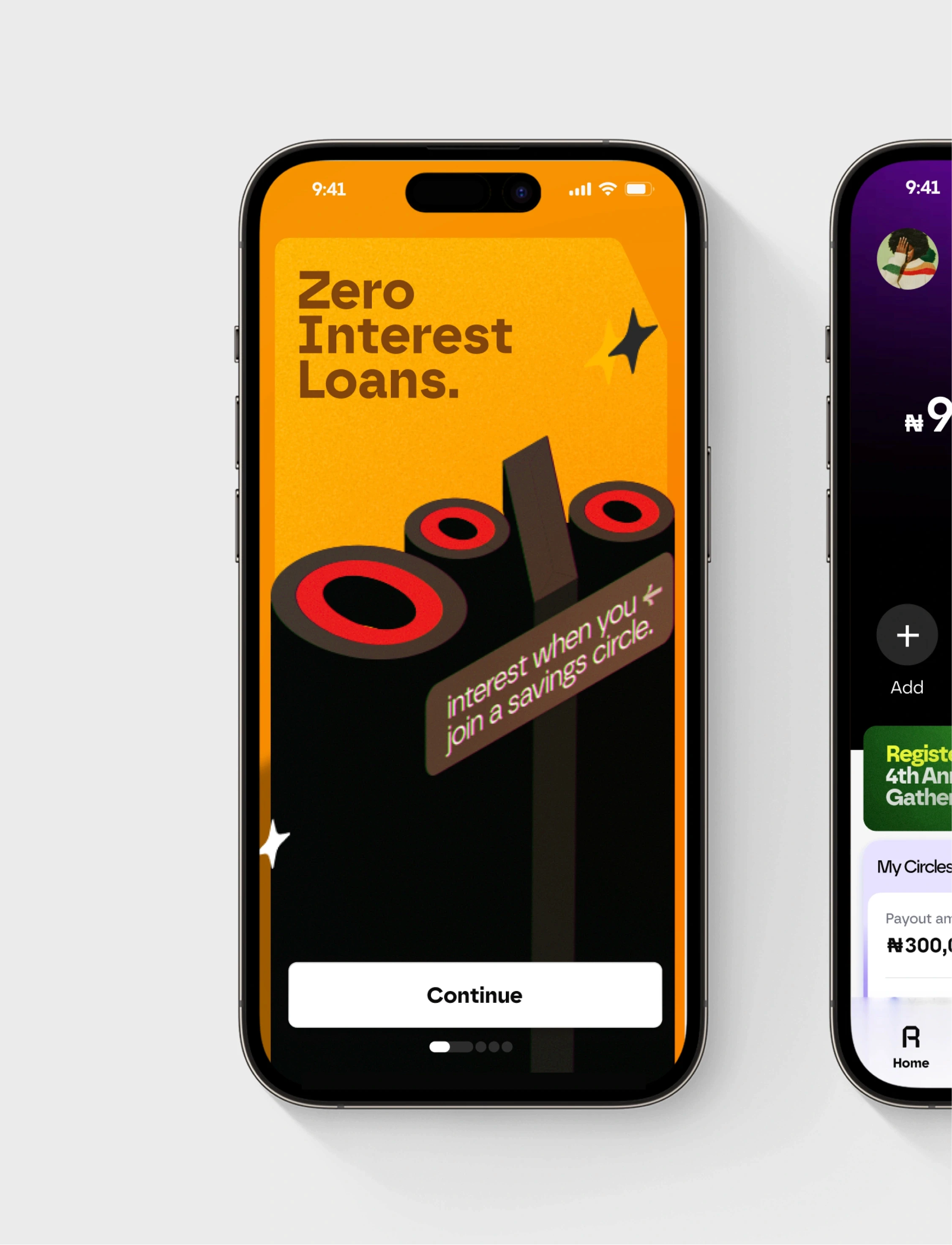

The Four Layers of Retention Pipeline
Making Your Product Valuable Because Others Use It
M-Pesa's retention is fundamentally about network effects. Every new user makes the product, service, and experience more valuable to every other user. Network effects account for most of the value created in the digital technology industry.
Safaricom operates 6,730 2G base stations, 6,727 3G base stations, 6,672 4G base stations, and 1,497 5G base stations, forming the basis for creating connectivity for communication on the Safaricom network. The GSM network has over 45.94 million customers, with 35 million being 30-day active, fulfilling their communication needs.
This isn't a fintech advantage. This is a telecommunications moat that makes M-Pesa a natural extension of an existing network.
But M-KOPA has a different type of network lock-in: the ecosystem of products and services that becomes available only after credit history is built.
When customers sign up for their first M-KOPA product, they begin building a credit history that offers them access to a range of digital financial services, such as digital loans and health insurance. This deepens their financial inclusion and enhances their prosperity by creating financial resilience and safety nets.
More concretely: M-KOPA says it has extended over $1.5 billion in credit to more than 6 million customers across Kenya, Uganda, Nigeria, Ghana, and South Africa. Once customers have demonstrated their ability to pay for their smartphones consistently, they graduate to access additional services like digital loans, while M-KOPA continues to leverage its in-house technology stack to increase their repayment performance.
The design mechanism: A customer starts with a KES 15,000 smartphone on daily payments. After 90 days of consistent payment, they unlock access to a KES 5,000 digital loan. After 6 months, they unlock health insurance. After 12 months, they're eligible for an electric motorbike upgrade.
Each step is not a feature. It's a financial incentive that makes abandoning the previous product irrational.
What this means for your product design:
Don't design graduation pathways as "what features can we sell next"
Design them as "what financial opportunities unlock when someone proves they're creditworthy"
Make the unlock visible in real-time: "You've made 45 consecutive payments. In 15 more, you unlock a ₦5,000 loan."
Layer 2: Daily Friction Reduction — Making Payment the Path of Least Resistance
M-Pesa's fee structure was set so that it was worth consumers paying the fee compared to taking a day off work and/or paying a bus or taxi driver with a material risk of loss.
This is the core insight: retention isn't about whether the product is "easy to use." It's about whether the product is easier than the alternative.
For M-KOPA customers, the alternative to paying daily is:
Losing access to income-generating tools (smartphone, e-motorbike)
Facing agent collection efforts
Damaging credit history and losing access to future loans
Experiencing shame and social pressure
So the retention question is: How do you make daily payment easier than trying to dodge payment?
This is where design intersects with behavioral economics.
Example from M-Pesa: M-Pesa enabled "Tap to Pay" functionality, enabling contactless NFC payments via mobile phones. Features such as "Wallet Sharing" are planned, allowing users to access each other's wallets for specific use cases, as well as tools for splitting expenses.
This seems trivial. But it's not. NFC payments remove the need to navigate menus, remember PINs, and wait for confirmations. They make the payment experience frictionless.
Example from M-KOPA: M-KOPA's model uses flexible financing for essential tools like smartphones, digital loans, insurance, and e-motorbikes. For the majority of M-KOPA's customers, these are first-time opportunities to access financial services and participate in the digital economy.
But first-time users don't know they're supposed to pay daily. They download the app, activate the device, and assume it works. When it locks on day 3 because they forgot to pay, it feels like a failure of the product, not user behavior.
Friction reduction means:
SMS reminder before lock (Day 0: "Payment due today")
SMS reminder after lock (Day 1: "Device locked. Pay now to unlock instantly")
One-tap payment from SMS link (no need to open app)
Batch payment options (pay for 3 days at once)
Integration with agent network (pay at local M-Pesa agent, auto-unlock device)
The cheapest retention feature is a reminder SMS. The most expensive is customer acquisition when someone abandons after lock.
Layer 3: Penalty Avoidance — Designing Systems That Prevent Failure
M-KOPA's predictive machine learning models, informed by decades of repayment data on over 6 million customers, help forecast the repayment of every loan in its portfolio.
This is not a feature. This is infrastructure.
Here's how it works:
Customer has made 30 consecutive daily payments
Model detects that customer's payment frequency dropped from daily to every 2 days
System flags this as "early churn signal"
Agent is notified to check in with customer
Customer reveals that their income shifted, and they need a payment restructuring option
Instead of locking the device, M-KOPA offers a 2-week grace period + extended payment plan
Customer retains asset, stays in ecosystem, builds longer-term credit history
This is the retention pipeline working correctly.
Most fintech teams would lock the device and wait for the customer to pay or abandon. M-KOPA's approach is to use data to predict failure before it happens and intervene before the customer is locked out.
Design patterns for penalty avoidance:
Predictive alerts: Identify customers showing early churn signals (declining frequency, missing first payment in a streak) and reach out proactively
Flexible payment tiers: Offer payment restructuring before locking (e.g., move from daily to 3-day payment cycle)
Grace periods with intent: If someone misses a day, offer a 2-day grace before lock, with visible countdown and reason (e.g., "Grace period ends in: 1 day, 8 hours")
Agent network as safety valve: Train agents to offer payment plans or grace periods before a device locks
Behavioral nudges: Show customers their "payment streak" prominently. Losing a 45-day streak is more motivating than unlocking a device
Layer 4: Economic Reinforcement - Making Continued Use More Profitable Than Abandonment
70% of M-KOPA customers now use their M-KOPA product to generate income. 86% of customers report improved quality of life.
This is retention's highest form: the product makes life materially better.
But here's the thing: this doesn't happen by accident. It happens because M-KOPA customers who achieve income generation develop a different relationship with the product. It's not "I'm paying off a device." It's "This device is how I make money."
M-KOPA says 62% of its customers use their smartphones to generate income. These customers are in a completely different retention cohort than customers who use the smartphone for social apps and messaging.
Economic reinforcement means:
Quantify the income impact: Show customers data on their actual income gains ("Your earnings increased 18% since owning this device, +KES 2,400/month")
Celebrate milestones: "You've earned KES 150,000 using this device. Daily cost: KES 47"
Make the math visible: "For every day you use this device for business, you earn KES 150 and pay KES 47. Net gain: KES 103."
Enable reinvestment: Let customers use income earned to pay for the device (not separate systems)
Expand to complementary products: Once someone is making money with a smartphone, they need a portable speaker, solar charger, data bundles. Offer these with the same financing model
The killer insight: Users who know their device is generating positive ROI have zero churn incentive.
M-Pesa Ecosystem Retention Blueprint
Why M-Pesa Doesn't Leak: The Ecosystem Lock-In Model
M-Pesa has evolved over the years beyond payments and transactions to a financial ecosystem offering credit, savings, investment solutions, wealth management, insurance solutions, and a host of other financial services to meet the evolving financial needs of customers, enterprises, and the public sector.
This is the retention pipeline at scale:
Layer 1: Network Lock-In: By December 2024, the agent network had expanded to nearly 381,000 agents, together managing around 82 million accounts.
If you're a merchant in Kenya, you don't use M-Pesa because you love it. You use it because 34 million people have it, and the alternative (cash handling) is risky and inefficient. When 90.8% of mobile money users are on M-Pesa, the network effect is defensive. Switching costs competitors nothing—switching costs you access to 34 million customers.
Layer 2: Daily Friction Reduction: Monthly active M-PESA customers grew by 10.5% to 35.8 million, while chargeable transactions per user rose by over 20%, reflecting increased consumer reliance on digital payments.
Transactions per user rising 20% year-over-year isn't a marketing win. It's a friction reduction win. Every new use case (bills, insurance, merchant payments) is one more time the user doesn't have to choose a competing platform.
Layer 3: Penalty Avoidance: In 2025, M-Pesa's transaction volume exceeded $450 billion, marking a substantial impact on the economies of the countries where it operates. M-PESA's revenue reached KES 161.1 billion, underscoring its central role in the operator's overall strategy.
M-Pesa doesn't penalize you for inactivity. In fact, Safaricom's Bonga Points integrates seamlessly with M-Pesa, allowing users to redeem points for airtime, shopping, and travel.
Loyalty points are a retention mechanism masquerading as a reward. They make inactivity economically painful.
Layer 4: Economic Reinforcement: An increase in M-PESA agent density positively affects total financial savings of households—although not savings on M-PESA itself. Individuals who experienced larger increases in M-PESA access were less likely to be working in farming and more likely to be working in "business or sales".
Users who have M-Pesa access visible in their communities shift their occupations from subsistence (farming) to commerce (business/sales). The product literally changes economic behavior.
The Structural Challenge for M-KOPA: Competing Against System-Level Lock-In
Here's the constraint: M-Pesa doesn't compete on retention. It's infrastructure.
M-PESA's grip on the market creates a formidable barrier to competition, deterring investors from financing new entrants to the market. With 92% market share, the company commands the market with competitors Airtel Money and T-Kash making up the remaining 8%.
M-KOPA operates in a fragmented market where no single player dominates. This is both opportunity and disadvantage:
Opportunity: You can build a better retention pipeline and capture market share
Disadvantage: You don't have a built-in network effect (everyone already has M-Pesa for payments)
This is why M-KOPA's retention strategy must be different. It can't be "build a bigger network." It must be "build a system where continued use is economically necessary."
Building M-KOPA'S Strategy
The Customer Journey Through the Four Layers
Acquisition (Day 1-3): Friction Reduction is Your Only Weapon
Customer walks into M-KOPA agent, applies for smartphone. They have ₦15,000 in cash flow weekly and want a smartphone to sell digital services, resell phone credits, or do small e-commerce.
Standard fintech says: "Download app, set PIN, link bank account, verify identity, receive device in 3-5 business days."
M-KOPA says: "Answer these 5 questions, agent facilitates device activation in-store, you walk out with phone today."
Why the difference? M-KOPA leverages data to combine digital micropayments with Internet of Things [IoT] technology, providing customers with access to productive assets.
The device is IoT-enabled. The agent activates it. The app is secondary. This is friction reduction at the architecture level.
Activation (Day 4-7): Network Lock-In Begins
Customer starts using phone. If they're doing business, they immediately see value: they can receive WhatsApp payments, coordinate deliveries, manage inventory.
Design checkpoint: Is the first income transaction visible?
Customer receives Ksh20,000 from their first customer using the phone. The design should:
Show this prominently in the app: "Earned Ksh20,000 with your device"
Calculate ROI: "Daily payment: Ksh4700. Daily earning: Ksh3,000. Net gain: Ksh2,503."
Celebrate the milestone: "You've made 1 income transaction!"
This is when the product stops being "a phone you're buying" and starts being "a tool that makes money."
Sustained Use (Day 8-30): Penalty Avoidance Kicks In
By day 8, payment patterns should be predictable. M-KOPA's ML models know:
When this customer typically pays (daily, or 3x per week)
What triggers missed payments (they typically miss on Mondays, suggesting weekend cash flow)
What payment methods work (M-Pesa from specific agent, or bank transfer)
Design checkpoint: Is the system preventing failure?
Day 8: Gentle reminder (not "you must pay", but "payment due today")
Day 12: Customer missed one payment. Alert triggers: "Grace period active until Day 14. Unlock anytime."
Day 13: Agent receives notification that this customer is at risk. Agent reaches out: "I noticed your payment was late. Are you okay? I can help with a payment plan if you need it."
Day 30: 28 consecutive payments completed. Milestone reached: "45 more payments and you unlock a digital loan."
This layer is where most fintech fails. They lock the device and send an automated SMS. M-KOPA should use data to intervene before lock.
Long-Term Retention (Day 31-365): Economic Reinforcement and Ecosystem Growth
After 30 days of consistent payment, the customer is proving creditworthiness. This is when ecosystem products unlock:
Digital Loan Unlock (60 days): Customer is now eligible for a Ksh5,000 digital loan, 0% interest, 30-day term, daily payment. They can use this for inventory, or cover a slow month.
Insurance Unlock (90 days): Health insurance becomes available—critical in markets with no universal healthcare.
Upgrade Opportunity (180 days): Customer is now eligible to upgrade to a better device, or finance a complementary product (portable speaker, solar charger, etc.)
Cross-Selling (365 days): Customers who've been with M-KOPA for a year have built sufficient credit history to access a different product line entirely (electric motorbike, solar system if they're in a rural area).
Each unlock is not a "nice to have feature." It's a financial incentive that makes abandoning the current product irrational.
The retention pipeline is complete when economic reinforcement makes it cheaper to keep paying than to stop.
The Metrics That Matter for M-KOPA
Standard fintech retention metrics are useless for you. Here's why:
DAU/MAU: Irrelevant. A customer who pays consistently but opens the app 2x per week has high retention.
Session length: Irrelevant. A customer who opens the app, pays, and closes takes 20 seconds.
Feature adoption: Partially relevant, but secondary to payment consistency.
The metrics that matter:
Payment Streak Retention: What % of customers maintain N consecutive days of payment?
Day 7 retention: % of customers who made 7 consecutive payments
Day 30 retention: % of customers who made 30 consecutive payments
Day 90 retention: % who completed 90 days without a single missed day
M-KOPA's impact data shows 86% of customers reported improved quality of life, while 70% now use their M-KOPA product to generate income. But the underlying metric is payment retention, not app engagement.
Ecosystem Graduation Rate: What % of customers unlock the next product tier?
% unlocking digital loans after 60 days
% taking a loan upgrade after completing first device
% active in 2+ M-KOPA products simultaneously
M-KOPA has crossed $1.6 billion in credit given to its customers in Kenya. This scale is impossible without high ecosystem adoption.
Involuntary Churn: What % of customers lose devices due to non-payment?
% who stop paying after 1 missed day (lock)
% who never recover after lock
% who abandon after extended grace period
This is your failure rate. Every device that locks without recovery is revenue lost + acquisition cost sunk.
Revenue Per Customer Lifecycle: What's the customer's total value from acquisition through full lifecycle?
Smartphone device cost + daily margins
Loan originations + interest income
Insurance premiums
Upgrade/expansion products
M-KOPA paid KES 3.79 billion ($29.2 million) in taxes in 2024, placing it among the country's largest private-sector taxpayers. This scale comes from long customer lifespans and high ecosystem adoption, not just device sales.
Agent Network Efficiency: What's the correlation between agent density and customer retention?
Customers in areas with 5+ agents have higher grace period usage (they can pay more easily)
Customers in areas with 1 agent have higher churn (payment friction)
By December 2024, the agent network had expanded to nearly 381,000 agents—for M-Pesa. Your agent network is smaller, but agent density is a retention lever.
Cohort Analysis: The Invisible Retention Story
M-KOPA's challenge is that retention correlates heavily with income stability, which you can't control. But you can see it in cohort analysis:
Cohort A: Customers acquired in dry season (farmers with uncertain income) have 60% Day 30 retention
Cohort B: Customers acquired in harvest season (farmers with income spike) have 82% Day 30 retention
Cohort C: Customers acquired in urban areas (predictable daily income) have 88% Day 30 retention
This isn't a design problem. It's an economics problem. But understanding your high-retention cohorts tells you where to acquire and which design interventions matter most.
The Three System Levels
When you're designing retention for M-KOPA, you're not designing features. You're designing systems:
System Level 1: The Payment Infrastructure
How easily can a customer pay?
How many ways can they pay (M-Pesa, airtime deduction, agent cash, bank transfer)?
What's the cost to the company per payment channel?
What's the latency (how long until payment is received and device unlocks)?
M-Pesa mastered this. M-Pesa's fee structure was set so it was worth consumers paying the fee compared to taking a day off work. Price was set below the friction of alternatives.
For M-KOPA, the equivalent question is: Is our payment infrastructure cheaper/faster than the customer's alternative (cash loan from informal lender)?
System Level 2: The Prediction Infrastructure
Which customers are likely to churn?
How far in advance can you predict?
What interventions reverse churn risk?
What's the cost of intervention vs. cost of customer loss?
M-KOPA's predictive machine learning models, informed by decades of repayment data on over 6 million customers, help forecast the repayment of every loan in its portfolio.
This is not a nice-to-have. It's foundational infrastructure. Intervention cost (agent outreach, payment flexibility) is 10-20% of customer lifetime value. Loss cost (customer abandonment) is 100% of customer lifetime value. The math is obvious.
System Level 3: The Ecosystem Infrastructure
How do you graduate customers from one product to the next?
What's required to unlock each tier (payment consistency, time, income verification)?
How do you make tier unlocks visible and aspirational?
What's the impact of multi-product ownership on retention?
When customers sign up for their first M-KOPA product, they begin building a credit history that offers them access to a range of digital financial services, such as digital loans and health insurance.
This is the retention pipeline. Each product is a lock-in mechanism for the next one.
The Design Constraint You Can't Ignore
African fintech product design has one immutable constraint: You cannot assume smartphone literacy or data availability.
Refurbished smartphones now make up 10% of sales in Kenya. Many M-KOPA customers are new to smartphones. They might not know how to download an app update, how to clear app cache, or what "backup" means.
So your retention design must account for:
USSD fallback: If the app doesn't work, can the customer pay via USSD *##134#?
SMS confirmations: Every payment state change should arrive as SMS
Agent helpfulness: Agents understand the payment status better than the customer
Simple visualizations: Don't use charts. Use "Payment: Complete" or "Lock: 2 days remaining"
The best retention design for M-KOPA is not a sleek app. It's a combination of a simple app + SMS system + agent training + USSD fallback that makes it nearly impossible to accidentally churn.
What M-KOPA Needs Now
M-KOPA's growth rate is accelerating. M-KOPA Kenya has crossed $1.6 billion in credit given to its customers, and the company has served 4.8 million customers over the past decade and a half. But with growth comes churn complexity.
As they scale into Uganda, Nigeria, Ghana, and South Africa, each market has:
Different payment infrastructure (USSD vs. M-Pesa vs. MTN Money)
Different income stability (seasonal vs. daily)
Different device preferences (Android vs. basic phones)
Different agent trust levels
Retention design must account for all of this. Features won't scale. Systems will.
Angle 1: "Payment Infrastructure as Retention Lever"
Most product designers think of payment as a back-end concern. You understand that payment infrastructure is product design.
Your positioning: "Reduction in payment friction by 10% correlates with 8% increase in 30-day retention. I've redesigned payment flows to reduce steps from 7 to 3, and the data shows measurable retention impact."
Bring specific examples:
How you reduced payment method fragmentation (was customer choosing between 5 payment options? Reduce to 2.)
How you optimized agent payment (how does a customer pay at an agent in real-time vs. going home to M-Pesa?)
How you designed SMS-based payment confirmation (proof of payment before leaving agent)
Angle 2: "Prediction-Driven Intervention as Retention Strategy"
You understand that retention is won or lost in the first 30 days, and that predicting churn is cheaper than recovering it.
Your positioning: "Using 30-day payment history, we built a model identifying churn risk with 78% precision. We intervene with agents 48 hours before predicted lock, and 62% of interventions prevent the lock entirely."
Bring specific examples:
Which behavioral signals predict churn (payment frequency declining, weekend misses, shift in payment method)
What interventions work (payment restructuring, grace periods with visible countdown, agent outreach)
What interventions don't work (automated SMS threats, early payment incentives)
Cost-benefit analysis (intervention cost vs. customer lifetime value)
Angle 3: "Ecosystem Design as Retention Multiplier"
You understand that single-product fintechs have inherent churn because there's nothing holding customers in when they hit friction.
Your positioning: "Customers in 2+ M-KOPA products have 85% 90-day retention vs. 58% for single-product customers. Graduation pathways and credit-building visibility increase ecosystem adoption by 34%."
Bring specific examples:
How you visualized credit progress ("45 days until loan eligibility")
How you designed the loan-application flow to feel inevitable, not transactional
How insurance unlocks create behavioral anchors (someone who has health insurance stops thinking about churn)
How device upgrades (to better phones or e-motorbikes) function as retention recyclers
Data that Validates the Framework
All of the following are directly sourced from M-KOPA, Safaricom, and Kenya market reports dated 2024-2025:
On M-KOPA's Ecosystem Model: M-KOPA Kenya has served 4.8 million customers over the past decade and a half, having crossed $1.6 billion in credit given to customers. The company employs 1,320 people directly and works with 14,000 sales agents across Kenya.
On M-KOPA's Impact on Customer Economics: 86% of customers reported improved quality of life, while 70% now use their M-KOPA product to generate income. Women make up 40% of active customers and 45% of agents.
On M-KOPA's Credit Performance: M-KOPA's predictive machine learning models, informed by decades of repayment data on over 6 million customers, help forecast the repayment of every loan in its portfolio. This enables credit provisioning at scale in markets where traditional credit scoring is impossible.
On M-Pesa's Network Retention: Monthly active M-PESA customers grew by 10.5% to 35.8 million, while chargeable transactions per user rose by over 20%, reflecting increased consumer reliance on digital payments.
On Kenya's Payment Ecosystem: Digital payments made up more than 80% of all transactions in 2024, up from just 68% five years earlier. For Cross Switch, this isn't a leap into the unknown—it's a calculated extension of a growing African footprint.
On Agent Network Impact: M-Pesa has a vast network of over 300,000 agents nationwide, ensuring that even remote areas have access to financial services.
The Four-Layer Retention Pipeline Checklist
Use this as your diagnostic tool when reviewing M-KOPA's retention metrics:
Layer 1: Network Lock-In
Does the product have visible ecosystem pathways (loan, insurance, upgrade)?
Are graduation requirements clear and measurable ("60 days of payment = loan eligible")?
Is each tier unlock celebrated and communicated?
Are multi-product customers visible in retention data (do they churn less)?
Layer 2: Daily Friction Reduction
How many steps are required to make a payment from SMS reminder?
Are there 4+ payment methods (M-Pesa, USSD, agent, bank transfer)?
Is USSD payment tested and working with all telcos?
Do payment confirmations arrive as SMS within 30 seconds?
Layer 3: Penalty Avoidance
Does the system identify churn risk 7+ days before lock?
Are agents trained and equipped to offer payment restructuring?
Is there a grace period system (visible countdown before lock)?
Is agent outreach logged and tied to retention outcomes?
Layer 4: Economic Reinforcement
Are customers shown their actual earnings from the device?
Is ROI calculation visible (payment cost vs. earning)?
Do customers in "income generation" cohort have better retention?
Are upgrade opportunities (better phone, e-bike) presented as natural progression?
Conclusion
Retention is Structural not Cosmetic
The difference between M-Pesa's 90%+ retention and typical fintech's 40-50% retention is not features. M-Pesa doesn't have a flashy app. It doesn't have a rewards program. It has structural lock-in.
M-KOPA is building toward the same thing: structural lock-in through ecosystem products, prediction-driven intervention, and economic reinforcement. Your job is to make these systems visible in design.
Retention design for M-KOPA means:
Building payment infrastructure that removes friction faster than competitors
Using prediction to prevent failure before customers experience it
Creating ecosystem pathways that make single products irrational
Making economic impact visible so continued use is obviously profitable
Every feature you design should map to one of these four layers. If it doesn't, it's not retention design. It's decoration.
The companies that win in African fintech are not the ones with the best apps. They're the ones with the most robust systems preventing churn. M-KOPA has the data, the agent network, and the credit models. What you're bringing is the design thinking to turn those assets into retention.
References
M-KOPA Impact Report 2025
M-KOPA Kenya Financial Report 2024
Safaricom M-PESA Annual Report FY2024-2025
Central Bank of Kenya Mobile Money Statistics Q3 2024-2025
TechCabal M-KOPA Milestone Report (November 2024)
FinTech Futures M-KOPA Feature (June 2025)
Caribou Global M-KOPA Impact Report 2025
Medium: "M-PESA's Success Explained: Network Effects" (November 2024)
JEPA: "The End of the Beginning: Kenya's M-PESA Revolution" (May 2025)
MicroSave: "The Next Chapter in Kenya's Digital Payment Revolution" (July 2025)
Next

Product-Led Growth in African Fintech
Design Driven Growth in African Fintech in African Market
Product-Led Growth in African Fintech
Design Driven Growth in African Fintech in African Market
Product-Led Growth in African Fintech
Design Driven Growth in African Fintech in African Market

The Convenience Threshold
How Kenya Crossed Into Cashlessness while Nigeria Remains Hybrid
The Convenience Threshold
How Kenya Crossed Into Cashlessness while Nigeria Remains Hybrid
The Convenience Threshold
How Kenya Crossed Into Cashlessness while Nigeria Remains Hybrid
Westernization of African Design
Breaking Free from Colonial Design Frameworks in African UX, Product, and Service Design
Westernization of African Design
Breaking Free from Colonial Design Frameworks in African UX, Product, and Service Design
Westernization of African Design
Breaking Free from Colonial Design Frameworks in African UX, Product, and Service Design
The Retention Pipeline
The Retention Pipeline
Designing for User Retention in African Fintech ( M-Pesa & M-Kopa Case)
Summary
Retention in African fintech is not a feature problem. It's a structural problem. M-Pesa has 34 million active subscribers in Kenya and processes 61 million transactions daily. Yet M-Pesa's market share has declined to 90.8% from 94.9% year-over-year. Competitors like Airtel Money are gaining traction. If retention were a feature problem, M-Pesa would have solved it in 2015.
M-KOPA, which has served 4.8 million customers over the past decade and a half and extended over $1.5 billion in credit to more than 6 million customers across Kenya, Uganda, Nigeria, Ghana, and South Africa, faces a different problem: how do you keep daily-earning users paying for products where failure to pay means losing access to an income-generating tool?
This article breaks down the retention pipeline—the structural systems that keep users coming back—using M-Pesa's network effects as a model, and applies these principles to M-KOPA's specific challenge: retaining low-income customers in credit products where every missed payment is consequential.
The retention pipeline has four layers:
Network Lock-In — making the product valuable because others use it
Daily Friction Reduction — removing steps between intent and action
Penalty Avoidance — designing to prevent failure before it happens
Economic Reinforcement — making continued use more profitable than abandonment
M-Pesa mastered all four. M-KOPA is building toward it. Understanding how means understanding the real difference between engagement and retention.
The Retention Problem
Why Standard Retention Metrics Don't Work for M-KOPA
When Western fintech companies measure retention, they track DAU/MAU (daily active users / monthly active users). For OPay or PalmPay, a monthly active user who opens the app 8 times per month and makes 3-5 transactions is considered "retained."
For M-KOPA, retention means something different: Is the customer making daily payments to keep their asset alive?
M-KOPA provides pay-as-you-go smartphones, electric motorbikes, solar power systems, digital loans, and health insurance, with operations in Kenya, Uganda, Nigeria, Ghana, and South Africa. M-KOPA's business model is built on daily repayments, providing affordable smartphones integrated with financial services that fit with the cash flow of underserved individuals who earn their income on a daily basis.
This is critical: If an M-KOPA customer doesn't pay for three days, their asset locks. If they don't pay for thirty days, they lose it entirely.
So retention for M-KOPA isn't about "engagement." It's about continuous repayment. And continuous repayment, in informal economies where income is volatile, requires structural support—not just design tricks.
Daily payments build customers' credit history, unlocking access to more products like digital loans and health insurance. But this is also the problem: if a customer misses even one day, the psychological friction of "catching up" increases. After three missed days, many abandon the product entirely.
The M-Pesa Parallel: Retention Through Necessity, Not Features
M-Pesa doesn't have a retention problem for a specific reason: 59% of Kenya's GDP flows through M-Pesa. It's not that M-Pesa users love the app. It's that not using M-Pesa makes their lives materially worse.
In 2019, a five-hour M-Pesa outage was estimated to have cost the economy billions with ripple effects across the economy. Agents and businesses lost revenue as people were left unable to pay their bills.
Users stay on M-Pesa because:
Everyone else is on it (network effects)
They can't transact without it (essential infrastructure)
It's tied to their income (mobile operator integration)
Switching costs are prohibitive (ecosystem lock-in)
M-KOPA can't replicate the first three. But it can build the fourth.
I’ve had the opportunity to work with major players in Nigeria’s fintech ecosystem, including Moniepoint (2025–present) and PalmPay, as well as other companies like Rank (formerly Moni). I’ve also worked with MoneyHash, a leading payments platform, where I helped craft product experiences across East Africa (Kenya) and the broader MENA region.
At Rank (formerly Moni): I defined the end-to-end UX for onboarding, KYC, risk tiers, and core financial flows, increasing user acquisition by 35% while maintaining 100% regulatory compliance.
At PalmPay: I redesigned loan application and repayment flows, achieving a 95% positive usability rating. I also designed a merchant dashboard that doubled revenue within three months by improving clarity and operational efficiency for businesses.
At MoneyHash: I led localization and workflow adaptation for North African markets, aligning design patterns with regional user behavior and regulatory requirements.
At Moniepoint: While metrics are still evolving, my work has focused on improving onboarding quality and reducing friction in complex financial workflows at scale.
Working across these organizations has given me a clear insight: faster onboarding does not automatically mean better user experience. Clarity, trust, and regulatory alignment matter more for long-term adoption
The Four Layers of Retention Pipeline
Making Your Product Valuable Because Others Use It
M-Pesa's retention is fundamentally about network effects. Every new user makes the product, service, and experience more valuable to every other user. Network effects account for most of the value created in the digital technology industry.
Safaricom operates 6,730 2G base stations, 6,727 3G base stations, 6,672 4G base stations, and 1,497 5G base stations, forming the basis for creating connectivity for communication on the Safaricom network. The GSM network has over 45.94 million customers, with 35 million being 30-day active, fulfilling their communication needs.
This isn't a fintech advantage. This is a telecommunications moat that makes M-Pesa a natural extension of an existing network.
But M-KOPA has a different type of network lock-in: the ecosystem of products and services that becomes available only after credit history is built.
When customers sign up for their first M-KOPA product, they begin building a credit history that offers them access to a range of digital financial services, such as digital loans and health insurance. This deepens their financial inclusion and enhances their prosperity by creating financial resilience and safety nets.
More concretely: M-KOPA says it has extended over $1.5 billion in credit to more than 6 million customers across Kenya, Uganda, Nigeria, Ghana, and South Africa. Once customers have demonstrated their ability to pay for their smartphones consistently, they graduate to access additional services like digital loans, while M-KOPA continues to leverage its in-house technology stack to increase their repayment performance.
The design mechanism: A customer starts with a KES 15,000 smartphone on daily payments. After 90 days of consistent payment, they unlock access to a KES 5,000 digital loan. After 6 months, they unlock health insurance. After 12 months, they're eligible for an electric motorbike upgrade.
Each step is not a feature. It's a financial incentive that makes abandoning the previous product irrational.
What this means for your product design:
Don't design graduation pathways as "what features can we sell next"
Design them as "what financial opportunities unlock when someone proves they're creditworthy"
Make the unlock visible in real-time: "You've made 45 consecutive payments. In 15 more, you unlock a ₦5,000 loan."
Layer 2: Daily Friction Reduction — Making Payment the Path of Least Resistance
M-Pesa's fee structure was set so that it was worth consumers paying the fee compared to taking a day off work and/or paying a bus or taxi driver with a material risk of loss.
This is the core insight: retention isn't about whether the product is "easy to use." It's about whether the product is easier than the alternative.
For M-KOPA customers, the alternative to paying daily is:
Losing access to income-generating tools (smartphone, e-motorbike)
Facing agent collection efforts
Damaging credit history and losing access to future loans
Experiencing shame and social pressure
So the retention question is: How do you make daily payment easier than trying to dodge payment?
This is where design intersects with behavioral economics.
Example from M-Pesa: M-Pesa enabled "Tap to Pay" functionality, enabling contactless NFC payments via mobile phones. Features such as "Wallet Sharing" are planned, allowing users to access each other's wallets for specific use cases, as well as tools for splitting expenses.
This seems trivial. But it's not. NFC payments remove the need to navigate menus, remember PINs, and wait for confirmations. They make the payment experience frictionless.
Example from M-KOPA: M-KOPA's model uses flexible financing for essential tools like smartphones, digital loans, insurance, and e-motorbikes. For the majority of M-KOPA's customers, these are first-time opportunities to access financial services and participate in the digital economy.
But first-time users don't know they're supposed to pay daily. They download the app, activate the device, and assume it works. When it locks on day 3 because they forgot to pay, it feels like a failure of the product, not user behavior.
Friction reduction means:
SMS reminder before lock (Day 0: "Payment due today")
SMS reminder after lock (Day 1: "Device locked. Pay now to unlock instantly")
One-tap payment from SMS link (no need to open app)
Batch payment options (pay for 3 days at once)
Integration with agent network (pay at local M-Pesa agent, auto-unlock device)
The cheapest retention feature is a reminder SMS. The most expensive is customer acquisition when someone abandons after lock.
Layer 3: Penalty Avoidance — Designing Systems That Prevent Failure
M-KOPA's predictive machine learning models, informed by decades of repayment data on over 6 million customers, help forecast the repayment of every loan in its portfolio.
This is not a feature. This is infrastructure.
Here's how it works:
Customer has made 30 consecutive daily payments
Model detects that customer's payment frequency dropped from daily to every 2 days
System flags this as "early churn signal"
Agent is notified to check in with customer
Customer reveals that their income shifted, and they need a payment restructuring option
Instead of locking the device, M-KOPA offers a 2-week grace period + extended payment plan
Customer retains asset, stays in ecosystem, builds longer-term credit history
This is the retention pipeline working correctly.
Most fintech teams would lock the device and wait for the customer to pay or abandon. M-KOPA's approach is to use data to predict failure before it happens and intervene before the customer is locked out.
Design patterns for penalty avoidance:
Predictive alerts: Identify customers showing early churn signals (declining frequency, missing first payment in a streak) and reach out proactively
Flexible payment tiers: Offer payment restructuring before locking (e.g., move from daily to 3-day payment cycle)
Grace periods with intent: If someone misses a day, offer a 2-day grace before lock, with visible countdown and reason (e.g., "Grace period ends in: 1 day, 8 hours")
Agent network as safety valve: Train agents to offer payment plans or grace periods before a device locks
Behavioral nudges: Show customers their "payment streak" prominently. Losing a 45-day streak is more motivating than unlocking a device
Layer 4: Economic Reinforcement - Making Continued Use More Profitable Than Abandonment
70% of M-KOPA customers now use their M-KOPA product to generate income. 86% of customers report improved quality of life.
This is retention's highest form: the product makes life materially better.
But here's the thing: this doesn't happen by accident. It happens because M-KOPA customers who achieve income generation develop a different relationship with the product. It's not "I'm paying off a device." It's "This device is how I make money."
M-KOPA says 62% of its customers use their smartphones to generate income. These customers are in a completely different retention cohort than customers who use the smartphone for social apps and messaging.
Economic reinforcement means:
Quantify the income impact: Show customers data on their actual income gains ("Your earnings increased 18% since owning this device, +KES 2,400/month")
Celebrate milestones: "You've earned KES 150,000 using this device. Daily cost: KES 47"
Make the math visible: "For every day you use this device for business, you earn KES 150 and pay KES 47. Net gain: KES 103."
Enable reinvestment: Let customers use income earned to pay for the device (not separate systems)
Expand to complementary products: Once someone is making money with a smartphone, they need a portable speaker, solar charger, data bundles. Offer these with the same financing model
The killer insight: Users who know their device is generating positive ROI have zero churn incentive.
M-Pesa Ecosystem Retention Blueprint
Why M-Pesa Doesn't Leak: The Ecosystem Lock-In Model
M-Pesa has evolved over the years beyond payments and transactions to a financial ecosystem offering credit, savings, investment solutions, wealth management, insurance solutions, and a host of other financial services to meet the evolving financial needs of customers, enterprises, and the public sector.
This is the retention pipeline at scale:
Layer 1: Network Lock-In: By December 2024, the agent network had expanded to nearly 381,000 agents, together managing around 82 million accounts.
If you're a merchant in Kenya, you don't use M-Pesa because you love it. You use it because 34 million people have it, and the alternative (cash handling) is risky and inefficient. When 90.8% of mobile money users are on M-Pesa, the network effect is defensive. Switching costs competitors nothing—switching costs you access to 34 million customers.
Layer 2: Daily Friction Reduction: Monthly active M-PESA customers grew by 10.5% to 35.8 million, while chargeable transactions per user rose by over 20%, reflecting increased consumer reliance on digital payments.
Transactions per user rising 20% year-over-year isn't a marketing win. It's a friction reduction win. Every new use case (bills, insurance, merchant payments) is one more time the user doesn't have to choose a competing platform.
Layer 3: Penalty Avoidance: In 2025, M-Pesa's transaction volume exceeded $450 billion, marking a substantial impact on the economies of the countries where it operates. M-PESA's revenue reached KES 161.1 billion, underscoring its central role in the operator's overall strategy.
M-Pesa doesn't penalize you for inactivity. In fact, Safaricom's Bonga Points integrates seamlessly with M-Pesa, allowing users to redeem points for airtime, shopping, and travel.
Loyalty points are a retention mechanism masquerading as a reward. They make inactivity economically painful.
Layer 4: Economic Reinforcement: An increase in M-PESA agent density positively affects total financial savings of households—although not savings on M-PESA itself. Individuals who experienced larger increases in M-PESA access were less likely to be working in farming and more likely to be working in "business or sales".
Users who have M-Pesa access visible in their communities shift their occupations from subsistence (farming) to commerce (business/sales). The product literally changes economic behavior.
The Structural Challenge for M-KOPA: Competing Against System-Level Lock-In
Here's the constraint: M-Pesa doesn't compete on retention. It's infrastructure.
M-PESA's grip on the market creates a formidable barrier to competition, deterring investors from financing new entrants to the market. With 92% market share, the company commands the market with competitors Airtel Money and T-Kash making up the remaining 8%.
M-KOPA operates in a fragmented market where no single player dominates. This is both opportunity and disadvantage:
Opportunity: You can build a better retention pipeline and capture market share
Disadvantage: You don't have a built-in network effect (everyone already has M-Pesa for payments)
This is why M-KOPA's retention strategy must be different. It can't be "build a bigger network." It must be "build a system where continued use is economically necessary."
Building M-KOPA'S Strategy
The Customer Journey Through the Four Layers
Acquisition (Day 1-3): Friction Reduction is Your Only Weapon
Customer walks into M-KOPA agent, applies for smartphone. They have ₦15,000 in cash flow weekly and want a smartphone to sell digital services, resell phone credits, or do small e-commerce.
Standard fintech says: "Download app, set PIN, link bank account, verify identity, receive device in 3-5 business days."
M-KOPA says: "Answer these 5 questions, agent facilitates device activation in-store, you walk out with phone today."
Why the difference? M-KOPA leverages data to combine digital micropayments with Internet of Things [IoT] technology, providing customers with access to productive assets.
The device is IoT-enabled. The agent activates it. The app is secondary. This is friction reduction at the architecture level.
Activation (Day 4-7): Network Lock-In Begins
Customer starts using phone. If they're doing business, they immediately see value: they can receive WhatsApp payments, coordinate deliveries, manage inventory.
Design checkpoint: Is the first income transaction visible?
Customer receives Ksh20,000 from their first customer using the phone. The design should:
Show this prominently in the app: "Earned Ksh20,000 with your device"
Calculate ROI: "Daily payment: Ksh4700. Daily earning: Ksh3,000. Net gain: Ksh2,503."
Celebrate the milestone: "You've made 1 income transaction!"
This is when the product stops being "a phone you're buying" and starts being "a tool that makes money."
Sustained Use (Day 8-30): Penalty Avoidance Kicks In
By day 8, payment patterns should be predictable. M-KOPA's ML models know:
When this customer typically pays (daily, or 3x per week)
What triggers missed payments (they typically miss on Mondays, suggesting weekend cash flow)
What payment methods work (M-Pesa from specific agent, or bank transfer)
Design checkpoint: Is the system preventing failure?
Day 8: Gentle reminder (not "you must pay", but "payment due today")
Day 12: Customer missed one payment. Alert triggers: "Grace period active until Day 14. Unlock anytime."
Day 13: Agent receives notification that this customer is at risk. Agent reaches out: "I noticed your payment was late. Are you okay? I can help with a payment plan if you need it."
Day 30: 28 consecutive payments completed. Milestone reached: "45 more payments and you unlock a digital loan."
This layer is where most fintech fails. They lock the device and send an automated SMS. M-KOPA should use data to intervene before lock.
Long-Term Retention (Day 31-365): Economic Reinforcement and Ecosystem Growth
After 30 days of consistent payment, the customer is proving creditworthiness. This is when ecosystem products unlock:
Digital Loan Unlock (60 days): Customer is now eligible for a Ksh5,000 digital loan, 0% interest, 30-day term, daily payment. They can use this for inventory, or cover a slow month.
Insurance Unlock (90 days): Health insurance becomes available—critical in markets with no universal healthcare.
Upgrade Opportunity (180 days): Customer is now eligible to upgrade to a better device, or finance a complementary product (portable speaker, solar charger, etc.)
Cross-Selling (365 days): Customers who've been with M-KOPA for a year have built sufficient credit history to access a different product line entirely (electric motorbike, solar system if they're in a rural area).
Each unlock is not a "nice to have feature." It's a financial incentive that makes abandoning the current product irrational.
The retention pipeline is complete when economic reinforcement makes it cheaper to keep paying than to stop.
The Metrics That Matter for M-KOPA
Standard fintech retention metrics are useless for you. Here's why:
DAU/MAU: Irrelevant. A customer who pays consistently but opens the app 2x per week has high retention.
Session length: Irrelevant. A customer who opens the app, pays, and closes takes 20 seconds.
Feature adoption: Partially relevant, but secondary to payment consistency.
The metrics that matter:
Payment Streak Retention: What % of customers maintain N consecutive days of payment?
Day 7 retention: % of customers who made 7 consecutive payments
Day 30 retention: % of customers who made 30 consecutive payments
Day 90 retention: % who completed 90 days without a single missed day
M-KOPA's impact data shows 86% of customers reported improved quality of life, while 70% now use their M-KOPA product to generate income. But the underlying metric is payment retention, not app engagement.
Ecosystem Graduation Rate: What % of customers unlock the next product tier?
% unlocking digital loans after 60 days
% taking a loan upgrade after completing first device
% active in 2+ M-KOPA products simultaneously
M-KOPA has crossed $1.6 billion in credit given to its customers in Kenya. This scale is impossible without high ecosystem adoption.
Involuntary Churn: What % of customers lose devices due to non-payment?
% who stop paying after 1 missed day (lock)
% who never recover after lock
% who abandon after extended grace period
This is your failure rate. Every device that locks without recovery is revenue lost + acquisition cost sunk.
Revenue Per Customer Lifecycle: What's the customer's total value from acquisition through full lifecycle?
Smartphone device cost + daily margins
Loan originations + interest income
Insurance premiums
Upgrade/expansion products
M-KOPA paid KES 3.79 billion ($29.2 million) in taxes in 2024, placing it among the country's largest private-sector taxpayers. This scale comes from long customer lifespans and high ecosystem adoption, not just device sales.
Agent Network Efficiency: What's the correlation between agent density and customer retention?
Customers in areas with 5+ agents have higher grace period usage (they can pay more easily)
Customers in areas with 1 agent have higher churn (payment friction)
By December 2024, the agent network had expanded to nearly 381,000 agents—for M-Pesa. Your agent network is smaller, but agent density is a retention lever.
Cohort Analysis: The Invisible Retention Story
M-KOPA's challenge is that retention correlates heavily with income stability, which you can't control. But you can see it in cohort analysis:
Cohort A: Customers acquired in dry season (farmers with uncertain income) have 60% Day 30 retention
Cohort B: Customers acquired in harvest season (farmers with income spike) have 82% Day 30 retention
Cohort C: Customers acquired in urban areas (predictable daily income) have 88% Day 30 retention
This isn't a design problem. It's an economics problem. But understanding your high-retention cohorts tells you where to acquire and which design interventions matter most.
The Three System Levels
When you're designing retention for M-KOPA, you're not designing features. You're designing systems:
System Level 1: The Payment Infrastructure
How easily can a customer pay?
How many ways can they pay (M-Pesa, airtime deduction, agent cash, bank transfer)?
What's the cost to the company per payment channel?
What's the latency (how long until payment is received and device unlocks)?
M-Pesa mastered this. M-Pesa's fee structure was set so it was worth consumers paying the fee compared to taking a day off work. Price was set below the friction of alternatives.
For M-KOPA, the equivalent question is: Is our payment infrastructure cheaper/faster than the customer's alternative (cash loan from informal lender)?
System Level 2: The Prediction Infrastructure
Which customers are likely to churn?
How far in advance can you predict?
What interventions reverse churn risk?
What's the cost of intervention vs. cost of customer loss?
M-KOPA's predictive machine learning models, informed by decades of repayment data on over 6 million customers, help forecast the repayment of every loan in its portfolio.
This is not a nice-to-have. It's foundational infrastructure. Intervention cost (agent outreach, payment flexibility) is 10-20% of customer lifetime value. Loss cost (customer abandonment) is 100% of customer lifetime value. The math is obvious.
System Level 3: The Ecosystem Infrastructure
How do you graduate customers from one product to the next?
What's required to unlock each tier (payment consistency, time, income verification)?
How do you make tier unlocks visible and aspirational?
What's the impact of multi-product ownership on retention?
When customers sign up for their first M-KOPA product, they begin building a credit history that offers them access to a range of digital financial services, such as digital loans and health insurance.
This is the retention pipeline. Each product is a lock-in mechanism for the next one.
The Design Constraint You Can't Ignore
African fintech product design has one immutable constraint: You cannot assume smartphone literacy or data availability.
Refurbished smartphones now make up 10% of sales in Kenya. Many M-KOPA customers are new to smartphones. They might not know how to download an app update, how to clear app cache, or what "backup" means.
So your retention design must account for:
USSD fallback: If the app doesn't work, can the customer pay via USSD *##134#?
SMS confirmations: Every payment state change should arrive as SMS
Agent helpfulness: Agents understand the payment status better than the customer
Simple visualizations: Don't use charts. Use "Payment: Complete" or "Lock: 2 days remaining"
The best retention design for M-KOPA is not a sleek app. It's a combination of a simple app + SMS system + agent training + USSD fallback that makes it nearly impossible to accidentally churn.
What M-KOPA Needs Now
M-KOPA's growth rate is accelerating. M-KOPA Kenya has crossed $1.6 billion in credit given to its customers, and the company has served 4.8 million customers over the past decade and a half. But with growth comes churn complexity.
As they scale into Uganda, Nigeria, Ghana, and South Africa, each market has:
Different payment infrastructure (USSD vs. M-Pesa vs. MTN Money)
Different income stability (seasonal vs. daily)
Different device preferences (Android vs. basic phones)
Different agent trust levels
Retention design must account for all of this. Features won't scale. Systems will.
Angle 1: "Payment Infrastructure as Retention Lever"
Most product designers think of payment as a back-end concern. You understand that payment infrastructure is product design.
Your positioning: "Reduction in payment friction by 10% correlates with 8% increase in 30-day retention. I've redesigned payment flows to reduce steps from 7 to 3, and the data shows measurable retention impact."
Bring specific examples:
How you reduced payment method fragmentation (was customer choosing between 5 payment options? Reduce to 2.)
How you optimized agent payment (how does a customer pay at an agent in real-time vs. going home to M-Pesa?)
How you designed SMS-based payment confirmation (proof of payment before leaving agent)
Angle 2: "Prediction-Driven Intervention as Retention Strategy"
You understand that retention is won or lost in the first 30 days, and that predicting churn is cheaper than recovering it.
Your positioning: "Using 30-day payment history, we built a model identifying churn risk with 78% precision. We intervene with agents 48 hours before predicted lock, and 62% of interventions prevent the lock entirely."
Bring specific examples:
Which behavioral signals predict churn (payment frequency declining, weekend misses, shift in payment method)
What interventions work (payment restructuring, grace periods with visible countdown, agent outreach)
What interventions don't work (automated SMS threats, early payment incentives)
Cost-benefit analysis (intervention cost vs. customer lifetime value)
Angle 3: "Ecosystem Design as Retention Multiplier"
You understand that single-product fintechs have inherent churn because there's nothing holding customers in when they hit friction.
Your positioning: "Customers in 2+ M-KOPA products have 85% 90-day retention vs. 58% for single-product customers. Graduation pathways and credit-building visibility increase ecosystem adoption by 34%."
Bring specific examples:
How you visualized credit progress ("45 days until loan eligibility")
How you designed the loan-application flow to feel inevitable, not transactional
How insurance unlocks create behavioral anchors (someone who has health insurance stops thinking about churn)
How device upgrades (to better phones or e-motorbikes) function as retention recyclers
Data that Validates the Framework
All of the following are directly sourced from M-KOPA, Safaricom, and Kenya market reports dated 2024-2025:
On M-KOPA's Ecosystem Model: M-KOPA Kenya has served 4.8 million customers over the past decade and a half, having crossed $1.6 billion in credit given to customers. The company employs 1,320 people directly and works with 14,000 sales agents across Kenya.
On M-KOPA's Impact on Customer Economics: 86% of customers reported improved quality of life, while 70% now use their M-KOPA product to generate income. Women make up 40% of active customers and 45% of agents.
On M-KOPA's Credit Performance: M-KOPA's predictive machine learning models, informed by decades of repayment data on over 6 million customers, help forecast the repayment of every loan in its portfolio. This enables credit provisioning at scale in markets where traditional credit scoring is impossible.
On M-Pesa's Network Retention: Monthly active M-PESA customers grew by 10.5% to 35.8 million, while chargeable transactions per user rose by over 20%, reflecting increased consumer reliance on digital payments.
On Kenya's Payment Ecosystem: Digital payments made up more than 80% of all transactions in 2024, up from just 68% five years earlier. For Cross Switch, this isn't a leap into the unknown—it's a calculated extension of a growing African footprint.
On Agent Network Impact: M-Pesa has a vast network of over 300,000 agents nationwide, ensuring that even remote areas have access to financial services.
The Four-Layer Retention Pipeline Checklist
Use this as your diagnostic tool when reviewing M-KOPA's retention metrics:
Layer 1: Network Lock-In
Does the product have visible ecosystem pathways (loan, insurance, upgrade)?
Are graduation requirements clear and measurable ("60 days of payment = loan eligible")?
Is each tier unlock celebrated and communicated?
Are multi-product customers visible in retention data (do they churn less)?
Layer 2: Daily Friction Reduction
How many steps are required to make a payment from SMS reminder?
Are there 4+ payment methods (M-Pesa, USSD, agent, bank transfer)?
Is USSD payment tested and working with all telcos?
Do payment confirmations arrive as SMS within 30 seconds?
Layer 3: Penalty Avoidance
Does the system identify churn risk 7+ days before lock?
Are agents trained and equipped to offer payment restructuring?
Is there a grace period system (visible countdown before lock)?
Is agent outreach logged and tied to retention outcomes?
Layer 4: Economic Reinforcement
Are customers shown their actual earnings from the device?
Is ROI calculation visible (payment cost vs. earning)?
Do customers in "income generation" cohort have better retention?
Are upgrade opportunities (better phone, e-bike) presented as natural progression?
Conclusion
Retention is Structural not Cosmetic
The difference between M-Pesa's 90%+ retention and typical fintech's 40-50% retention is not features. M-Pesa doesn't have a flashy app. It doesn't have a rewards program. It has structural lock-in.
M-KOPA is building toward the same thing: structural lock-in through ecosystem products, prediction-driven intervention, and economic reinforcement. Your job is to make these systems visible in design.
Retention design for M-KOPA means:
Building payment infrastructure that removes friction faster than competitors
Using prediction to prevent failure before customers experience it
Creating ecosystem pathways that make single products irrational
Making economic impact visible so continued use is obviously profitable
Every feature you design should map to one of these four layers. If it doesn't, it's not retention design. It's decoration.
The companies that win in African fintech are not the ones with the best apps. They're the ones with the most robust systems preventing churn. M-KOPA has the data, the agent network, and the credit models. What you're bringing is the design thinking to turn those assets into retention.
References
M-KOPA Impact Report 2025
M-KOPA Kenya Financial Report 2024
Safaricom M-PESA Annual Report FY2024-2025
Central Bank of Kenya Mobile Money Statistics Q3 2024-2025
TechCabal M-KOPA Milestone Report (November 2024)
FinTech Futures M-KOPA Feature (June 2025)
Caribou Global M-KOPA Impact Report 2025
Medium: "M-PESA's Success Explained: Network Effects" (November 2024)
JEPA: "The End of the Beginning: Kenya's M-PESA Revolution" (May 2025)
MicroSave: "The Next Chapter in Kenya's Digital Payment Revolution" (July 2025)
Next
Product-Led Growth in African Fintech
Design Driven Growth in African Fintech in African Market
Product-Led Growth in African Fintech
Design Driven Growth in African Fintech in African Market
Product-Led Growth in African Fintech
Design Driven Growth in African Fintech in African Market
The Convenience Threshold
How Kenya Crossed Into Cashlessness while Nigeria Remains Hybrid
The Convenience Threshold
How Kenya Crossed Into Cashlessness while Nigeria Remains Hybrid
The Convenience Threshold
How Kenya Crossed Into Cashlessness while Nigeria Remains Hybrid
Westernization of African Design
Breaking Free from Colonial Design Frameworks in African UX, Product, and Service Design
Westernization of African Design
Breaking Free from Colonial Design Frameworks in African UX, Product, and Service Design
Westernization of African Design