Product-Led Growth in African Fintech
Design Driven Growth in African Fintech in African Market
Summary
Most fintech designers treat growth as a marketing problem. Launch ads. Run referral campaigns. Optimize for sign-ups. But this approach costs more and converts worse than it should. The data is clear: increasing customer retention by just 5% can increase profits by 25-95% in financial services. Yet most teams optimize for acquisition at the expense of retention.
Product-Led Growth (PLG) flips this. Instead of marketing and sales driving acquisition, the product itself becomes the primary acquisition engine. Users discover the product independently, experience immediate value, and choose to upgrade or refer without sales friction. In 2025, 58% of SaaS businesses already have a PLG model in place, and 91% are increasing investment in PLG strategies.
For African fintech specifically—where regulatory constraints are tight and customer acquisition costs are high—PLG is not optional. It's survival. This article shows you how to design onboarding, activation, and monetization flows that drive growth while maintaining compliance, using case studies from OPay, PalmPay, M-Pesa, Boost, and others.
Note: I was part of the term In localization in Palmpay (2021) where I helped Introduced gamified onboarding patterns that tripled profile completion and increased monthly transaction frequency by 65%
Why Most Fin-tech Growth Strategy Fails
The False Assumption: More Users = More Revenue
The most expensive mistake fintech teams make is optimizing purely for acquisition. Sign up more users, the logic goes, and revenue will follow. But the numbers tell a different story.
The average retention rate for mobile apps after 30 days is only 40%. By day 90, it drops to around 20%. In fintech specifically, the situation is worse because trust and reliability are prerequisites for retention. A well-designed onboarding might get users in, but without meaningful product value, they leave immediately.
Here's the real cost: acquiring a new customer is five to twenty-five times more expensive than retaining an existing one. So if you acquire 100 users but only 20 stay after 90 days, your unit economics are broken. You're spending acquisition budget on a leaky bucket.
Yet most fintech teams structure themselves around acquisition because it's measurable and feels productive. Marketing runs campaigns. Sales closes deals. Growth teams focus on sign-up metrics. Nobody optimizes for whether those users actually experience value and stick around.
What's Broken: The Default Fintech Growth Model
The traditional fintech GTM (Go-To-Market) strategy looks like this: paid acquisition (ads) → free trial or freemium → sales outreach → upgrade to paid. This model worked when fintech was novel and users were desperate to escape traditional banks. It doesn't work now that the market is saturated.
Why it's broken in 2025:
First, customers have too many choices. A user can try Wise, OPay, PalmPay, M-Pesa, Moniepoint, and others within minutes. Switching costs are essentially zero. Marketing alone cannot create loyalty in this environment.
Second, paid acquisition is expensive. A single customer acquisition across fintech can cost $1,450 or more in highly competitive markets. For a B2C fintech trying to serve SMBs or individuals, CAC (Customer Acquisition Cost) can eat 80% of margin if you rely purely on ads.
Third, regulatory friction kills traditional sales models. In Nigeria and Kenya, fintech onboarding is heavily regulated. You cannot use aggressive sales tactics or pressure conversions. You have to build trust through the product itself.
Product-Led Growth solves all three problems because it inverts the funnel: instead of paying for users to discover you, users discover you because they experience value first.
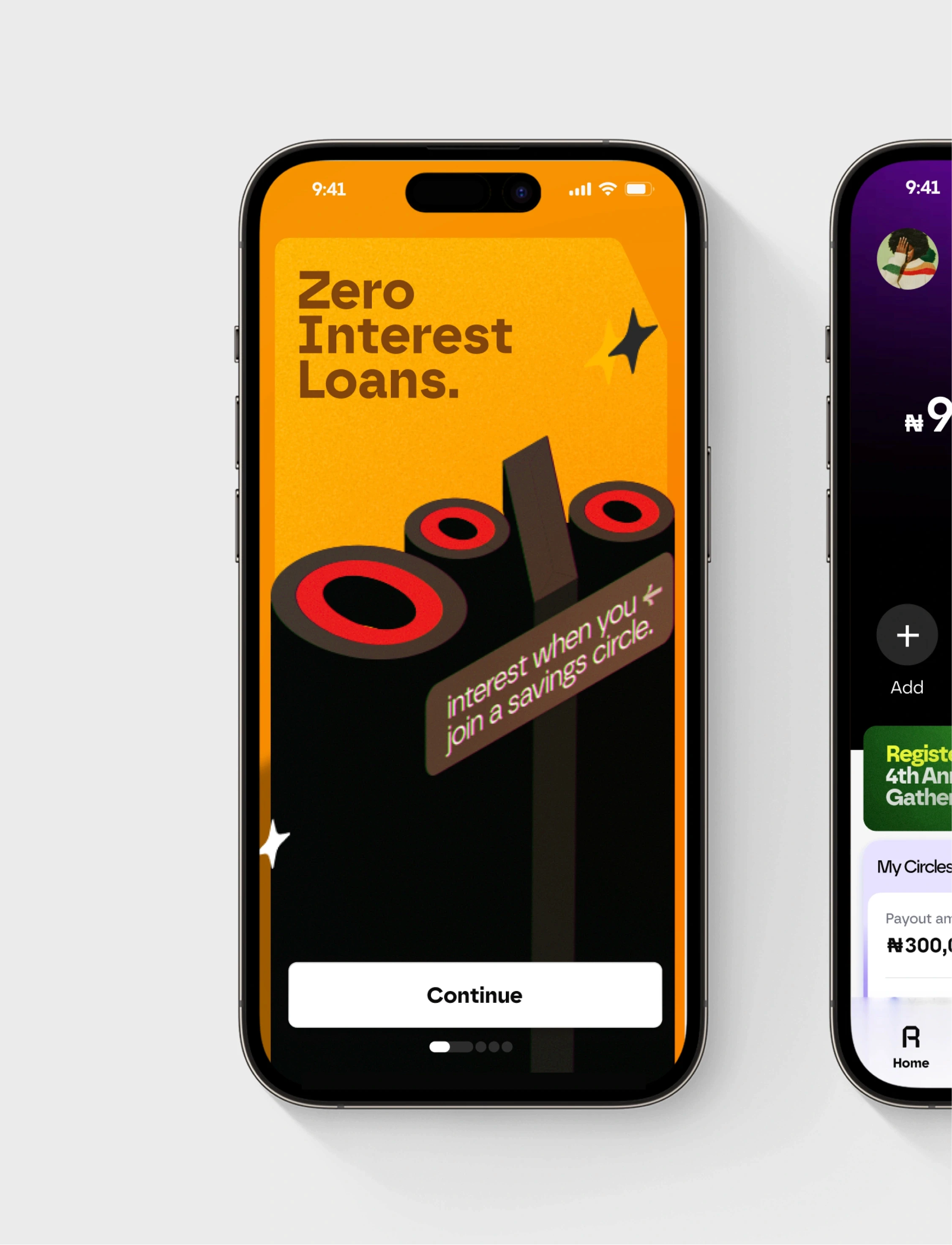
In 2021, as part of the PalmPay localization team, I helped introduce gamified onboarding patterns, resulting in a 3× increase in profile completion and a 65% lift in monthly transaction frequency.

What Is PLG Actually?
Product-Led Growth is a go-to-market strategy where the product itself is the primary driver of customer acquisition, activation, retention, and expansion. Rather than relying on sales teams to qualify prospects or marketing to convince buyers, PLG lets users experience core value independently and decide to upgrade based on genuine utility. This is different from freemium or free trials by itself. Having a free plan doesn't make you PLG—many companies offer free tiers but still rely on sales teams to close deals. PLG means removing friction so completely that users can self-serve their entire journey, from discovery to upgrade to expansion.
Think of Slack: users could invite their entire team, experience the product collaboratively, and decide to upgrade without ever talking to sales. Or Dropbox: users could share folders, see the value immediately, and upgrade to paid storage when they hit limits. Neither company required a sales demo or call to convince users the product was worth paying for.
In fintech, PLG works differently because of regulatory requirements and trust dynamics, but the principle is identical: let users experience core financial value quickly and independently, then monetize around that value.
The Core PLG Metrics You Need to Track
Product-Led Growth requires measuring different metrics than traditional SaaS. Instead of focusing on demos booked or sales pipeline, you focus on product usage and monetization signals.
Time-to-Value (TTV) is the first metric. This measures how long it takes for a user to reach their "Aha Moment"—the moment when they experience core product value. In best-in-class PLG products, this happens within 3-5 minutes. In fintech, it might be completing your first transaction. The shorter your TTV, the more likely users convert from free to paid.
Activation Rate measures the percentage of users who complete a key action within their first session—creating an account, linking a bank account, completing a transaction. High activation correlates directly with retention. If 10% of free trial users never activate, you've already lost them.
Product-Qualified Leads (PQLs) are the PLG equivalent of sales-qualified leads. A PQL is a user who has actively used your product, experienced meaningful value, and demonstrated clear intent to upgrade. PLG companies achieve 25-30% PQL conversion rates—dramatically higher than the 5-10% conversion rates for traditional marketing-qualified leads.
Net Revenue Retention (NRR) measures whether existing customers generate enough expansion revenue (upgrades, add-ons) to outpace churn. The goal is NRR > 120%, meaning you're making 20% more from existing customers even as some churn. This is impossible if your product doesn't deliver ongoing value after initial activation.
Expansion Revenue tracks revenue from existing customers upgrading plans or using new features. In PLG, expansion often outpaces new customer acquisition revenue once you achieve product-market fit. This is where the real profit margin lives.
The Four-Stage PLG Funnel
Understanding how PLG flows through your product is essential for design:
Stage 1: Acquisition — Users discover and sign up for your product, usually through word-of-mouth, organic search, or viral features. In PLG, acquisition cost is low because the product sells itself.
Stage 2: Activation — Users reach their Aha Moment and experience core value. For a payments app, this might be completing their first transfer. For an investment app, it might be setting up their first investment.
Stage 3: Revenue — Users upgrade to paid plans, add features, or commit to higher tiers. In fintech, this might mean upgraded account limits or merchant services.
Stage 4: Retention — Users continue using the product and expanding usage (more transactions, higher balances, inviting others). The focus shifts from conversion to deepening engagement and reducing churn.
Most fintech teams focus design effort on stages 1 and 2. Smart teams optimize all four because retention and expansion are where the economics improve.
PLG in FIntech
Why Fintech Is Different From SaaS
SaaS PLG works because users can access and evaluate the product without legal barriers. Slack users can sign up, invite teammates, and experience collaboration. No contracts, no verification, no regulatory friction.
Fintech PLG is harder because of three constraints: First, regulatory requirements force verification. You cannot allow users to sign up and immediately transfer money without KYC (Know Your Customer) compliance. This friction is legally required, not optional. A Nigeria-based fintech skipping KYC won't survive a CBN audit—they'll get a ban or fine.
Second, financial transactions carry inherent risk. Users are understandably cautious about trusting new financial platforms with their money. This means your product has to build trust faster than a SaaS tool.
Third, fintech business models depend on scale. A payment processor or mobile money app needs millions of users to reach profitability. The CAC-to-LTV math is brutal. You cannot afford low conversion because your margins are thin.
The result: Fintech PLG looks different from SaaS PLG. You still optimize for activation and viral growth, but you do it within regulatory and trust constraints. This is actually a strength—companies that solve this problem build more defensible moats than SaaS businesses because the regulatory requirements create higher switching costs.
How African Fintech Adapted PLG
African fintech companies discovered PLG principles years before the SaaS industry branded it as a strategy. They didn't have sales teams or massive marketing budgets, so they had to make their products so useful that users voluntarily brought others in.
OPay's approach: OPay offered free transfers (until June 2023) and instant onboarding. Users could sign up, transfer money for free, and benefit immediately. Word-of-mouth did the marketing. OPay was Nigeria's most-downloaded app by October 2023 with 10 million daily active users. This is pure PLG—zero sales team, zero ads (relatively speaking), product-driven growth.
PalmPay's approach: Similar to OPay—instant onboarding, zero transfer fees initially, personalized experience. But PalmPay integrated compliance directly into the product flow, so they avoided OPay's regulatory backlash. By Q1 2025, PalmPay had 35 million users and maintained an 80% retention rate. Each user makes an average of 50 transactions per month. That's not just acquisition—that's activation and retention combined into a single metric.
M-Pesa's approach: M-Pesa didn't have digital onboarding in the traditional sense. Instead, they used agent networks as the acquisition channel. Agents explained the service, built trust physically, then handed users off to digital. This is hybrid PLG—the agent network is the "free trial." Once users experience the convenience of digital money transfer, they keep using the product.
The lesson: African fintech didn't wait for SaaS to invent PLG. They built product-driven growth out of necessity. Your job is to codify what they did intuitively and apply it systematically to your design.
Viral Loop & In Product Growth Mechanism
How Virality Actually Works in Fintech
Most designers think virality means referral programs. Offer users $10 for referring a friend (like Venmo did), and growth happens. This misses the deeper mechanics. True virality is built into core functionality, not bolted on as incentives. Virality happens when three conditions align:
First, the product creates natural moments for sharing. When you send money to a friend via Venmo, it's visible on a social feed. Sharing is built in. You don't need a separate "refer a friend" campaign.
Second, the product is more useful with more users. M-Pesa became essential once enough people were using it—suddenly everyone could send money digitally instead of only some people. This creates network effects that make the product stickier.
Third, the product makes the referrer look good. Recommending OPay to friends improves your reputation because you're helping them access a useful service.
The best viral fintech products combine all three. Let's break down how:
Venmo's referral program: Venmo's $10 referral bonus is famous, but that's not what drove their viral growth. What drove it was the social feed. Every transaction (whether public or visible to your network) created a moment where someone else saw the service in action. The $10 bonus accelerated growth but wasn't the foundation.
Boost's recommendation feature: Boost is a Malaysian e-wallet that solved retention differently than OPay or PalmPay. Rather than offer free transfers forever, Boost built personalized recommendations into their app. The system would suggest offers, cashback opportunities, and services relevant to each user's spending patterns. Boost tracked click-through, open rates, and conversion rates on these recommendations and continuously optimized them. The result: doubled monthly active users and a fivefold increase in user retention over 90 days.
What's important here is that the virality wasn't a referral program. It was a product feature (recommendations) that became so valuable that users kept returning, and retention became the growth lever.
Building Virality Into Your Fintech Product
For African fintech, there are four proven viral mechanisms:
Mechanism 1: Social Proof in Transactions. When users send money to friends, show this activity. Not to embarrass users, but to make the service visible. When your friend gets a notification that you sent them money via your fintech app, they see the product in action. This is free marketing. M-Pesa notifications do this implicitly—they're so common that seeing an M-Pesa transaction notification makes the service feel standard.
Mechanism 2: Network Effects From Scale. The more people using your app, the more useful it becomes. If 1 million Nigerians use OPay, it's incredibly useful for any Nigerian—they can send money to more people instantly. This creates a positive feedback loop: more users → more utility → more adoption.
Mechanism 3: Gamified Engagement. Boost's personalized recommendations work because they gamify financial engagement. Users get achievements, rewards, or exclusive offers for hitting spending milestones or trying new features. This isn't manipulation—it's making financial behavior feel rewarding. PalmPay and other apps use this too: cashback for first transactions, bonus points for referring friends, tier-based status (bronze, silver, gold) that unlocks features.
Mechanism 4: Progressive Disclosure of Value. New users don't need to know about all your features on day one. Instead, unlock them progressively. First transaction is free. Second transaction unlocks bill payment. After your third transaction, you can send to international transfers. After your 10th, you can invest. Each unlocked feature is a new reason to come back, and each feature creates a new sharing moment ("Try sending money internationally, it's instant!").




In App Monetization through Design
The Challenge: Monetizing Without Breaking Trust: Here's the tension every fintech team faces: you want to monetize, but users expect free transfers, free accounts, and no hidden fees. Traditional SaaS can charge for storage or features. Fintech is different—users expect basic services free because banks offer them free (even if banks add friction).The solution is to monetize through expansion, not through artificial paywalls. Design your monetization around what users actually need, not what you want to charge for.
Upselling and Cross-Selling in Fintech: The most effective way to monetize PLG fintech is through upselling and cross-selling features that users genuinely need.
Upselling example: A user has a basic account with a $500 daily transfer limit. They hit that limit and want to transfer $2,000 to pay rent. You offer a premium account with a $10,000 limit for a small monthly fee. They upgrade immediately because the value exceeds the cost.
Cross-selling example: A user regularly sends international transfers. You show them investment products or forex services that would help them manage money across countries. They don't need it immediately, but you've made them aware of it. Later, when their needs evolve, they remember.
The key is timing. Offer upgrades and new products at moments of friction, not randomly. When users hit a limit, offer a solution. When their behavior shows interest in a feature, surface that feature. M-Pesa does this effectively. Once users are comfortable with basic transfers, M-Pesa surfaces savings products, insurance, and business lending. The funnel is activation first, monetization second.
Reverse Trials and Freemium Conversion
Freemium (offering a free tier and charging for premium features) works in fintech differently than in SaaS.
In SaaS, users often never convert from free to paid because they can accomplish their core goal for free. Freemium CAC is low, but conversion is typically 2-4%.
Free trial (users get access to all features for a limited time) creates artificial urgency. Time pressure makes users upgrade or lose access. But free trials require upfront commitment, which creates friction—users have to provide a credit card to start.
Fintech works best with a hybrid approach that we can call "reverse trials": users start with free core functionality and unlock premium features by using the product more. Payment transfers might be free forever, but merchant services, business accounts, or advanced features unlock based on usage patterns.
This works because it's not artificial. Users only upgrade when they've used the product enough to understand the value. Conversion happens because the product proved itself, not because time ran out.
Retention Through Personalization
The Problem Boost Faced
Boost, a Malaysian e-wallet with 7 million users by mid-2021, had a classic fintech problem: large user base but poor engagement. Users signed up but didn't transact frequently. The product was useful for receiving money, but users weren't returning regularly to spend or send. This is the activation-to-retention gap. Getting users in is one thing. Getting them to become habitual users is another.
How Boost Solved It With Personalized Recommendations
Rather than add friction with new features or charge for features users didn't want, Boost took a different approach. They built a recommendation engine that surfaced relevant offers, cashback opportunities, and services based on each user's spending patterns.
Here's why this worked:
First, recommendations solved a real problem: users didn't know what Boost could do for them. A new user might not realize Boost offered merchant discounts or cashback. Recommendations made these features visible at the moment they were relevant.
Second, recommendations created daily engagement moments. Instead of opening the app when they needed to send money, users opened the app every day to see what new deals or offers were available. These micro-moments of engagement compound into habit formation.
Third, Boost tracked every metric obsessively: click-through rates on recommendations, open rates, conversion rates. This allowed them to continuously improve recommendations. They removed recommendations with low CTR and doubled down on recommendations that converted.
The Results
The data is stark: Boost doubled its monthly active users and achieved a fivefold increase in user retention over a 90-day period. Think about that. Not a 20% increase. Not a 50% increase. A 500% improvement in retention in three months.
How is that possible? Because retention is multiplicative. Every user who stays longer converts more friends. Every user who becomes habitual attracts more users. The growth starts to feed itself.
What This Teaches Us About Design-Driven Growth
Boost's success is pure PLG. No major marketing campaign (that we know of). No paid acquisition blitz. Just a product feature that made users engage more, which naturally increased retention, which increased word-of-mouth, which increased acquisition.
For African fintech designers, the lesson is clear: your product is your marketing. Boost didn't hire a marketing team to convince users to come back. They designed a feature so valuable that users came back voluntarily.
This is how you build sustainable growth. You design for the psychology of engagement, not just the mechanics of acquisition.
From Activation to Revenue
Principle 1: Get Users to Core Value Immediately
Your onboarding should be shorter than a traditional bank (obviously), but more importantly, it should be faster than just getting users to sign up. Get them to their first meaningful transaction within 5-10 minutes of signup.
For OPay, this means completing KYC and linking a bank account (which technically takes more than 5 minutes, but the app makes it feel seamless). For M-Pesa, it's completing your first transfer. For investment apps like Acorns or Monzo, it's setting up your first savings pot or investment.
The key is removing every step that doesn't move users toward core value. If KYC is required by law, integrate it into the flow so it feels like part of the product, not a separate compliance hurdle.
Principle 2: Design for Habit Formation
Activation is getting users to value once. Retention is making them come back repeatedly. This requires designing for habit.
Habits form when users repeat an action in response to a trigger, get a reward, and anticipate future rewards. The fintech equivalent: push notification alerts you about a bill (trigger) → you pay it instantly via the app (action) → you feel relief (reward) → you remember the app for next month's bill (anticipation).
Boost's recommendation feature is a deliberate habit loop: daily notification (trigger) → user opens app to see offers (action) → user discovers a deal (reward) → user comes back tomorrow hoping for more deals (anticipation).
For M-Pesa, the habit loop is even stronger: money arrives → notification (trigger) → you immediately check balance (action) → you know your balance and can plan spending (reward) → you use M-Pesa again next week (anticipation).
Design your onboarding, notifications, and in-app moments to create these loops.
Principle 3: Monetize Expansion, Not Friction
Don't charge users for basics—transfer fees, account creation, basic payments. These are table stakes. Instead, monetize expansion: premium accounts with higher limits, business services, investment products, international features.
But here's the rule: only show premium features when users are ready for them. Surface them contextually—when they hit a limit, when their behavior suggests interest, when they've proven they trust your product.
Principle 4: Leverage Network Effects
Every fintech has potential network effects. The more people using the service, the more useful it becomes. Design your product to make this network effect visible.
When a user sends money to a friend and that friend receives a notification, they see the product in action. When a user refers a friend and that friend also uses the service, both users get value. These are powerful viral moments.
Contrast this with traditional financial services where there's no network effect—your bank balance is private, and you can't see your friends' transactions (for good reason).
Principle 5: Measure and Iterate Obsessively
PLG requires data-driven design. You can't rely on intuition or best practices. You need to measure activation rates, retention cohorts, expansion revenue, and churn triggers. Then iterate rapidly.
Boost's recommendation engine improved because they had real data on click-through rates and conversion. They removed low-performing recommendations and doubled down on winners. This iterative approach is what created the fivefold retention improvement.
Implementing the Framework: Step-by-Step
Step 1: Map Your Activation Moment — Define what "activated" means for your product. For payments apps, it's completing a transaction. For investment apps, it's making an investment. For lending apps, it's being approved for a loan. Design your onboarding specifically to reach this moment in under 5 minutes.
Step 2: Design for Habit — Map the habit loop for your product. What's the trigger? What's the action? What's the reward? What creates anticipation for next time? Design notifications, in-app moments, and features around this loop.
Step 3: Define Monetization Triggers — Don't charge for activation features. Instead, identify premium moments. When does a user hit a limit and need to upgrade? When does their behavior suggest they'd value a premium feature? Design monetization around these moments, not arbitrary paywalls.
Step 4: Build Viral Mechanisms — How does your product create sharing moments? Whether it's social notifications, network effects, or referral incentives, design virality into core features, not as an afterthought.
Step 5: Set Up Measurement — Before you launch, define your key metrics: activation rate, time-to-value, retention cohorts (day 1, 7, 30), expansion revenue, churn triggers. Track these obsessively and iterate.
African Fintech Example
OPay: Growth Through Incentives (With Compliance Risks)
OPay is a master case study in PLG acceleration and PLG failure.
What they did right: Instant onboarding (minimal KYC initially), zero transfer fees, and social notifications of transactions. Users could sign up and transfer money to friends immediately. Friends saw OPay transactions and wanted to sign up. This is viral loop design at its best.
Growth results: OPay was Nigeria's most-downloaded app by October 2023 with 10 million daily active users and 50 million registered users by mid-2025.
What went wrong: OPay optimized for activation so aggressively that they under-invested in compliance integration. The CBN's April 2024 audit revealed KYC gaps. OPay was fined ₦1 billion and faced an onboarding ban. This killed their growth momentum even though they were massively popular.
The lesson: PLG doesn't mean ignoring compliance. It means integrating compliance into the design so it's a trust signal, not friction. OPay eventually figured this out, implementing facial recognition for transactions, but only after the fine.
PalmPay: PLG Done Right (With Regulatory Alignment)
PalmPay followed a similar playbook to OPay but integrated compliance from day one.
What they did: Instant onboarding (with proper KYC), zero transfer fees, and 1 million agent merchants to support users. Like OPay, users could sign up and transfer money immediately. But unlike OPay, every step was regulatory-clean.
Growth results: 35 million users, 80% retention rate, 15 million daily transactions, 99.5% success rate, 50 transactions per user per month. These aren't vanity metrics—they're proof that PLG + compliance integration works.
Why it worked: PalmPay designed onboarding to satisfy compliance while reducing friction. The experience feels fast even though KYC is happening. The agent network provided trust signals that made users comfortable with digital money. The high success rate proved reliability, which kept users engaged.
The lesson: Compliance is not the enemy of PLG. Compliance can be a competitive advantage if you design for it. PalmPay's 80% retention rate is dramatically higher than typical fintech because users trust the product.
M-Pesa: Hybrid PLG Through Agent Networks
M-Pesa is the opposite of pure digital PLG. It's hybrid PLG: agent-first, digital-second.
What they did: Physical agents in every village explained M-Pesa, registered users, and built trust face-to-face. Only after users understood the service did they use the digital interface. This is the slowest possible onboarding compared to OPay or PalmPay.
Growth results: M-Pesa achieved 91% market penetration in Kenya by June 2025, 61 million daily transactions, 35.8 million monthly active users. The service processes 40 trillion KES (approximately $309 billion) annually. Unparalleled scale.
Why it worked: M-Pesa didn't optimize for pure digital growth because they didn't have to. Agents were their acquisition channel and their trust mechanism. By the time users touched the digital app, they already believed in the service. This created almost zero activation friction—users already knew how to use it.
The lesson: PLG doesn't have to be pure digital. In markets where digital literacy is lower or trust is harder to build, hybrid models (combining physical and digital) can achieve better outcomes than pure digital PLG.
Metric that Matters & Roadmap
Beyond Vanity Metrics
Most fintech teams track downloads and sign-ups. These are vanity metrics. They make the board happy but don't predict revenue or sustainability. PLG fintech requires different metrics:
Activation Rate — Percentage of new users who complete their core value moment (first transaction) within 7 days. Benchmark: 40-60% for strong PLG fintech. M-Pesa: estimated 70%+ because agent onboarding guarantees activation. OPay: probably 60%+ based on growth rates. PalmPay: likely 70%+ based on 80% retention.
Day 1, 7, 30 Retention — What percentage of users return after day 1, 7, and 30? Day 1 retention of 40% is typical for mobile apps. For fintech, 35-45% is acceptable. Day 30 retention of 20-30% is common. PalmPay's 80% retention (likely measured over a longer period like 6 months) is exceptional.
Expansion MRR (Monthly Recurring Revenue) — How much revenue comes from existing customers upgrading, adding features, or increasing usage? This is where PLG fintech makes real money. If 10% of your users upgrade to premium accounts at $5/month, and you have 1 million users, that's $500,000 monthly expansion revenue.
Churn Rate and Churn Triggers — What percentage of users stop using your product each month? This is the inverse of retention. Critical for understanding what's breaking. Even more important: why are they churning? Measure this through exit surveys or cohort analysis.
Customer Acquisition Cost vs. Lifetime Value — What's your CAC for PLG acquisition channels (organic, referral, word-of-mouth)? Compare this to LTV (how much revenue a customer generates over their lifetime). For PLG to work, LTV:CAC should be 5:1 or higher.
African-Specific Considerations
In Nigeria and Kenya, traditional metrics need adjustment:
Transaction Volume Per User — More important than just retention. PalmPay's 50 transactions per user per month tells you that the app isn't just installed—it's actively used. This is deeper engagement than day-30 retention alone would show.
Network Density — How many of a user's friends are also on your platform? This predicts viral growth. If 50% of your user's contacts are also users, the network effect is strong. If only 5%, growth relies on external marketing.
Agent Network Growth — For hybrid models like M-Pesa or early OPay/PalmPay, agent count and agent transaction volume are leading indicators. More agents → more acquisition friction removed → more growth.
0-3 Months: Foundation
Focus on one goal: improving activation. You cannot optimize retention if users aren't reaching core value.
Measure your current activation rate honestly. If 30% of users complete their first transaction within 7 days, you have work to do. Map your ideal onboarding flow: signup → KYC → link bank account → complete first transaction. Each step should take 1-2 minutes. Remove anything that doesn't move toward first transaction.
Set up analytics to track every step. You need to know where users drop off. If 50% of users abandon after KYC, KYC is your problem—redesign it. If 20% abandon after linking a bank account, that's your friction point.
Run rapid iteration cycles. Test 3-5 onboarding variations. Measure activation for each. Keep what works. Repeat.
3-6 Months: Habit Formation
Once activation reaches 50%+, focus on retention. Design habit loops into your product.
Add daily/weekly engagement moments: notifications, personalized recommendations, progress tracking (like Boost did). Measure how these impact day-7 and day-30 retention.
Start thinking about monetization moments. Where do users naturally hit a limit or need a premium feature? Design your monetization around these moments, not arbitrary paywalls.
6-12 Months: Scaling and Expansion
With activation and retention working, scale acquisition. Focus on viral loops and network effects.
Optimize referral mechanics—both incentive-based and organic (like social notifications of transactions).
Introduce premium features and upsells systematically. Measure expansion revenue.
Analyze churn cohorts to understand what's broken. High churn after 3 months? Investigate. Users who use feature X stay longer? Double down on feature X.
Conclusion
The fintech market is crowded. Every country has 5-10 payment apps competing for users. You cannot win on features alone every feature gets copied within months. You cannot win on marketing—ads are expensive and fintech is commoditized.
You win on product experience. You win by designing onboarding so smooth that users activate in minutes. You win by building habit loops so strong that users can't imagine living without your app. You win by making monetization so natural that users upgrade willingly when they hit limits.
This is Product-Led Growth. This is how you make your product the acquisition engine.
The evidence is clear: PalmPay's 80% retention beats OPay's acquisition headlines. M-Pesa's 91% penetration beats Wise's fancy UI. Boost's fivefold retention improvement beats any viral marketing campaign.
Your 5 years of fintech design experience means you've shipped onboarding, activation flows, and retention features. You know the constraints. You know where users drop off. Use that knowledge to apply the PLG framework systematically.
Pick one metric: activation rate, retention rate, or expansion revenue. Own it. Design every feature and every flow toward that metric. Measure obsessively. Iterate relentlessly.
That's how you build growth that compounds instead of campaigns that expire.
References
PLG adoption data: 91% of B2B SaaS increasing PLG investment (2025) PQL conversion benchmarks: 25-30% PQL conversion vs. 5-10% MQL (Optifai, ProductLed, multiple sources) Time-to-Value benchmarks: 3-5 minutes for best-in-class PLG (Optifai) Boost case study: Doubled MAU, 5x retention increase over 90 days (verified from multiple fintech sources) PalmPay metrics: Official Q1 2025 reports OPay metrics: Official reports and regulatory actions M-Pesa metrics: Safaricom FY25 investor reports Fintech retention benchmarks: AppsFlyer, mobile app analytics data NRR benchmarks: 15-20% higher for PLG companies vs. sales-led (G2 2024 report) Slack, Dropbox, ChatGPT PLG case studies: Verified from official company history Freemium vs. free trial conversion: 9% trial-to-paid vs. 2-4% freemium-to-paid (ProductLed benchmarks)
Next
The Retention Pipeline
Designing for User Retention in African Fintech ( M-Pesa & M-Kopa Case)
The Retention Pipeline
Designing for User Retention in African Fintech ( M-Pesa & M-Kopa Case)
The Retention Pipeline
Designing for User Retention in African Fintech ( M-Pesa & M-Kopa Case)

The Convenience Threshold
How Kenya Crossed Into Cashlessness while Nigeria Remains Hybrid
The Convenience Threshold
How Kenya Crossed Into Cashlessness while Nigeria Remains Hybrid
The Convenience Threshold
How Kenya Crossed Into Cashlessness while Nigeria Remains Hybrid

Westernization of African Design
Breaking Free from Colonial Design Frameworks in African UX, Product, and Service Design
Westernization of African Design
Breaking Free from Colonial Design Frameworks in African UX, Product, and Service Design
Westernization of African Design
Breaking Free from Colonial Design Frameworks in African UX, Product, and Service Design
Product-Led Growth in African Fintech
Product-Led Growth in African Fintech
Design Driven Growth in African Fintech in African Market
Summary
Most fintech designers treat growth as a marketing problem. Launch ads. Run referral campaigns. Optimize for sign-ups. But this approach costs more and converts worse than it should. The data is clear: increasing customer retention by just 5% can increase profits by 25-95% in financial services. Yet most teams optimize for acquisition at the expense of retention.
Product-Led Growth (PLG) flips this. Instead of marketing and sales driving acquisition, the product itself becomes the primary acquisition engine. Users discover the product independently, experience immediate value, and choose to upgrade or refer without sales friction. In 2025, 58% of SaaS businesses already have a PLG model in place, and 91% are increasing investment in PLG strategies.
For African fintech specifically—where regulatory constraints are tight and customer acquisition costs are high—PLG is not optional. It's survival. This article shows you how to design onboarding, activation, and monetization flows that drive growth while maintaining compliance, using case studies from OPay, PalmPay, M-Pesa, Boost, and others.
Note: I was part of the term In localization in Palmpay (2021) where I helped Introduced gamified onboarding patterns that tripled profile completion and increased monthly transaction frequency by 65%
Why Most Fin-tech Growth Strategy Fails
The False Assumption: More Users = More Revenue
The most expensive mistake fintech teams make is optimizing purely for acquisition. Sign up more users, the logic goes, and revenue will follow. But the numbers tell a different story.
The average retention rate for mobile apps after 30 days is only 40%. By day 90, it drops to around 20%. In fintech specifically, the situation is worse because trust and reliability are prerequisites for retention. A well-designed onboarding might get users in, but without meaningful product value, they leave immediately.
Here's the real cost: acquiring a new customer is five to twenty-five times more expensive than retaining an existing one. So if you acquire 100 users but only 20 stay after 90 days, your unit economics are broken. You're spending acquisition budget on a leaky bucket.
Yet most fintech teams structure themselves around acquisition because it's measurable and feels productive. Marketing runs campaigns. Sales closes deals. Growth teams focus on sign-up metrics. Nobody optimizes for whether those users actually experience value and stick around.
What's Broken: The Default Fintech Growth Model
The traditional fintech GTM (Go-To-Market) strategy looks like this: paid acquisition (ads) → free trial or freemium → sales outreach → upgrade to paid. This model worked when fintech was novel and users were desperate to escape traditional banks. It doesn't work now that the market is saturated.
Why it's broken in 2025:
First, customers have too many choices. A user can try Wise, OPay, PalmPay, M-Pesa, Moniepoint, and others within minutes. Switching costs are essentially zero. Marketing alone cannot create loyalty in this environment.
Second, paid acquisition is expensive. A single customer acquisition across fintech can cost $1,450 or more in highly competitive markets. For a B2C fintech trying to serve SMBs or individuals, CAC (Customer Acquisition Cost) can eat 80% of margin if you rely purely on ads.
Third, regulatory friction kills traditional sales models. In Nigeria and Kenya, fintech onboarding is heavily regulated. You cannot use aggressive sales tactics or pressure conversions. You have to build trust through the product itself.
Product-Led Growth solves all three problems because it inverts the funnel: instead of paying for users to discover you, users discover you because they experience value first.
In 2021, as part of the PalmPay localization team, I helped introduce gamified onboarding patterns, resulting in a 3× increase in profile completion and a 65% lift in monthly transaction frequency.
What Is PLG Actually?
Product-Led Growth is a go-to-market strategy where the product itself is the primary driver of customer acquisition, activation, retention, and expansion. Rather than relying on sales teams to qualify prospects or marketing to convince buyers, PLG lets users experience core value independently and decide to upgrade based on genuine utility. This is different from freemium or free trials by itself. Having a free plan doesn't make you PLG—many companies offer free tiers but still rely on sales teams to close deals. PLG means removing friction so completely that users can self-serve their entire journey, from discovery to upgrade to expansion.
Think of Slack: users could invite their entire team, experience the product collaboratively, and decide to upgrade without ever talking to sales. Or Dropbox: users could share folders, see the value immediately, and upgrade to paid storage when they hit limits. Neither company required a sales demo or call to convince users the product was worth paying for.
In fintech, PLG works differently because of regulatory requirements and trust dynamics, but the principle is identical: let users experience core financial value quickly and independently, then monetize around that value.
The Core PLG Metrics You Need to Track
Product-Led Growth requires measuring different metrics than traditional SaaS. Instead of focusing on demos booked or sales pipeline, you focus on product usage and monetization signals.
Time-to-Value (TTV) is the first metric. This measures how long it takes for a user to reach their "Aha Moment"—the moment when they experience core product value. In best-in-class PLG products, this happens within 3-5 minutes. In fintech, it might be completing your first transaction. The shorter your TTV, the more likely users convert from free to paid.
Activation Rate measures the percentage of users who complete a key action within their first session—creating an account, linking a bank account, completing a transaction. High activation correlates directly with retention. If 10% of free trial users never activate, you've already lost them.
Product-Qualified Leads (PQLs) are the PLG equivalent of sales-qualified leads. A PQL is a user who has actively used your product, experienced meaningful value, and demonstrated clear intent to upgrade. PLG companies achieve 25-30% PQL conversion rates—dramatically higher than the 5-10% conversion rates for traditional marketing-qualified leads.
Net Revenue Retention (NRR) measures whether existing customers generate enough expansion revenue (upgrades, add-ons) to outpace churn. The goal is NRR > 120%, meaning you're making 20% more from existing customers even as some churn. This is impossible if your product doesn't deliver ongoing value after initial activation.
Expansion Revenue tracks revenue from existing customers upgrading plans or using new features. In PLG, expansion often outpaces new customer acquisition revenue once you achieve product-market fit. This is where the real profit margin lives.
The Four-Stage PLG Funnel
Understanding how PLG flows through your product is essential for design:
Stage 1: Acquisition — Users discover and sign up for your product, usually through word-of-mouth, organic search, or viral features. In PLG, acquisition cost is low because the product sells itself.
Stage 2: Activation — Users reach their Aha Moment and experience core value. For a payments app, this might be completing their first transfer. For an investment app, it might be setting up their first investment.
Stage 3: Revenue — Users upgrade to paid plans, add features, or commit to higher tiers. In fintech, this might mean upgraded account limits or merchant services.
Stage 4: Retention — Users continue using the product and expanding usage (more transactions, higher balances, inviting others). The focus shifts from conversion to deepening engagement and reducing churn.
Most fintech teams focus design effort on stages 1 and 2. Smart teams optimize all four because retention and expansion are where the economics improve.
PLG in FIntech
Why Fintech Is Different From SaaS
SaaS PLG works because users can access and evaluate the product without legal barriers. Slack users can sign up, invite teammates, and experience collaboration. No contracts, no verification, no regulatory friction.
Fintech PLG is harder because of three constraints: First, regulatory requirements force verification. You cannot allow users to sign up and immediately transfer money without KYC (Know Your Customer) compliance. This friction is legally required, not optional. A Nigeria-based fintech skipping KYC won't survive a CBN audit—they'll get a ban or fine.
Second, financial transactions carry inherent risk. Users are understandably cautious about trusting new financial platforms with their money. This means your product has to build trust faster than a SaaS tool.
Third, fintech business models depend on scale. A payment processor or mobile money app needs millions of users to reach profitability. The CAC-to-LTV math is brutal. You cannot afford low conversion because your margins are thin.
The result: Fintech PLG looks different from SaaS PLG. You still optimize for activation and viral growth, but you do it within regulatory and trust constraints. This is actually a strength—companies that solve this problem build more defensible moats than SaaS businesses because the regulatory requirements create higher switching costs.
How African Fintech Adapted PLG
African fintech companies discovered PLG principles years before the SaaS industry branded it as a strategy. They didn't have sales teams or massive marketing budgets, so they had to make their products so useful that users voluntarily brought others in.
OPay's approach: OPay offered free transfers (until June 2023) and instant onboarding. Users could sign up, transfer money for free, and benefit immediately. Word-of-mouth did the marketing. OPay was Nigeria's most-downloaded app by October 2023 with 10 million daily active users. This is pure PLG—zero sales team, zero ads (relatively speaking), product-driven growth.
PalmPay's approach: Similar to OPay—instant onboarding, zero transfer fees initially, personalized experience. But PalmPay integrated compliance directly into the product flow, so they avoided OPay's regulatory backlash. By Q1 2025, PalmPay had 35 million users and maintained an 80% retention rate. Each user makes an average of 50 transactions per month. That's not just acquisition—that's activation and retention combined into a single metric.
M-Pesa's approach: M-Pesa didn't have digital onboarding in the traditional sense. Instead, they used agent networks as the acquisition channel. Agents explained the service, built trust physically, then handed users off to digital. This is hybrid PLG—the agent network is the "free trial." Once users experience the convenience of digital money transfer, they keep using the product.
The lesson: African fintech didn't wait for SaaS to invent PLG. They built product-driven growth out of necessity. Your job is to codify what they did intuitively and apply it systematically to your design.
Viral Loop & In Product Growth Mechanism
How Virality Actually Works in Fintech
Most designers think virality means referral programs. Offer users $10 for referring a friend (like Venmo did), and growth happens. This misses the deeper mechanics. True virality is built into core functionality, not bolted on as incentives. Virality happens when three conditions align:
First, the product creates natural moments for sharing. When you send money to a friend via Venmo, it's visible on a social feed. Sharing is built in. You don't need a separate "refer a friend" campaign.
Second, the product is more useful with more users. M-Pesa became essential once enough people were using it—suddenly everyone could send money digitally instead of only some people. This creates network effects that make the product stickier.
Third, the product makes the referrer look good. Recommending OPay to friends improves your reputation because you're helping them access a useful service.
The best viral fintech products combine all three. Let's break down how:
Venmo's referral program: Venmo's $10 referral bonus is famous, but that's not what drove their viral growth. What drove it was the social feed. Every transaction (whether public or visible to your network) created a moment where someone else saw the service in action. The $10 bonus accelerated growth but wasn't the foundation.
Boost's recommendation feature: Boost is a Malaysian e-wallet that solved retention differently than OPay or PalmPay. Rather than offer free transfers forever, Boost built personalized recommendations into their app. The system would suggest offers, cashback opportunities, and services relevant to each user's spending patterns. Boost tracked click-through, open rates, and conversion rates on these recommendations and continuously optimized them. The result: doubled monthly active users and a fivefold increase in user retention over 90 days.
What's important here is that the virality wasn't a referral program. It was a product feature (recommendations) that became so valuable that users kept returning, and retention became the growth lever.
Building Virality Into Your Fintech Product
For African fintech, there are four proven viral mechanisms:
Mechanism 1: Social Proof in Transactions. When users send money to friends, show this activity. Not to embarrass users, but to make the service visible. When your friend gets a notification that you sent them money via your fintech app, they see the product in action. This is free marketing. M-Pesa notifications do this implicitly—they're so common that seeing an M-Pesa transaction notification makes the service feel standard.
Mechanism 2: Network Effects From Scale. The more people using your app, the more useful it becomes. If 1 million Nigerians use OPay, it's incredibly useful for any Nigerian—they can send money to more people instantly. This creates a positive feedback loop: more users → more utility → more adoption.
Mechanism 3: Gamified Engagement. Boost's personalized recommendations work because they gamify financial engagement. Users get achievements, rewards, or exclusive offers for hitting spending milestones or trying new features. This isn't manipulation—it's making financial behavior feel rewarding. PalmPay and other apps use this too: cashback for first transactions, bonus points for referring friends, tier-based status (bronze, silver, gold) that unlocks features.
Mechanism 4: Progressive Disclosure of Value. New users don't need to know about all your features on day one. Instead, unlock them progressively. First transaction is free. Second transaction unlocks bill payment. After your third transaction, you can send to international transfers. After your 10th, you can invest. Each unlocked feature is a new reason to come back, and each feature creates a new sharing moment ("Try sending money internationally, it's instant!").
In App Monetization through Design
The Challenge: Monetizing Without Breaking Trust: Here's the tension every fintech team faces: you want to monetize, but users expect free transfers, free accounts, and no hidden fees. Traditional SaaS can charge for storage or features. Fintech is different—users expect basic services free because banks offer them free (even if banks add friction).The solution is to monetize through expansion, not through artificial paywalls. Design your monetization around what users actually need, not what you want to charge for.
Upselling and Cross-Selling in Fintech: The most effective way to monetize PLG fintech is through upselling and cross-selling features that users genuinely need.
Upselling example: A user has a basic account with a $500 daily transfer limit. They hit that limit and want to transfer $2,000 to pay rent. You offer a premium account with a $10,000 limit for a small monthly fee. They upgrade immediately because the value exceeds the cost.
Cross-selling example: A user regularly sends international transfers. You show them investment products or forex services that would help them manage money across countries. They don't need it immediately, but you've made them aware of it. Later, when their needs evolve, they remember.
The key is timing. Offer upgrades and new products at moments of friction, not randomly. When users hit a limit, offer a solution. When their behavior shows interest in a feature, surface that feature. M-Pesa does this effectively. Once users are comfortable with basic transfers, M-Pesa surfaces savings products, insurance, and business lending. The funnel is activation first, monetization second.
Reverse Trials and Freemium Conversion
Freemium (offering a free tier and charging for premium features) works in fintech differently than in SaaS.
In SaaS, users often never convert from free to paid because they can accomplish their core goal for free. Freemium CAC is low, but conversion is typically 2-4%.
Free trial (users get access to all features for a limited time) creates artificial urgency. Time pressure makes users upgrade or lose access. But free trials require upfront commitment, which creates friction—users have to provide a credit card to start.
Fintech works best with a hybrid approach that we can call "reverse trials": users start with free core functionality and unlock premium features by using the product more. Payment transfers might be free forever, but merchant services, business accounts, or advanced features unlock based on usage patterns.
This works because it's not artificial. Users only upgrade when they've used the product enough to understand the value. Conversion happens because the product proved itself, not because time ran out.
Retention Through Personalization
The Problem Boost Faced
Boost, a Malaysian e-wallet with 7 million users by mid-2021, had a classic fintech problem: large user base but poor engagement. Users signed up but didn't transact frequently. The product was useful for receiving money, but users weren't returning regularly to spend or send. This is the activation-to-retention gap. Getting users in is one thing. Getting them to become habitual users is another.
How Boost Solved It With Personalized Recommendations
Rather than add friction with new features or charge for features users didn't want, Boost took a different approach. They built a recommendation engine that surfaced relevant offers, cashback opportunities, and services based on each user's spending patterns.
Here's why this worked:
First, recommendations solved a real problem: users didn't know what Boost could do for them. A new user might not realize Boost offered merchant discounts or cashback. Recommendations made these features visible at the moment they were relevant.
Second, recommendations created daily engagement moments. Instead of opening the app when they needed to send money, users opened the app every day to see what new deals or offers were available. These micro-moments of engagement compound into habit formation.
Third, Boost tracked every metric obsessively: click-through rates on recommendations, open rates, conversion rates. This allowed them to continuously improve recommendations. They removed recommendations with low CTR and doubled down on recommendations that converted.
The Results
The data is stark: Boost doubled its monthly active users and achieved a fivefold increase in user retention over a 90-day period. Think about that. Not a 20% increase. Not a 50% increase. A 500% improvement in retention in three months.
How is that possible? Because retention is multiplicative. Every user who stays longer converts more friends. Every user who becomes habitual attracts more users. The growth starts to feed itself.
What This Teaches Us About Design-Driven Growth
Boost's success is pure PLG. No major marketing campaign (that we know of). No paid acquisition blitz. Just a product feature that made users engage more, which naturally increased retention, which increased word-of-mouth, which increased acquisition.
For African fintech designers, the lesson is clear: your product is your marketing. Boost didn't hire a marketing team to convince users to come back. They designed a feature so valuable that users came back voluntarily.
This is how you build sustainable growth. You design for the psychology of engagement, not just the mechanics of acquisition.
From Activation to Revenue
Principle 1: Get Users to Core Value Immediately
Your onboarding should be shorter than a traditional bank (obviously), but more importantly, it should be faster than just getting users to sign up. Get them to their first meaningful transaction within 5-10 minutes of signup.
For OPay, this means completing KYC and linking a bank account (which technically takes more than 5 minutes, but the app makes it feel seamless). For M-Pesa, it's completing your first transfer. For investment apps like Acorns or Monzo, it's setting up your first savings pot or investment.
The key is removing every step that doesn't move users toward core value. If KYC is required by law, integrate it into the flow so it feels like part of the product, not a separate compliance hurdle.
Principle 2: Design for Habit Formation
Activation is getting users to value once. Retention is making them come back repeatedly. This requires designing for habit.
Habits form when users repeat an action in response to a trigger, get a reward, and anticipate future rewards. The fintech equivalent: push notification alerts you about a bill (trigger) → you pay it instantly via the app (action) → you feel relief (reward) → you remember the app for next month's bill (anticipation).
Boost's recommendation feature is a deliberate habit loop: daily notification (trigger) → user opens app to see offers (action) → user discovers a deal (reward) → user comes back tomorrow hoping for more deals (anticipation).
For M-Pesa, the habit loop is even stronger: money arrives → notification (trigger) → you immediately check balance (action) → you know your balance and can plan spending (reward) → you use M-Pesa again next week (anticipation).
Design your onboarding, notifications, and in-app moments to create these loops.
Principle 3: Monetize Expansion, Not Friction
Don't charge users for basics—transfer fees, account creation, basic payments. These are table stakes. Instead, monetize expansion: premium accounts with higher limits, business services, investment products, international features.
But here's the rule: only show premium features when users are ready for them. Surface them contextually—when they hit a limit, when their behavior suggests interest, when they've proven they trust your product.
Principle 4: Leverage Network Effects
Every fintech has potential network effects. The more people using the service, the more useful it becomes. Design your product to make this network effect visible.
When a user sends money to a friend and that friend receives a notification, they see the product in action. When a user refers a friend and that friend also uses the service, both users get value. These are powerful viral moments.
Contrast this with traditional financial services where there's no network effect—your bank balance is private, and you can't see your friends' transactions (for good reason).
Principle 5: Measure and Iterate Obsessively
PLG requires data-driven design. You can't rely on intuition or best practices. You need to measure activation rates, retention cohorts, expansion revenue, and churn triggers. Then iterate rapidly.
Boost's recommendation engine improved because they had real data on click-through rates and conversion. They removed low-performing recommendations and doubled down on winners. This iterative approach is what created the fivefold retention improvement.
Implementing the Framework: Step-by-Step
Step 1: Map Your Activation Moment — Define what "activated" means for your product. For payments apps, it's completing a transaction. For investment apps, it's making an investment. For lending apps, it's being approved for a loan. Design your onboarding specifically to reach this moment in under 5 minutes.
Step 2: Design for Habit — Map the habit loop for your product. What's the trigger? What's the action? What's the reward? What creates anticipation for next time? Design notifications, in-app moments, and features around this loop.
Step 3: Define Monetization Triggers — Don't charge for activation features. Instead, identify premium moments. When does a user hit a limit and need to upgrade? When does their behavior suggest they'd value a premium feature? Design monetization around these moments, not arbitrary paywalls.
Step 4: Build Viral Mechanisms — How does your product create sharing moments? Whether it's social notifications, network effects, or referral incentives, design virality into core features, not as an afterthought.
Step 5: Set Up Measurement — Before you launch, define your key metrics: activation rate, time-to-value, retention cohorts (day 1, 7, 30), expansion revenue, churn triggers. Track these obsessively and iterate.
African Fintech Example
OPay: Growth Through Incentives (With Compliance Risks)
OPay is a master case study in PLG acceleration and PLG failure.
What they did right: Instant onboarding (minimal KYC initially), zero transfer fees, and social notifications of transactions. Users could sign up and transfer money to friends immediately. Friends saw OPay transactions and wanted to sign up. This is viral loop design at its best.
Growth results: OPay was Nigeria's most-downloaded app by October 2023 with 10 million daily active users and 50 million registered users by mid-2025.
What went wrong: OPay optimized for activation so aggressively that they under-invested in compliance integration. The CBN's April 2024 audit revealed KYC gaps. OPay was fined ₦1 billion and faced an onboarding ban. This killed their growth momentum even though they were massively popular.
The lesson: PLG doesn't mean ignoring compliance. It means integrating compliance into the design so it's a trust signal, not friction. OPay eventually figured this out, implementing facial recognition for transactions, but only after the fine.
PalmPay: PLG Done Right (With Regulatory Alignment)
PalmPay followed a similar playbook to OPay but integrated compliance from day one.
What they did: Instant onboarding (with proper KYC), zero transfer fees, and 1 million agent merchants to support users. Like OPay, users could sign up and transfer money immediately. But unlike OPay, every step was regulatory-clean.
Growth results: 35 million users, 80% retention rate, 15 million daily transactions, 99.5% success rate, 50 transactions per user per month. These aren't vanity metrics—they're proof that PLG + compliance integration works.
Why it worked: PalmPay designed onboarding to satisfy compliance while reducing friction. The experience feels fast even though KYC is happening. The agent network provided trust signals that made users comfortable with digital money. The high success rate proved reliability, which kept users engaged.
The lesson: Compliance is not the enemy of PLG. Compliance can be a competitive advantage if you design for it. PalmPay's 80% retention rate is dramatically higher than typical fintech because users trust the product.
M-Pesa: Hybrid PLG Through Agent Networks
M-Pesa is the opposite of pure digital PLG. It's hybrid PLG: agent-first, digital-second.
What they did: Physical agents in every village explained M-Pesa, registered users, and built trust face-to-face. Only after users understood the service did they use the digital interface. This is the slowest possible onboarding compared to OPay or PalmPay.
Growth results: M-Pesa achieved 91% market penetration in Kenya by June 2025, 61 million daily transactions, 35.8 million monthly active users. The service processes 40 trillion KES (approximately $309 billion) annually. Unparalleled scale.
Why it worked: M-Pesa didn't optimize for pure digital growth because they didn't have to. Agents were their acquisition channel and their trust mechanism. By the time users touched the digital app, they already believed in the service. This created almost zero activation friction—users already knew how to use it.
The lesson: PLG doesn't have to be pure digital. In markets where digital literacy is lower or trust is harder to build, hybrid models (combining physical and digital) can achieve better outcomes than pure digital PLG.
Metric that Matters & Roadmap
Beyond Vanity Metrics
Most fintech teams track downloads and sign-ups. These are vanity metrics. They make the board happy but don't predict revenue or sustainability. PLG fintech requires different metrics:
Activation Rate — Percentage of new users who complete their core value moment (first transaction) within 7 days. Benchmark: 40-60% for strong PLG fintech. M-Pesa: estimated 70%+ because agent onboarding guarantees activation. OPay: probably 60%+ based on growth rates. PalmPay: likely 70%+ based on 80% retention.
Day 1, 7, 30 Retention — What percentage of users return after day 1, 7, and 30? Day 1 retention of 40% is typical for mobile apps. For fintech, 35-45% is acceptable. Day 30 retention of 20-30% is common. PalmPay's 80% retention (likely measured over a longer period like 6 months) is exceptional.
Expansion MRR (Monthly Recurring Revenue) — How much revenue comes from existing customers upgrading, adding features, or increasing usage? This is where PLG fintech makes real money. If 10% of your users upgrade to premium accounts at $5/month, and you have 1 million users, that's $500,000 monthly expansion revenue.
Churn Rate and Churn Triggers — What percentage of users stop using your product each month? This is the inverse of retention. Critical for understanding what's breaking. Even more important: why are they churning? Measure this through exit surveys or cohort analysis.
Customer Acquisition Cost vs. Lifetime Value — What's your CAC for PLG acquisition channels (organic, referral, word-of-mouth)? Compare this to LTV (how much revenue a customer generates over their lifetime). For PLG to work, LTV:CAC should be 5:1 or higher.
African-Specific Considerations
In Nigeria and Kenya, traditional metrics need adjustment:
Transaction Volume Per User — More important than just retention. PalmPay's 50 transactions per user per month tells you that the app isn't just installed—it's actively used. This is deeper engagement than day-30 retention alone would show.
Network Density — How many of a user's friends are also on your platform? This predicts viral growth. If 50% of your user's contacts are also users, the network effect is strong. If only 5%, growth relies on external marketing.
Agent Network Growth — For hybrid models like M-Pesa or early OPay/PalmPay, agent count and agent transaction volume are leading indicators. More agents → more acquisition friction removed → more growth.
0-3 Months: Foundation
Focus on one goal: improving activation. You cannot optimize retention if users aren't reaching core value.
Measure your current activation rate honestly. If 30% of users complete their first transaction within 7 days, you have work to do. Map your ideal onboarding flow: signup → KYC → link bank account → complete first transaction. Each step should take 1-2 minutes. Remove anything that doesn't move toward first transaction.
Set up analytics to track every step. You need to know where users drop off. If 50% of users abandon after KYC, KYC is your problem—redesign it. If 20% abandon after linking a bank account, that's your friction point.
Run rapid iteration cycles. Test 3-5 onboarding variations. Measure activation for each. Keep what works. Repeat.
3-6 Months: Habit Formation
Once activation reaches 50%+, focus on retention. Design habit loops into your product.
Add daily/weekly engagement moments: notifications, personalized recommendations, progress tracking (like Boost did). Measure how these impact day-7 and day-30 retention.
Start thinking about monetization moments. Where do users naturally hit a limit or need a premium feature? Design your monetization around these moments, not arbitrary paywalls.
6-12 Months: Scaling and Expansion
With activation and retention working, scale acquisition. Focus on viral loops and network effects.
Optimize referral mechanics—both incentive-based and organic (like social notifications of transactions).
Introduce premium features and upsells systematically. Measure expansion revenue.
Analyze churn cohorts to understand what's broken. High churn after 3 months? Investigate. Users who use feature X stay longer? Double down on feature X.
Conclusion
The fintech market is crowded. Every country has 5-10 payment apps competing for users. You cannot win on features alone every feature gets copied within months. You cannot win on marketing—ads are expensive and fintech is commoditized.
You win on product experience. You win by designing onboarding so smooth that users activate in minutes. You win by building habit loops so strong that users can't imagine living without your app. You win by making monetization so natural that users upgrade willingly when they hit limits.
This is Product-Led Growth. This is how you make your product the acquisition engine.
The evidence is clear: PalmPay's 80% retention beats OPay's acquisition headlines. M-Pesa's 91% penetration beats Wise's fancy UI. Boost's fivefold retention improvement beats any viral marketing campaign.
Your 5 years of fintech design experience means you've shipped onboarding, activation flows, and retention features. You know the constraints. You know where users drop off. Use that knowledge to apply the PLG framework systematically.
Pick one metric: activation rate, retention rate, or expansion revenue. Own it. Design every feature and every flow toward that metric. Measure obsessively. Iterate relentlessly.
That's how you build growth that compounds instead of campaigns that expire.
References
PLG adoption data: 91% of B2B SaaS increasing PLG investment (2025) PQL conversion benchmarks: 25-30% PQL conversion vs. 5-10% MQL (Optifai, ProductLed, multiple sources) Time-to-Value benchmarks: 3-5 minutes for best-in-class PLG (Optifai) Boost case study: Doubled MAU, 5x retention increase over 90 days (verified from multiple fintech sources) PalmPay metrics: Official Q1 2025 reports OPay metrics: Official reports and regulatory actions M-Pesa metrics: Safaricom FY25 investor reports Fintech retention benchmarks: AppsFlyer, mobile app analytics data NRR benchmarks: 15-20% higher for PLG companies vs. sales-led (G2 2024 report) Slack, Dropbox, ChatGPT PLG case studies: Verified from official company history Freemium vs. free trial conversion: 9% trial-to-paid vs. 2-4% freemium-to-paid (ProductLed benchmarks)
Next
The Retention Pipeline
Designing for User Retention in African Fintech ( M-Pesa & M-Kopa Case)
The Retention Pipeline
Designing for User Retention in African Fintech ( M-Pesa & M-Kopa Case)
The Retention Pipeline
Designing for User Retention in African Fintech ( M-Pesa & M-Kopa Case)
The Convenience Threshold
How Kenya Crossed Into Cashlessness while Nigeria Remains Hybrid
The Convenience Threshold
How Kenya Crossed Into Cashlessness while Nigeria Remains Hybrid
The Convenience Threshold
How Kenya Crossed Into Cashlessness while Nigeria Remains Hybrid
Westernization of African Design
Breaking Free from Colonial Design Frameworks in African UX, Product, and Service Design
Westernization of African Design
Breaking Free from Colonial Design Frameworks in African UX, Product, and Service Design
Westernization of African Design