My Fuud
Turning Home Kitchens Into Scalable Food Businesses
About Project

MyFuud was created to solve a simple but widespread problem: talented home cooks, especially small and migrant chefs struggle to sell food beyond their immediate networks.
Existing food platforms are optimized for restaurants, not informal kitchens. This project focused on designing a marketplace that lowers the barrier to entry, accelerates vendor onboarding, and makes discovering home-cooked meals easy and trustworthy for users.
Scope
Motion design
UX/UI Design
Website
Prototyping
The Problem
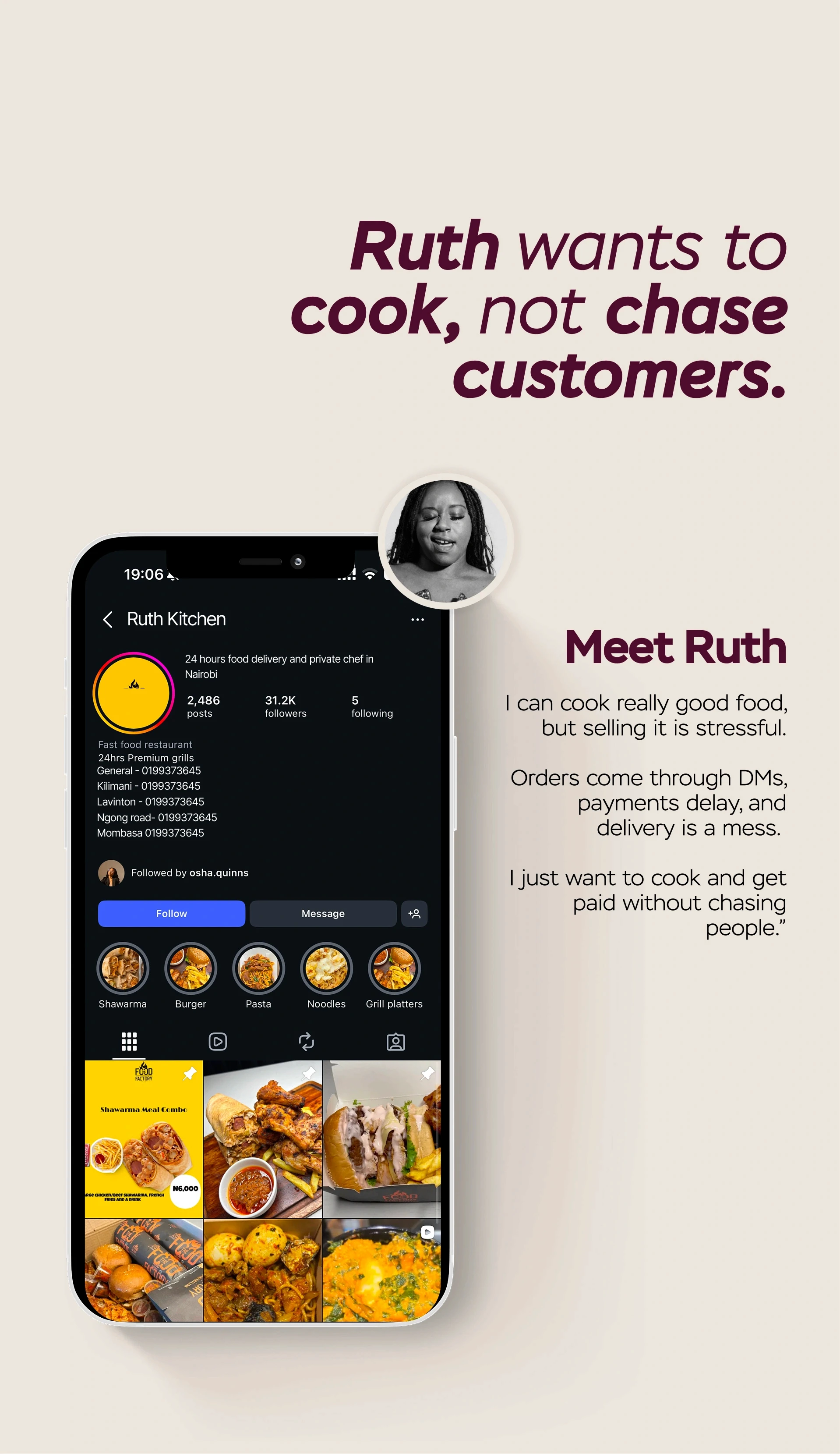
Many skilled home cooks and small-scale food vendors rely on informal channels like WhatsApp and Instagram to sell meals. While these channels work for small volumes, they don’t support scale, consistency, or discovery.
Vendors struggle with visibility, order management, and trust, while customers have no reliable way to find, evaluate, or reorder from home kitchens.
At the same time, most food delivery platforms are designed around restaurant operations complex onboarding, strict requirements, and workflows that exclude non-commercial kitchens. This creates a gap where demand for affordable, home-cooked meals exists, but supply remains fragmented and difficult to access.
Research & Insights
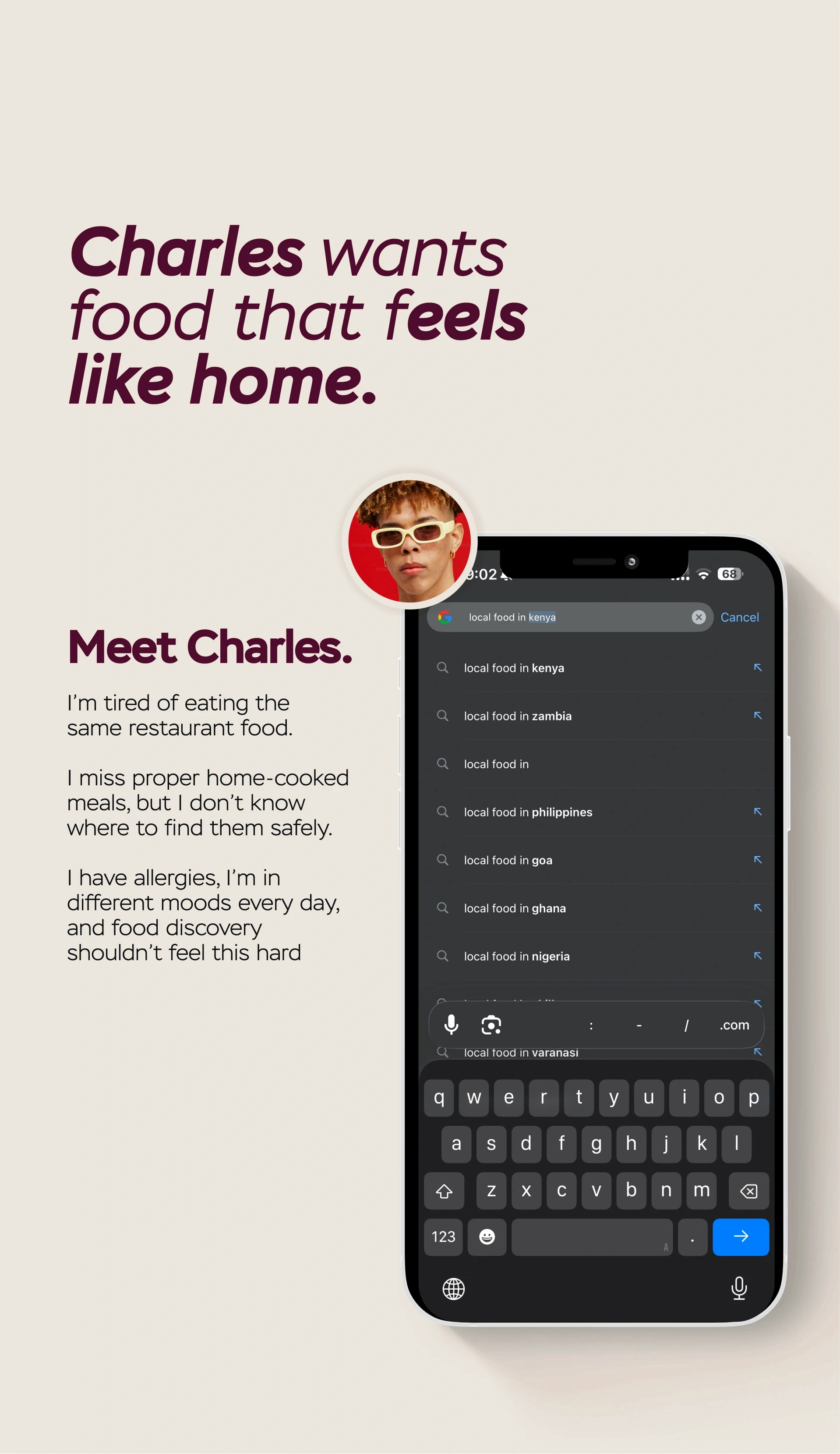
Existing food marketplaces prioritize restaurant-grade operations, assuming vendors have standardized menus, physical locations, and formal registrations. In contrast, home cooks operate with limited resources, flexible menus, and small batch production. This mismatch makes traditional onboarding flows unnecessarily complex and discouraging.
We also observed that discovery in informal food selling is relationship-based rather than search-based. Customers often buy because they trust the cook, not because of polished branding. This highlighted the need for a system that builds trust quickly without imposing heavy operational overhead.
The core insight was clear: enabling scale for home kitchens isn’t about adding more features it’s about removing friction and designing around how these vendors already operate.
How it was solved
The solution centered on simplifying both sides of the marketplace.
Vendor onboarding was designed to be lightweight, allowing home cooks to go live without restaurant-level setup. The product focused on essentials—menu creation, availability, and order flow—without forcing unnecessary operational complexity.
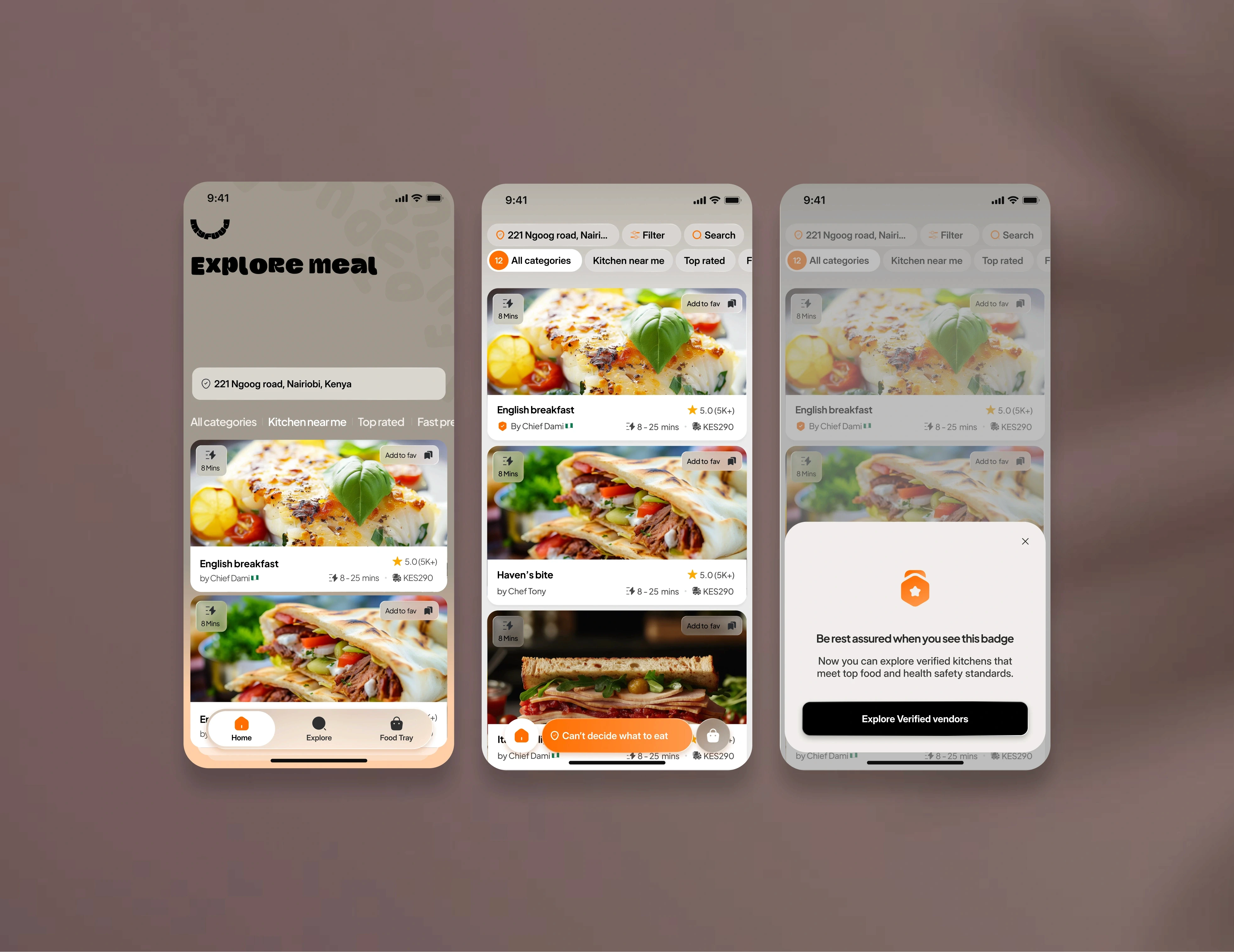
On the user side, discovery was optimized to surface relevant vendors quickly, making it easy to find nearby home kitchens and understand what they offer. The experience emphasized clarity and trust rather than overwhelming users with options.
By treating home kitchens as a first-class use case not an edge case the platform enabled vendors to sell consistently while giving users a reliable way to access home-cooked meals.
Food Discovery & Personalization
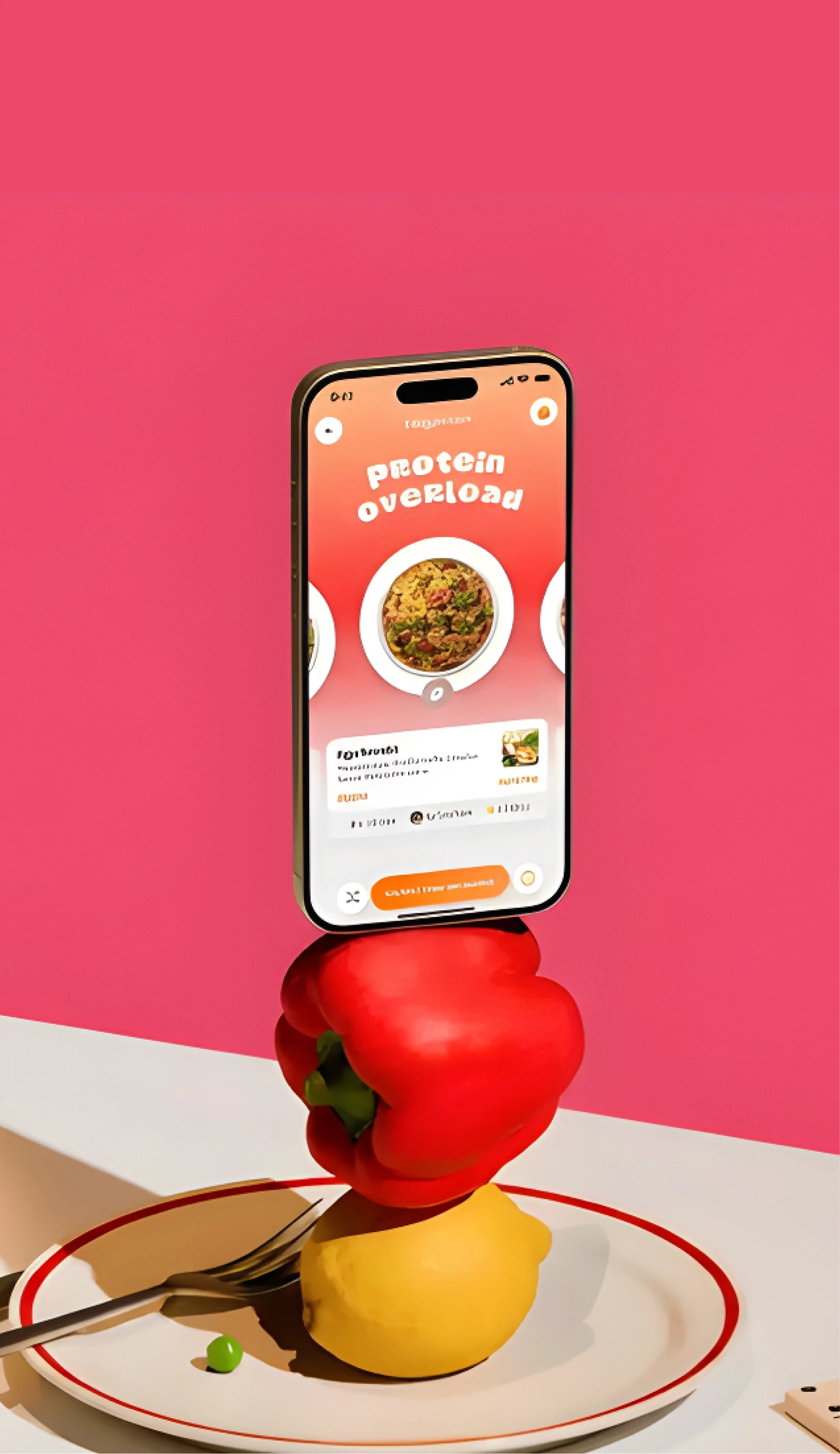
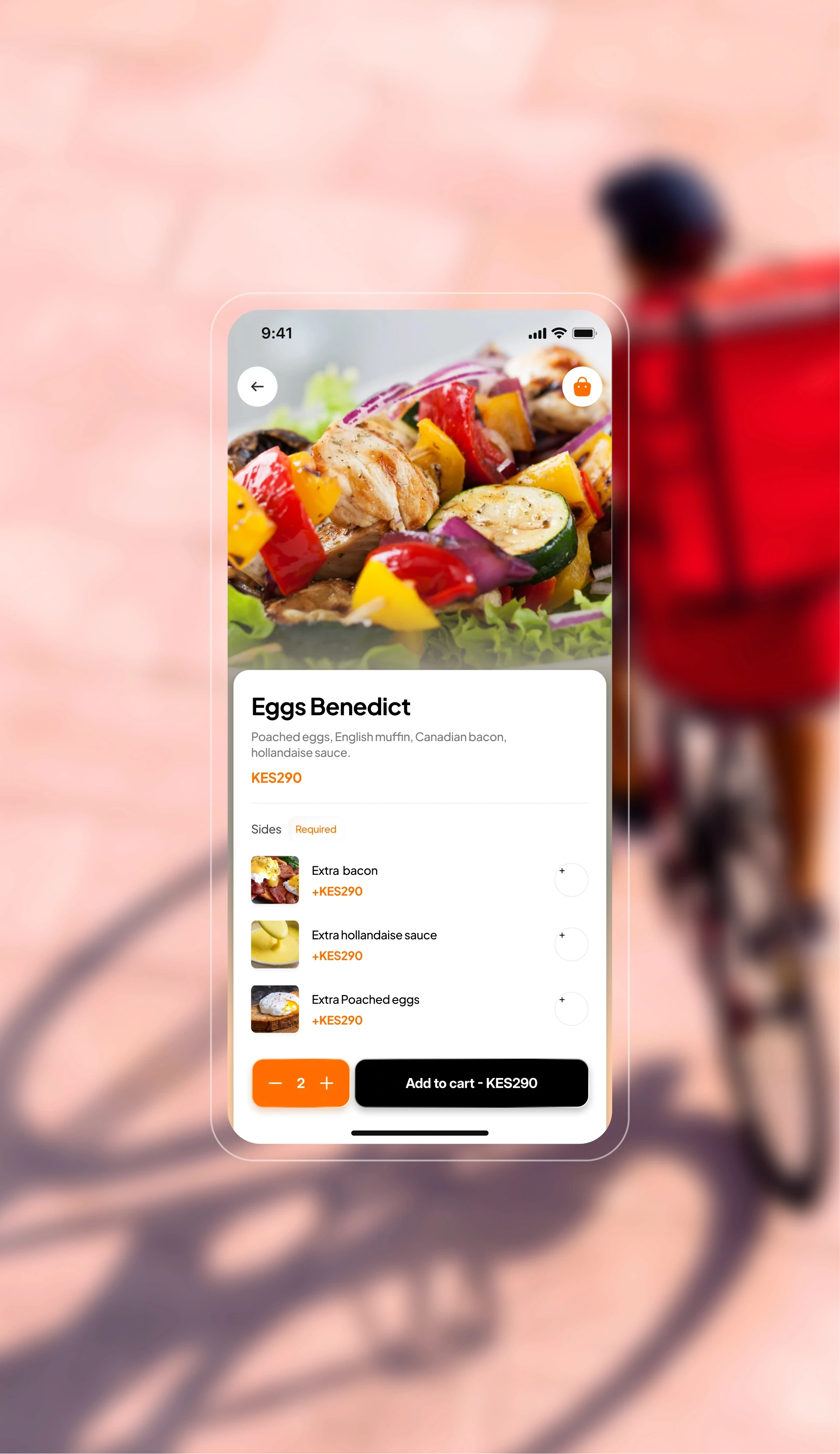
Food discovery was treated as a core problem, not a secondary feature. Many users don’t struggle to order food because of lack of options, but because they don’t know what they want in the moment. Decision fatigue, mood, and health considerations often make browsing menus feel overwhelming rather than helpful.
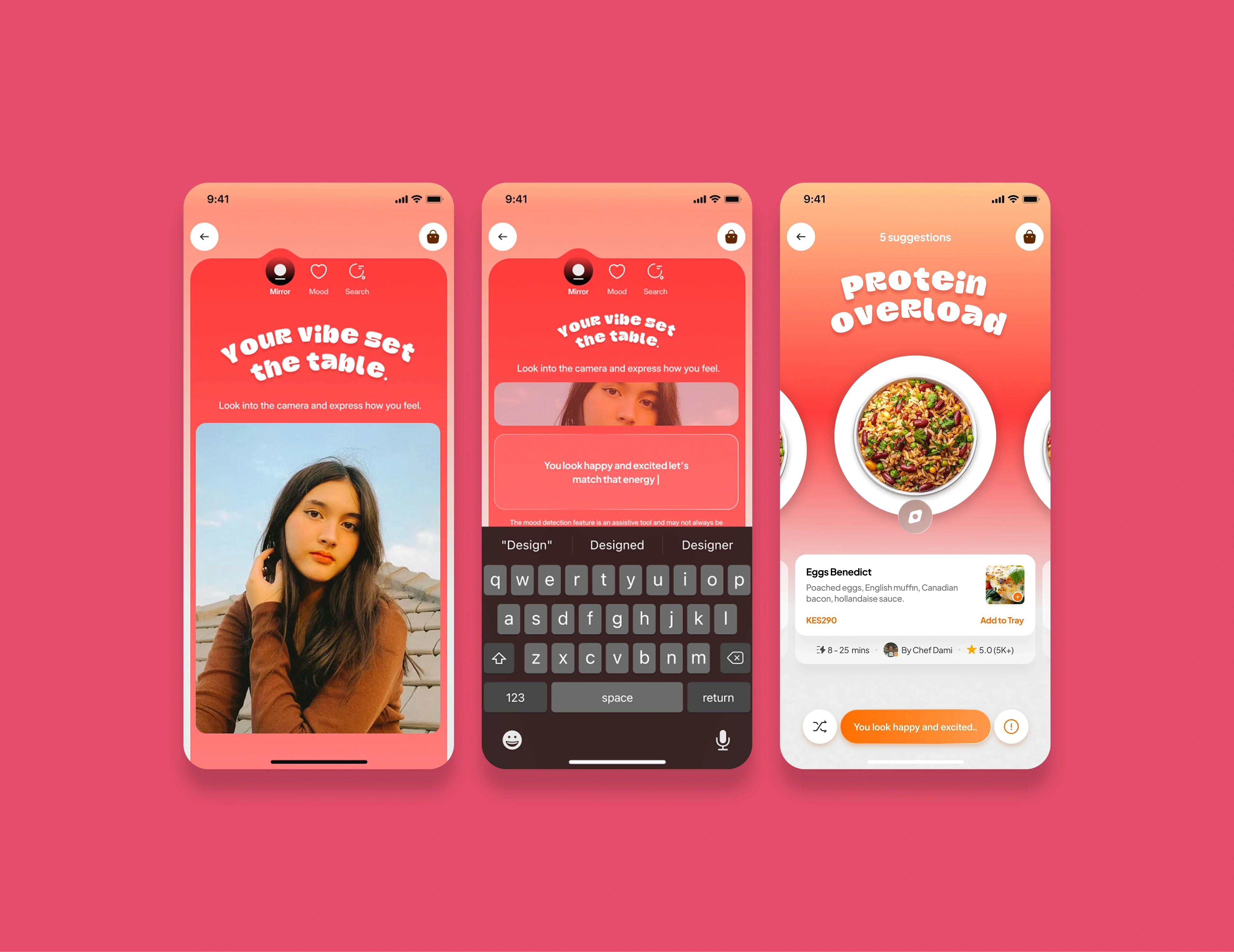
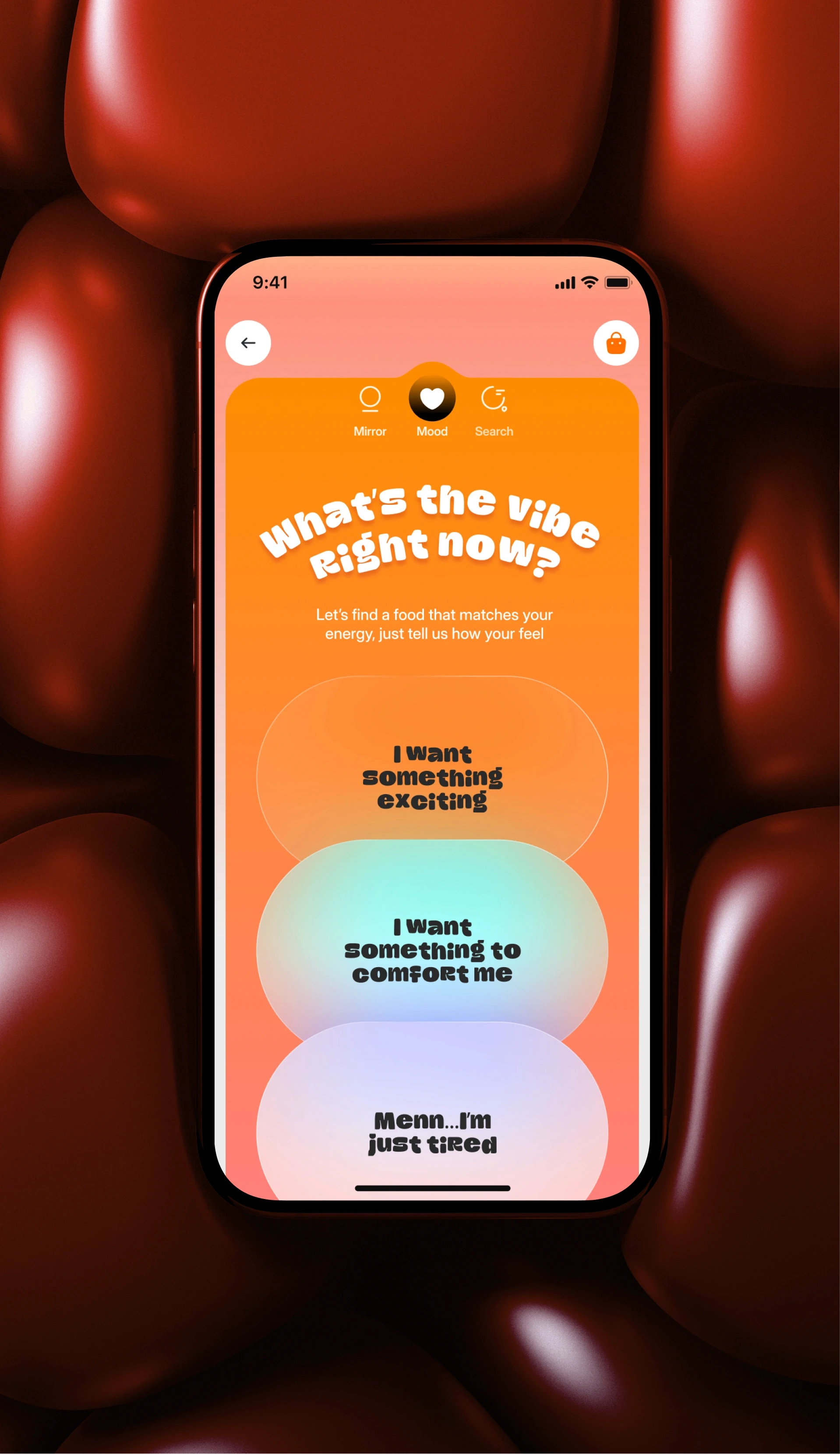
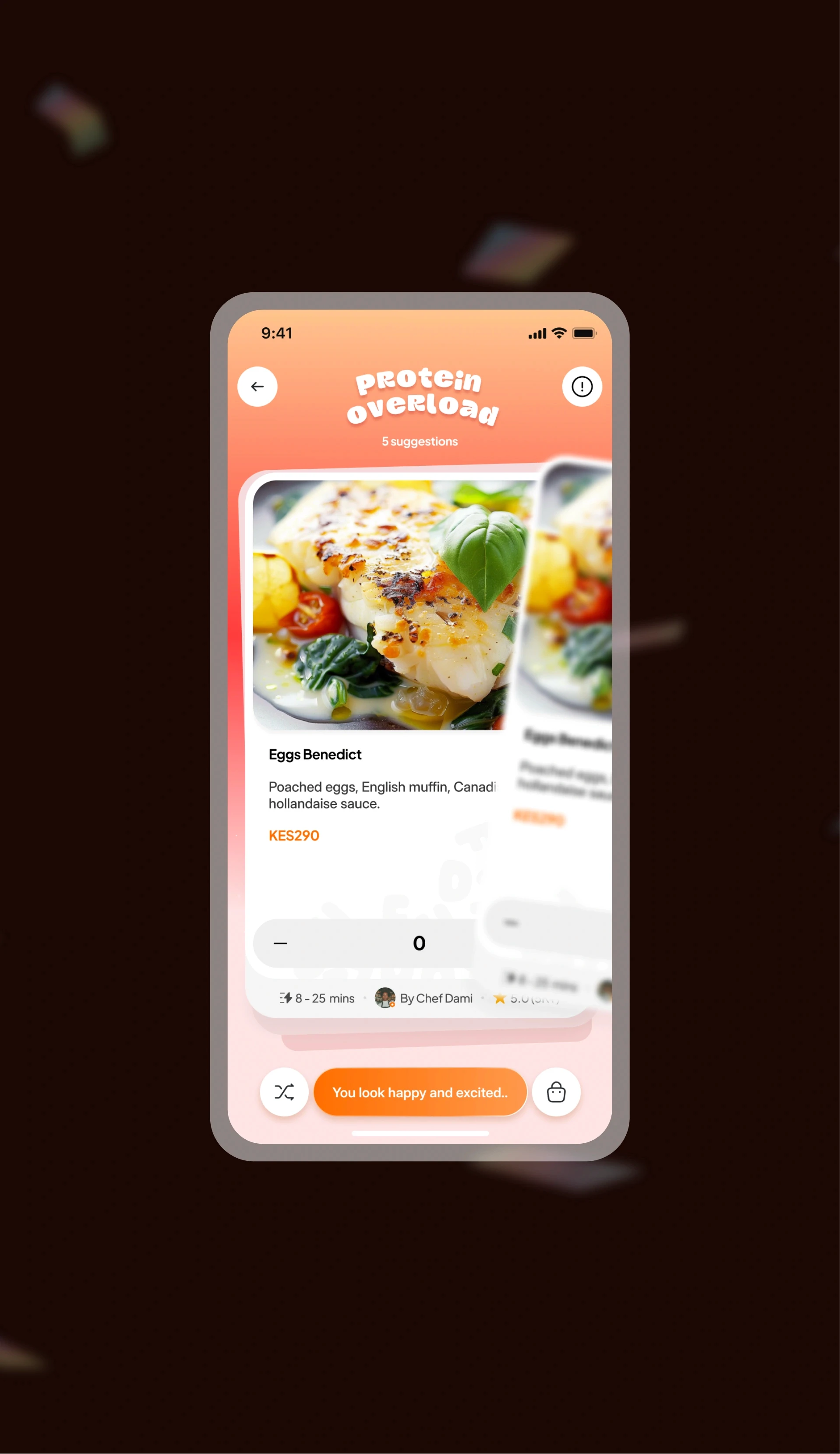
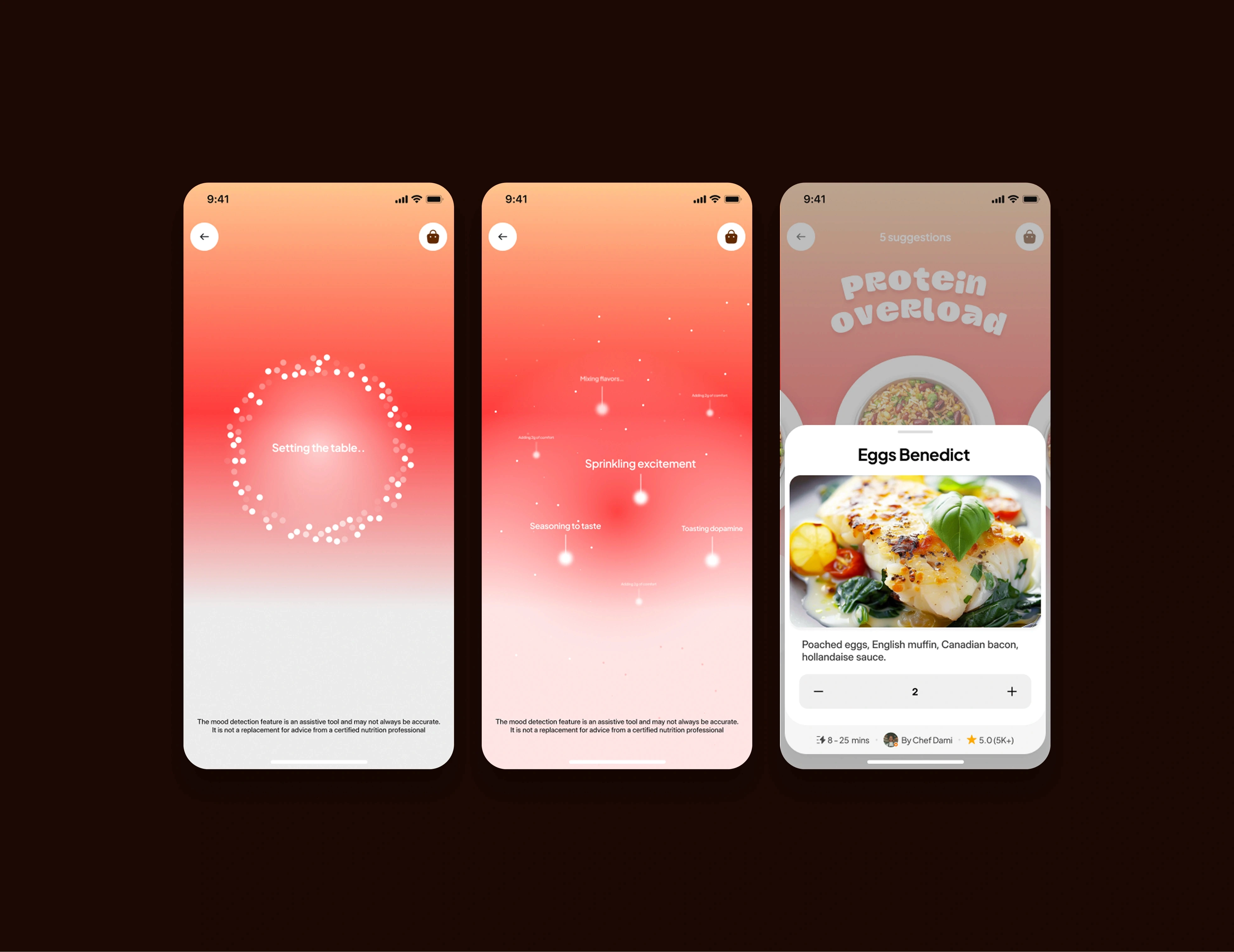
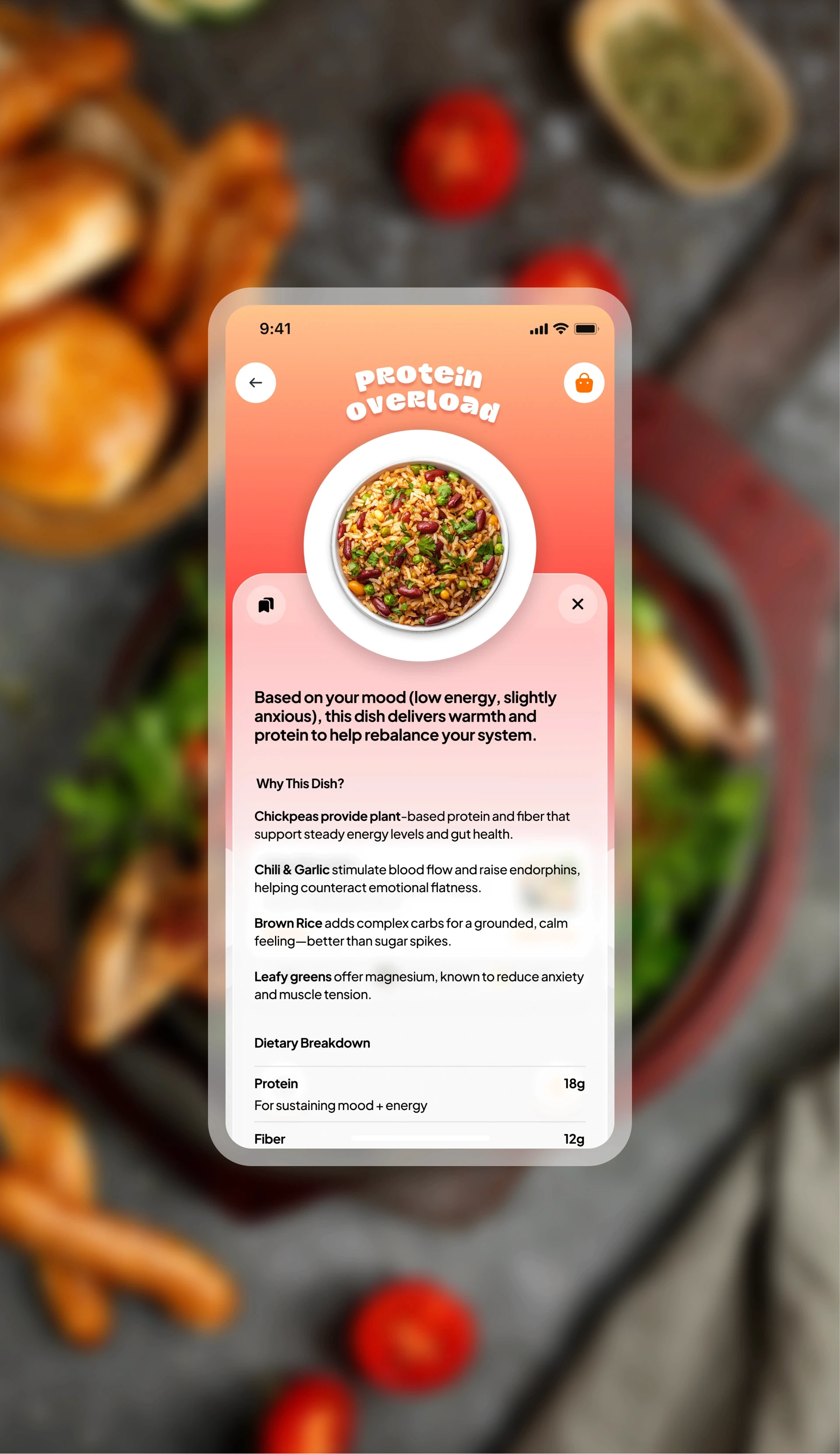
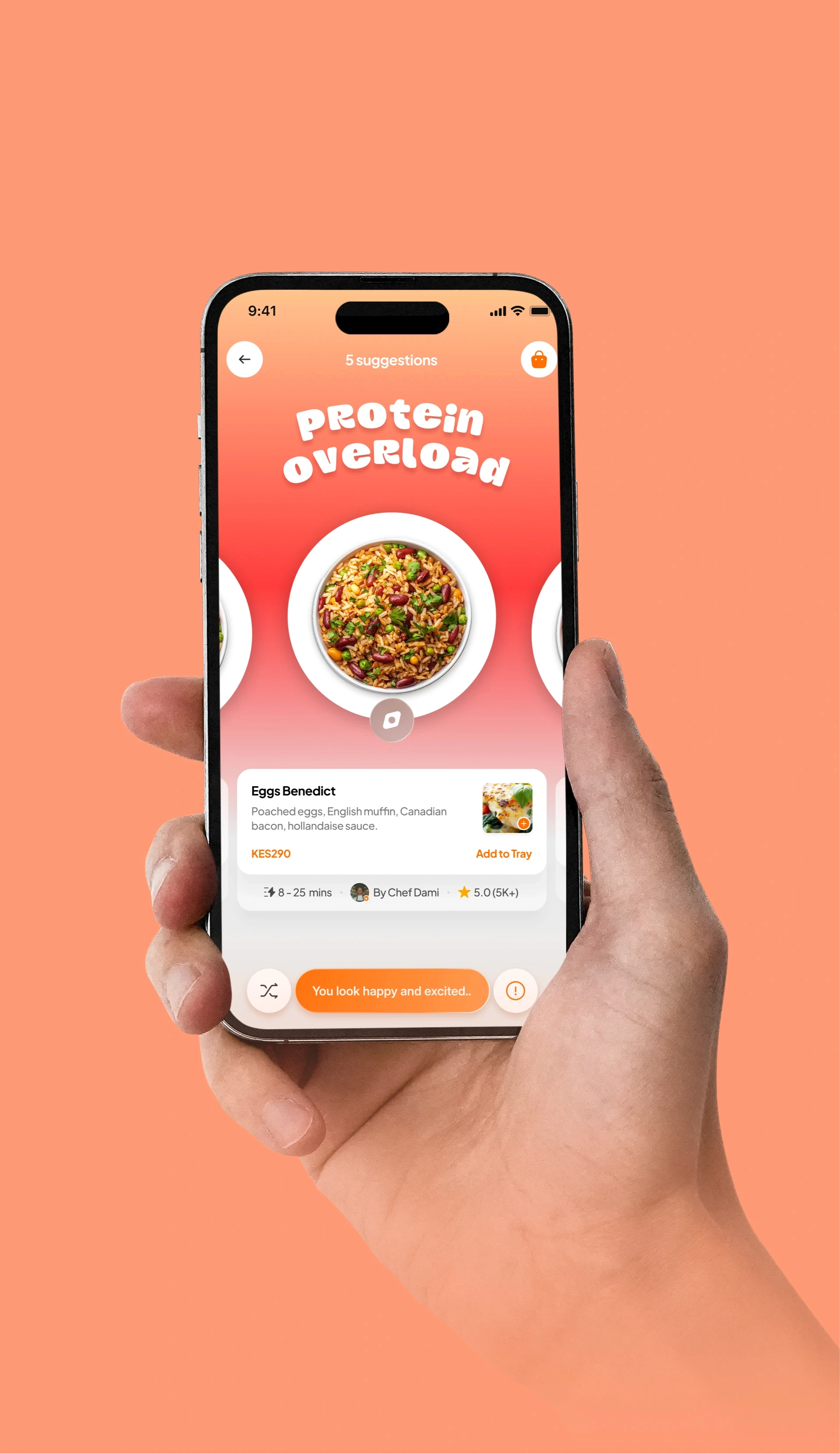
To address this, we explored an AI-assisted discovery experience that helps users decide what to eat based on context rather than endless scrolling. The system combines available user health data (when provided), such as dietary preferences or restrictions, with real-time emotional context. Users could describe how they’re feeling in natural language, or optionally allow the front camera to capture facial cues to infer emotional state. These signals are used together to generate food recommendations that feel relevant to the user’s current mindset.
Instead of presenting static lists, the experience reframes discovery as a guided suggestion process. Recommendations adapt based on mood, appetite, and personal constraints, helping users move from uncertainty to choice more quickly. This approach shifts food discovery from search-heavy behavior to a more intuitive, supportive interaction—making it easier for users to decide what to eat and increasing confidence in their selection.
Learnings
Designing for the actual operating reality of users reduces friction more than adding features.
Marketplaces fail when one side is forced into workflows designed for a different user type.
Trust can be designed through clarity and context, not just ratings and reviews.
Lowering onboarding friction is often the fastest path to activating supply.
Informal economies scale best when platforms adapt to them, not the other way around.

My Fuud
Turning Home Kitchens Into Scalable Food Businesses
About Project
MyFuud was created to solve a simple but widespread problem: talented home cooks, especially small and migrant chefs struggle to sell food beyond their immediate networks.
Existing food platforms are optimized for restaurants, not informal kitchens. This project focused on designing a marketplace that lowers the barrier to entry, accelerates vendor onboarding, and makes discovering home-cooked meals easy and trustworthy for users.
Scope
Motion design
UX/UI Design
Website
Prototyping
The Problem
Many skilled home cooks and small-scale food vendors rely on informal channels like WhatsApp and Instagram to sell meals. While these channels work for small volumes, they don’t support scale, consistency, or discovery.
Vendors struggle with visibility, order management, and trust, while customers have no reliable way to find, evaluate, or reorder from home kitchens.
At the same time, most food delivery platforms are designed around restaurant operations complex onboarding, strict requirements, and workflows that exclude non-commercial kitchens. This creates a gap where demand for affordable, home-cooked meals exists, but supply remains fragmented and difficult to access.
Research & Insights
Existing food marketplaces prioritize restaurant-grade operations, assuming vendors have standardized menus, physical locations, and formal registrations. In contrast, home cooks operate with limited resources, flexible menus, and small batch production. This mismatch makes traditional onboarding flows unnecessarily complex and discouraging.
We also observed that discovery in informal food selling is relationship-based rather than search-based. Customers often buy because they trust the cook, not because of polished branding. This highlighted the need for a system that builds trust quickly without imposing heavy operational overhead.
The core insight was clear: enabling scale for home kitchens isn’t about adding more features it’s about removing friction and designing around how these vendors already operate.
How it was solved
The solution centered on simplifying both sides of the marketplace.
Vendor onboarding was designed to be lightweight, allowing home cooks to go live without restaurant-level setup. The product focused on essentials—menu creation, availability, and order flow—without forcing unnecessary operational complexity.
On the user side, discovery was optimized to surface relevant vendors quickly, making it easy to find nearby home kitchens and understand what they offer. The experience emphasized clarity and trust rather than overwhelming users with options.
By treating home kitchens as a first-class use case not an edge case the platform enabled vendors to sell consistently while giving users a reliable way to access home-cooked meals.
Food Discovery & Personalization
Food discovery was treated as a core problem, not a secondary feature. Many users don’t struggle to order food because of lack of options, but because they don’t know what they want in the moment. Decision fatigue, mood, and health considerations often make browsing menus feel overwhelming rather than helpful.
To address this, we explored an AI-assisted discovery experience that helps users decide what to eat based on context rather than endless scrolling. The system combines available user health data (when provided), such as dietary preferences or restrictions, with real-time emotional context. Users could describe how they’re feeling in natural language, or optionally allow the front camera to capture facial cues to infer emotional state. These signals are used together to generate food recommendations that feel relevant to the user’s current mindset.
Instead of presenting static lists, the experience reframes discovery as a guided suggestion process. Recommendations adapt based on mood, appetite, and personal constraints, helping users move from uncertainty to choice more quickly. This approach shifts food discovery from search-heavy behavior to a more intuitive, supportive interaction—making it easier for users to decide what to eat and increasing confidence in their selection.