Idle Finance
Turning idle system resources into redeemable value
About Project
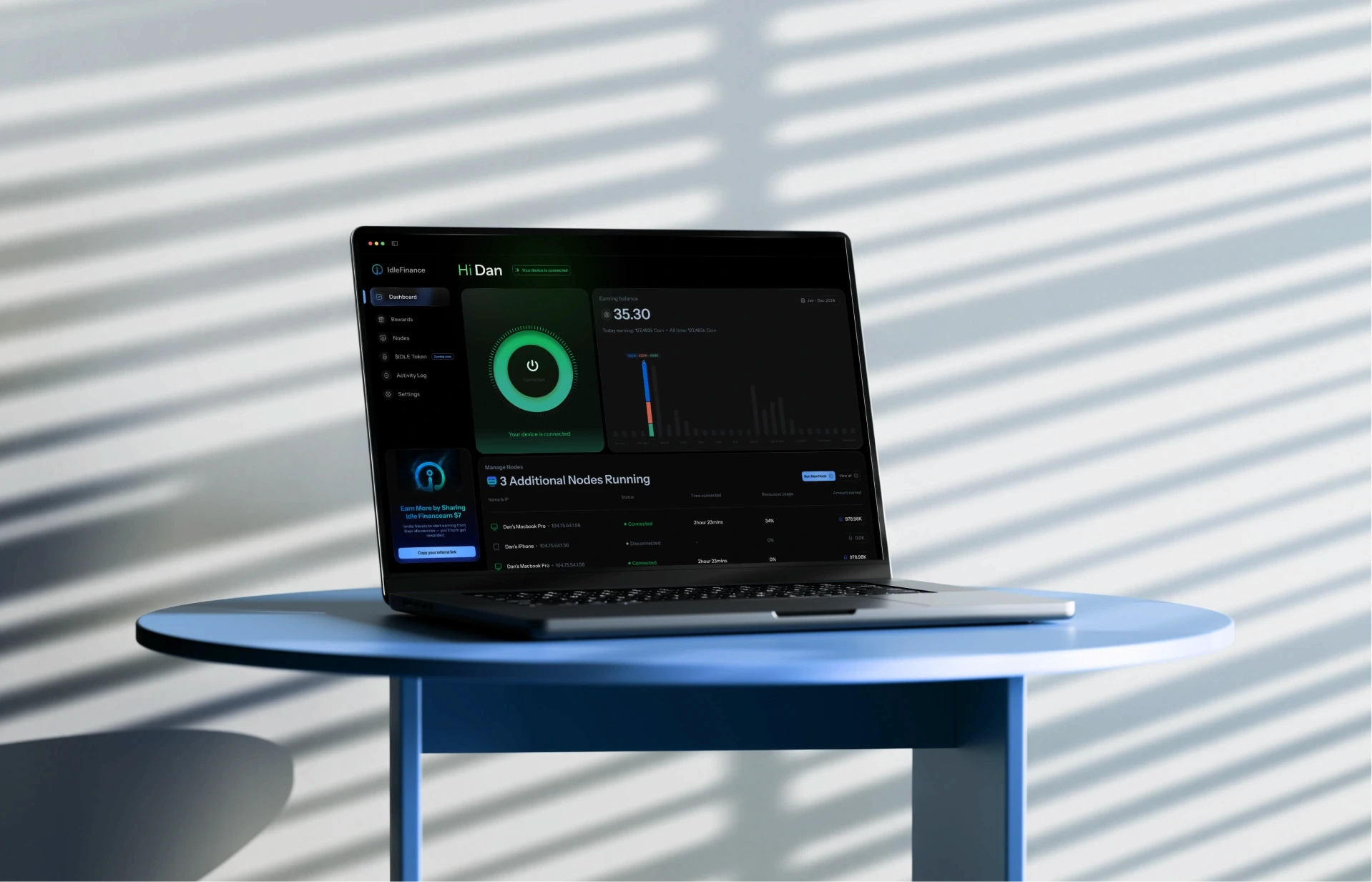
Idle Finance explored how unused system resources could be transformed into redeemable coins, using a dashboard designed to feel fun, lightweight, and instantly understandable so users stay in control without feeling like they’re managing a financial tool
Motion design
UX/UI Design
Website
Prototyping
The Problem
Users had idle system resources but no simple or engaging way to turn them into value.
Many users run systems that sit underutilized for long periods, but existing tools that attempt to monetize or optimize these resources often feel technical, opaque, or overly serious. This creates hesitation and low engagement, especially for first-time users who want clarity, control, and reassurance before allowing their system resources to be used.
Research & Insights
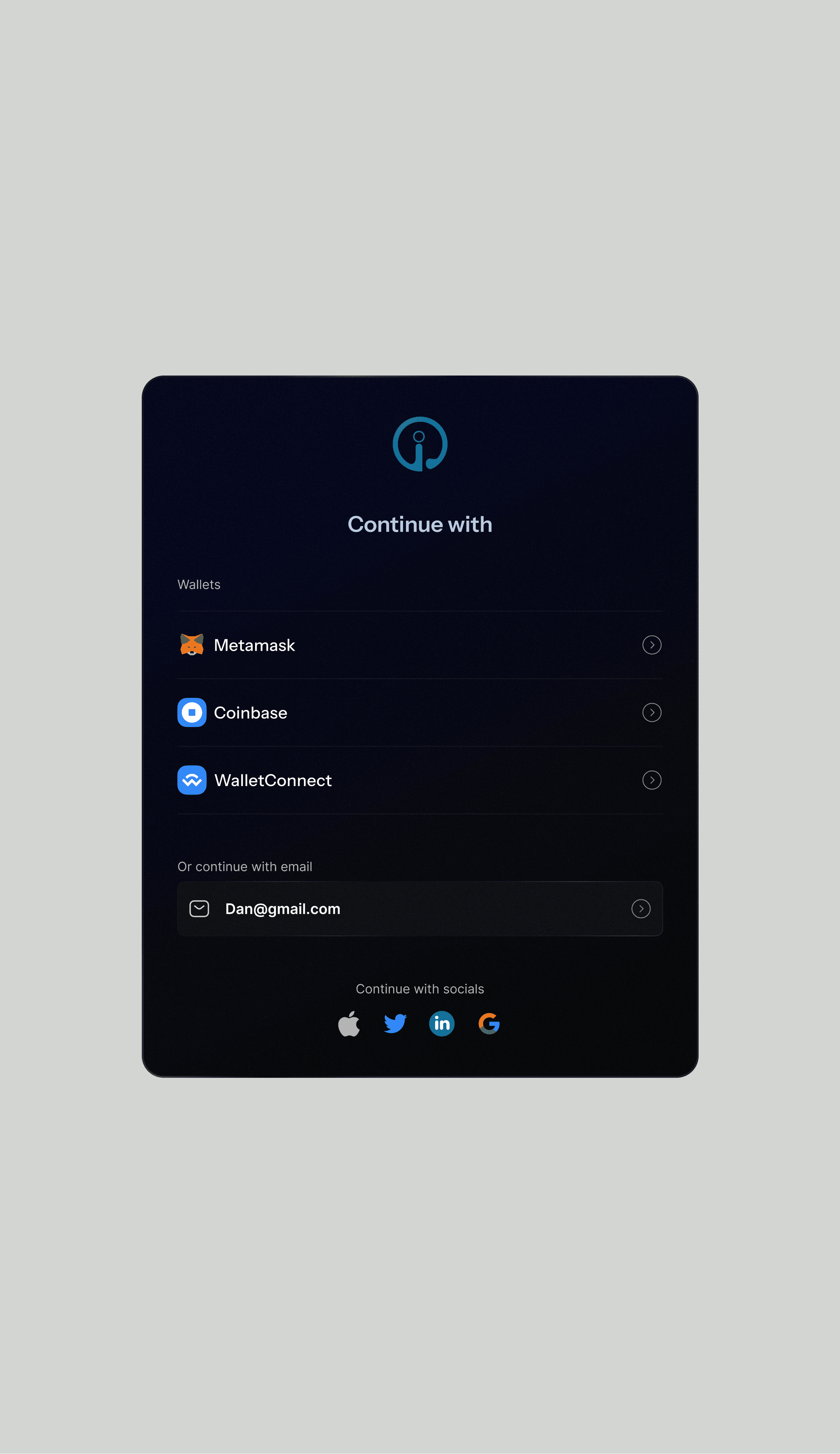
Most products in this space leaned heavily on technical metrics, complex charts, or long setup flows, which made the experience feel intimidating rather than inviting. A clear gap emerged: users wanted to know three things immediately whether their system was eligible, how much they were earning, and how easily they could stop or start the process. Anything beyond that was secondary.
How it was solved
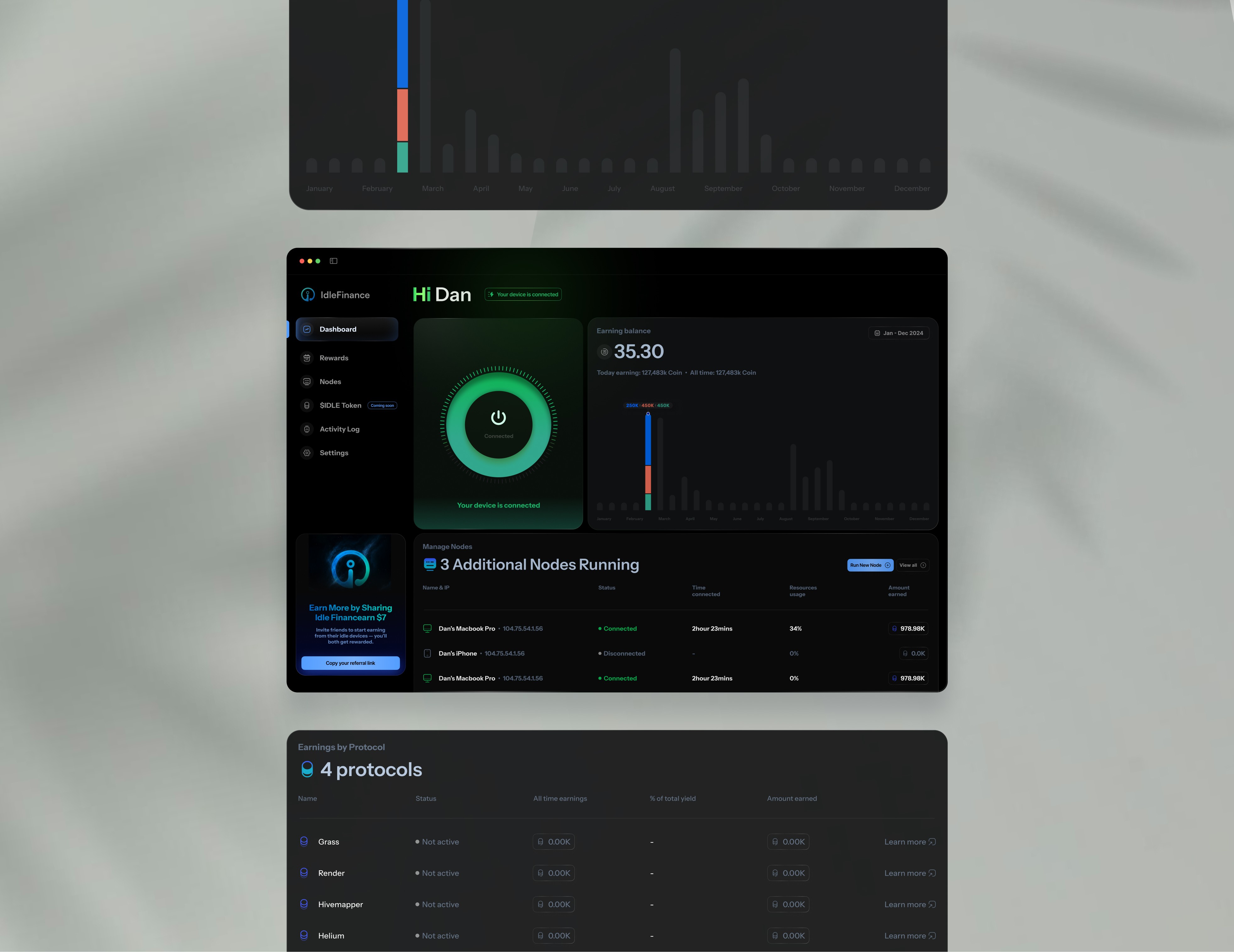
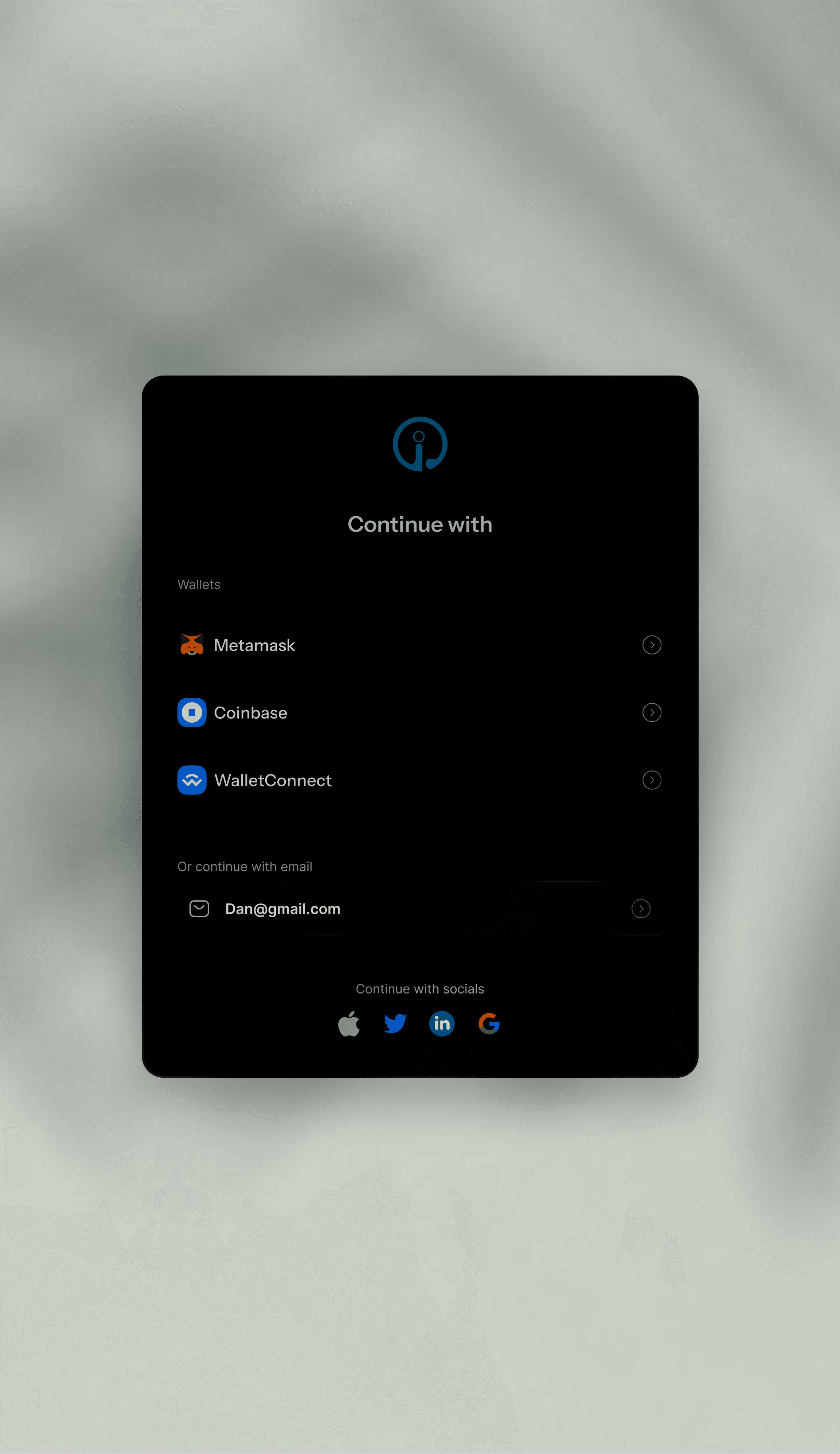
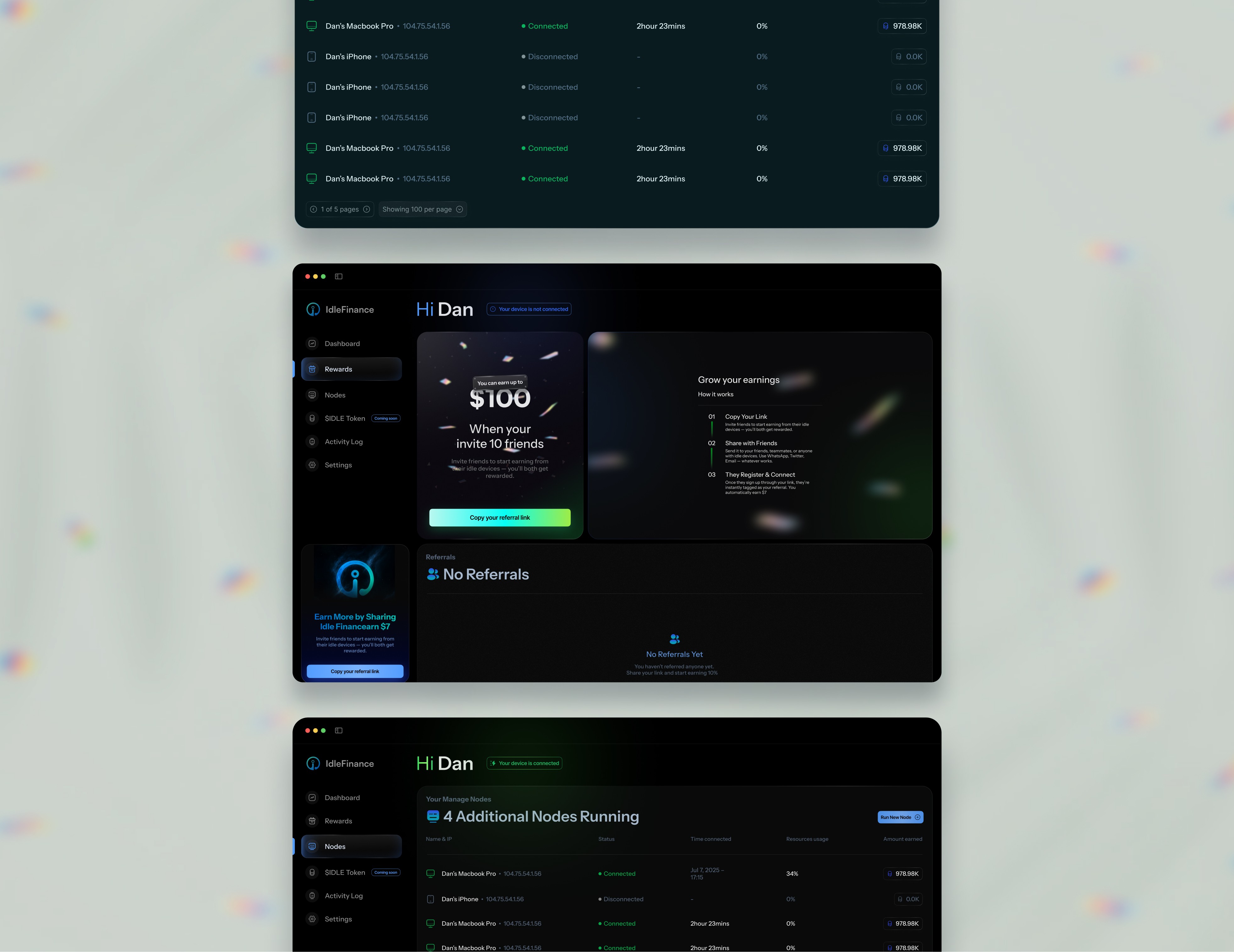
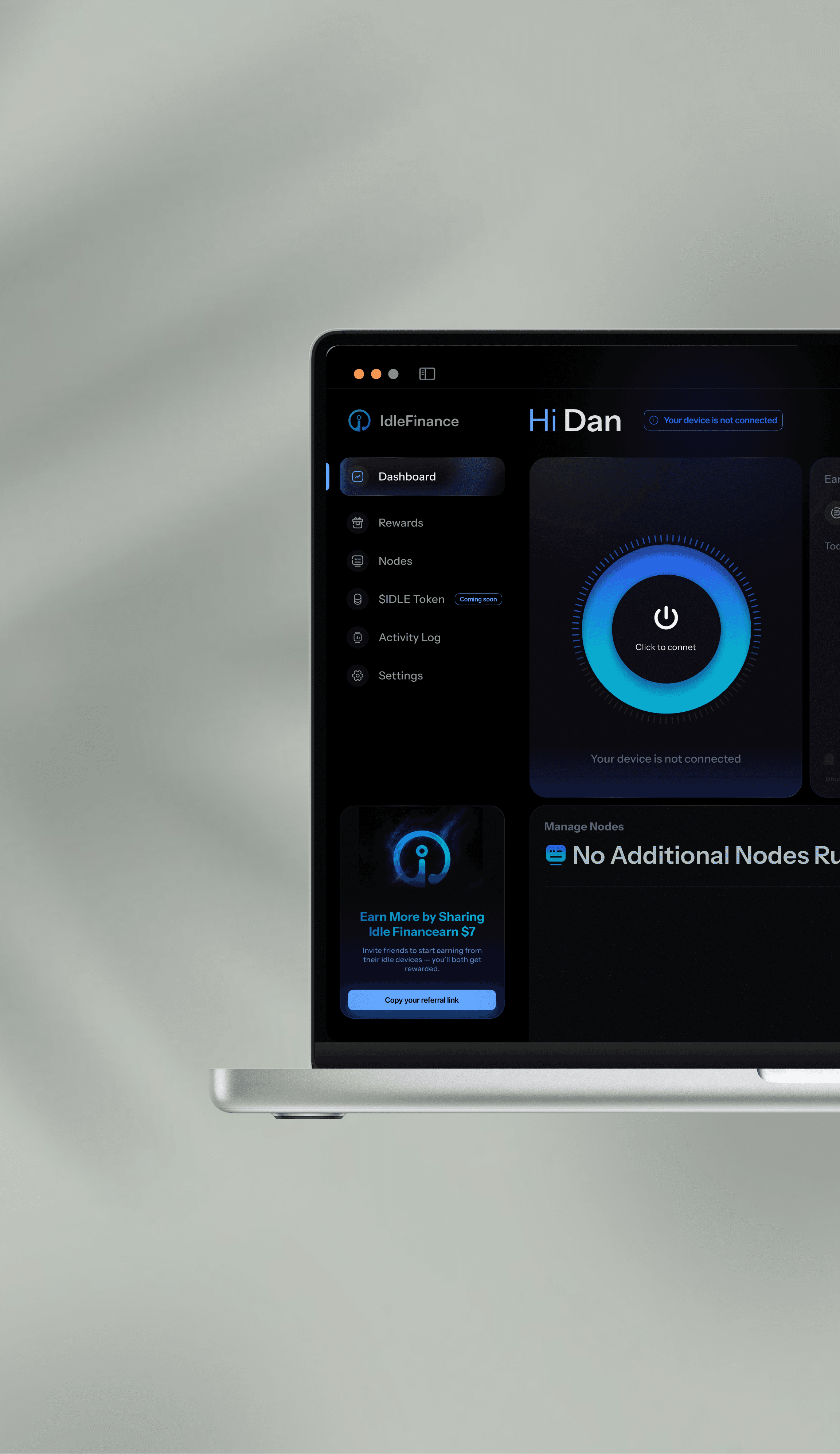
The product was designed around a dashboard-first approach, prioritizing clarity, playfulness, and instant control. The on/off switch became the primary interaction, giving users immediate authority over when their system resources are active. On first use, this switch also communicates whether the user’s system meets the required criteria, removing uncertainty upfront.
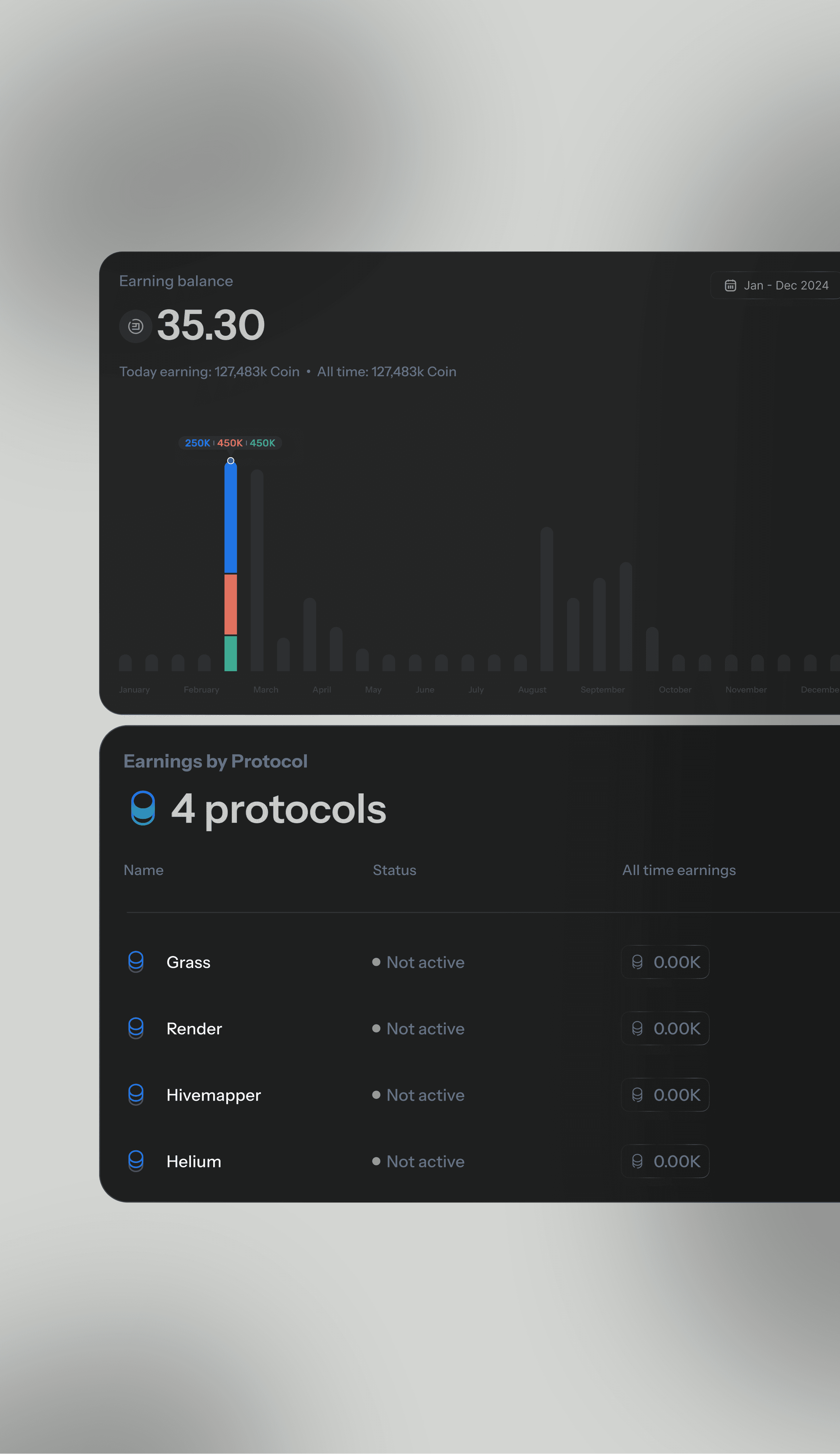
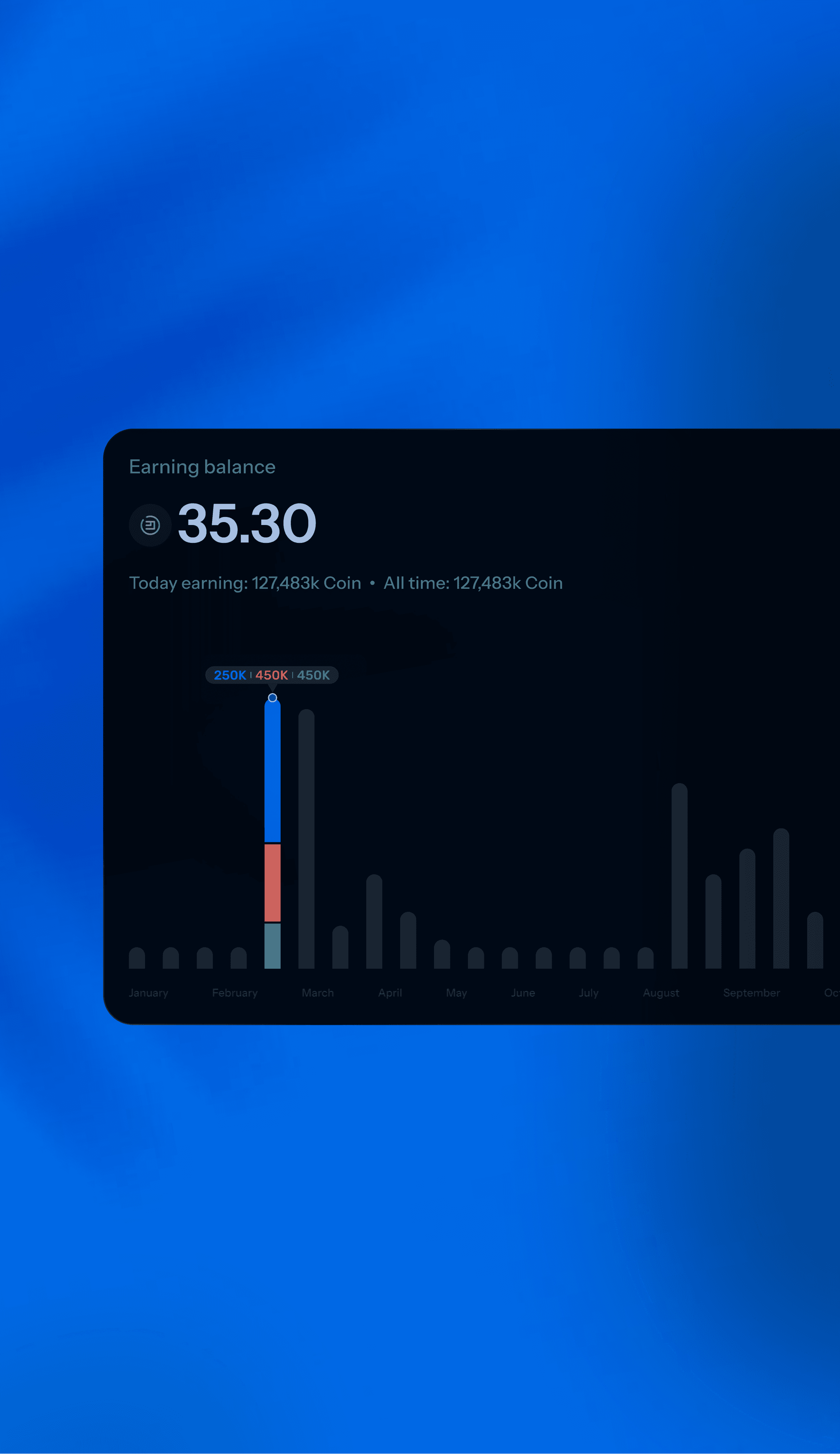
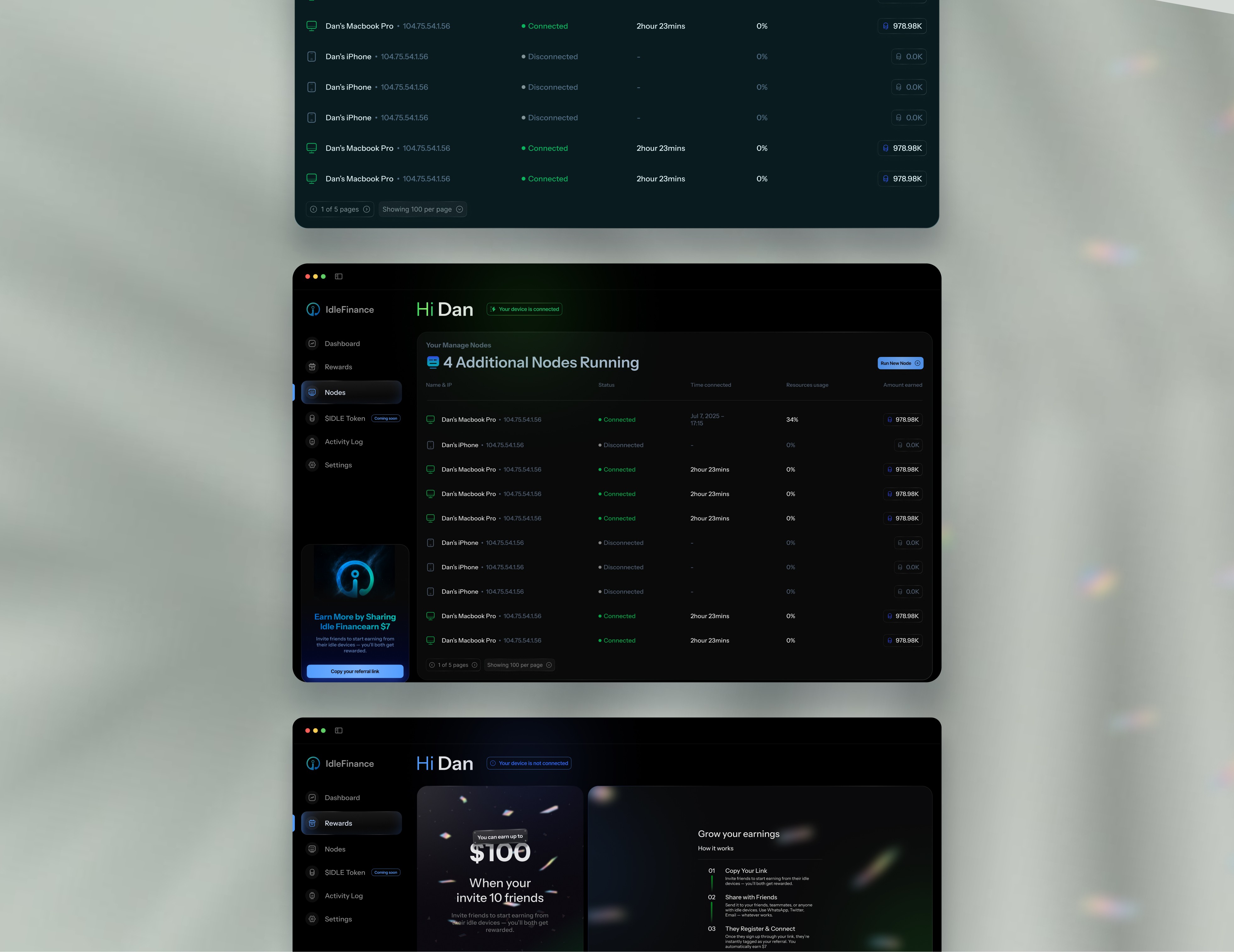
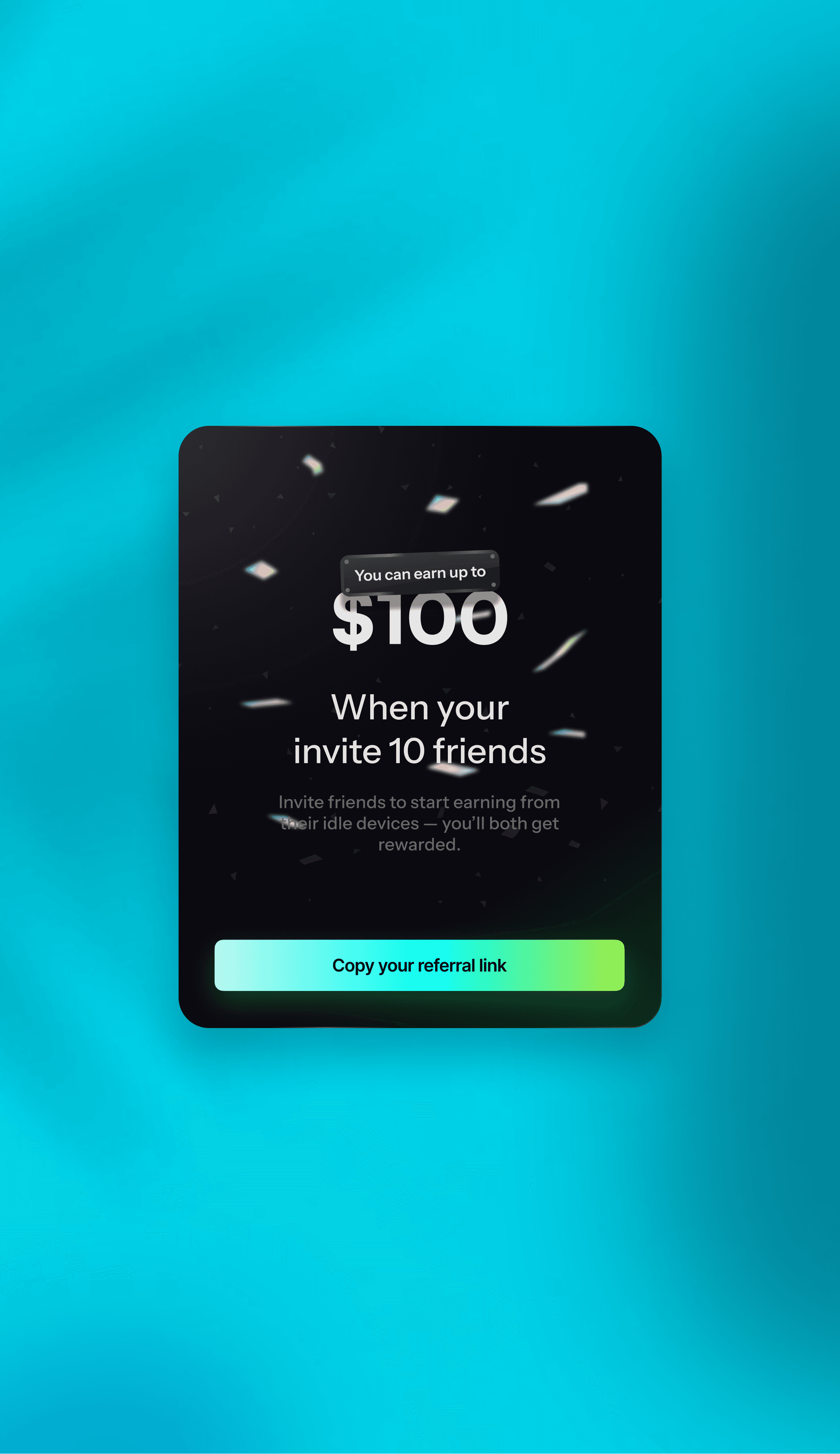
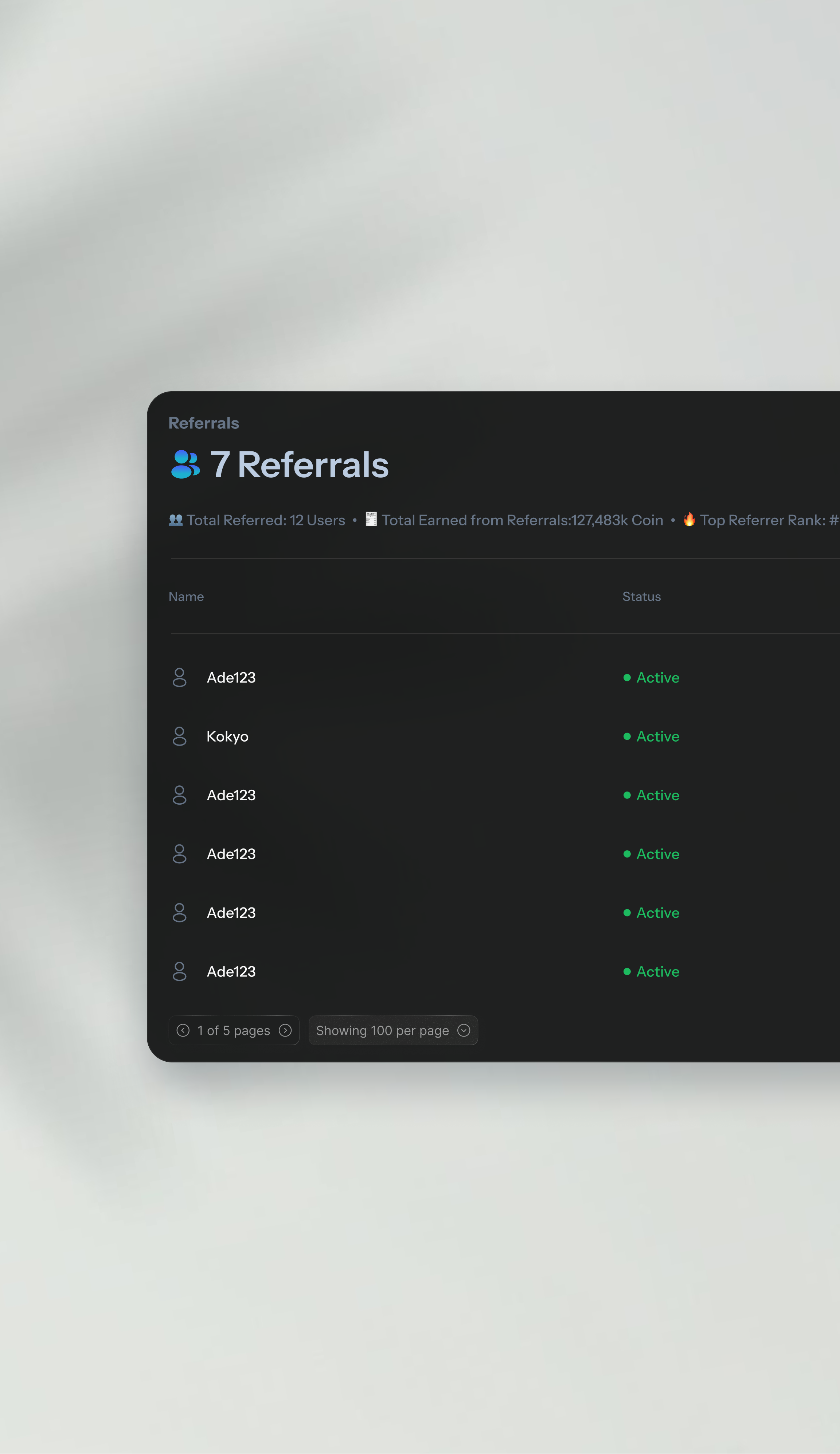
Earnings were surfaced as a redeemable coin balance rather than abstract metrics, reinforcing a sense of reward and progress. Visual hierarchy was used to highlight what matters most at any moment—current earning status, total coins earned, and system eligibility—while keeping the rest of the interface intentionally minimal. Subtle motion and friendly feedback were introduced to make the experience feel more like interacting with a game than managing infrastructure.
Impacts
Users engage more when value is framed as a reward, not a system metric
Immediate control builds trust in passive or background processes
A single, clear primary action can replace complex onboarding flows
Making utility feel playful increases willingness to experiment
Other Projects


Idle Finance
Turning idle system resources into redeemable value
About Project
Idle Finance explored how unused system resources could be transformed into redeemable coins, using a dashboard designed to feel fun, lightweight, and instantly understandable so users stay in control without feeling like they’re managing a financial tool
Motion design
UX/UI Design
Website
Prototyping
The Problem
Users had idle system resources but no simple or engaging way to turn them into value.
Many users run systems that sit underutilized for long periods, but existing tools that attempt to monetize or optimize these resources often feel technical, opaque, or overly serious. This creates hesitation and low engagement, especially for first-time users who want clarity, control, and reassurance before allowing their system resources to be used.
Research & Insights
Most products in this space leaned heavily on technical metrics, complex charts, or long setup flows, which made the experience feel intimidating rather than inviting. A clear gap emerged: users wanted to know three things immediately whether their system was eligible, how much they were earning, and how easily they could stop or start the process. Anything beyond that was secondary.
How it was solved
The product was designed around a dashboard-first approach, prioritizing clarity, playfulness, and instant control. The on/off switch became the primary interaction, giving users immediate authority over when their system resources are active. On first use, this switch also communicates whether the user’s system meets the required criteria, removing uncertainty upfront.
Earnings were surfaced as a redeemable coin balance rather than abstract metrics, reinforcing a sense of reward and progress. Visual hierarchy was used to highlight what matters most at any moment—current earning status, total coins earned, and system eligibility—while keeping the rest of the interface intentionally minimal. Subtle motion and friendly feedback were introduced to make the experience feel more like interacting with a game than managing infrastructure.