Flight tracker
Making Flight Price Tracking Predictable and Fun
About Project

Flight Tracker started as a personal travel problem: existing tools like Google Flights are powerful but overly analytical, passive, and emotionally flat. While they predict prices, they don’t help travelers act at the right moment or enjoy the experience of planning. This project explored how price tracking could become more proactive, more human, and more engaging by combining alert-based decision support with a playful, immersive flight experience.
Motion design
UX/UI Design
Website
Prototyping
The Problem
Travelers who want to plan trips around price fluctuations rely heavily on tools like Google Flights, which provide graphs, predictions, and historical data. However, these tools are largely passive: users must repeatedly check prices, interpret graphs, and decide for themselves when to act. There is no clear, user-defined trigger that says “now is the moment.”
Additionally, the experience of tracking flights is purely functional. It’s reduced to charts and lists, offering no sense of movement, progress, or excitement despite travel being an emotional, aspirational activity. This creates a gap between powerful data and meaningful user engagement, especially for frequent travelers who want both control and clarity.
Research & Insights
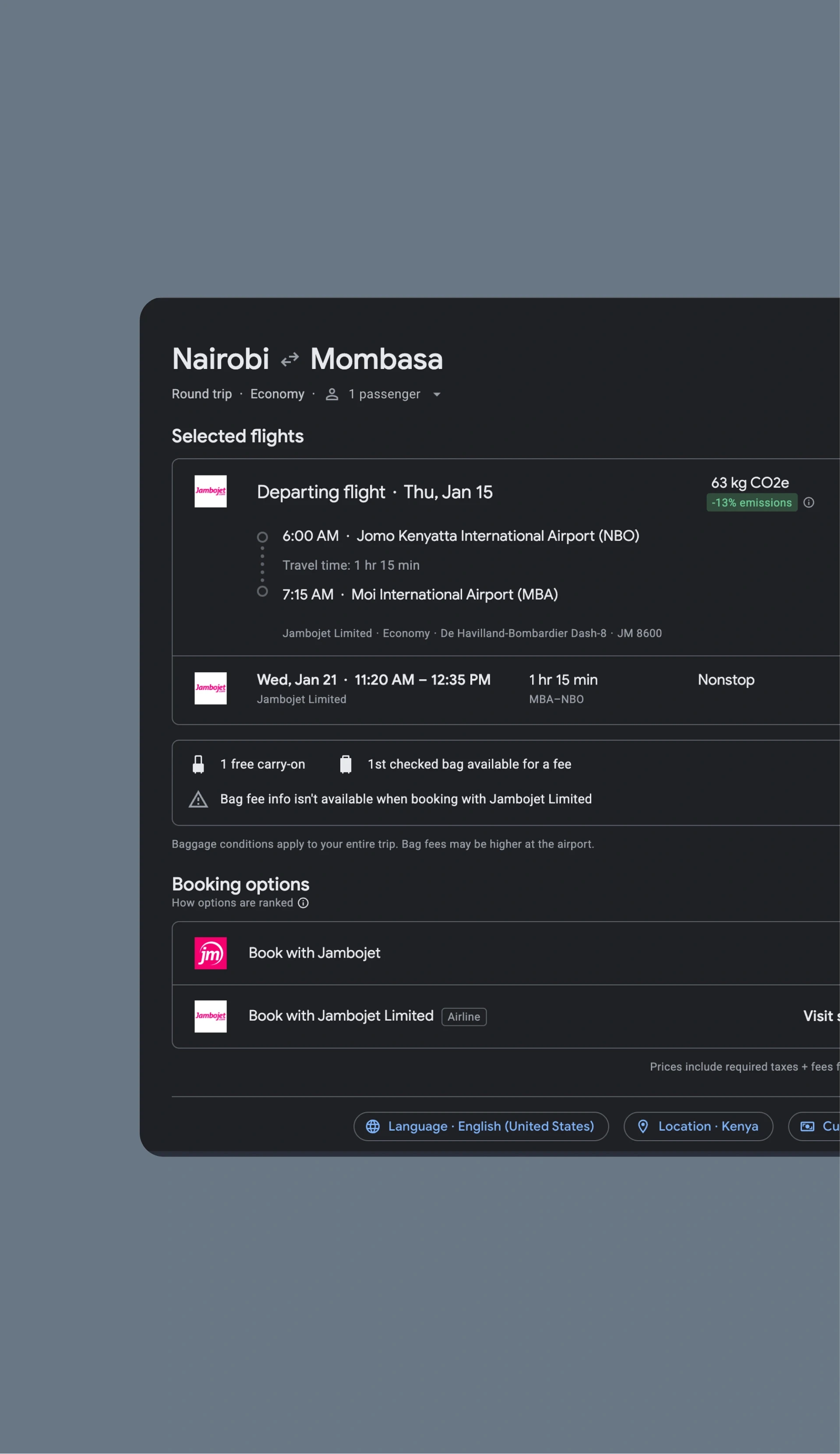
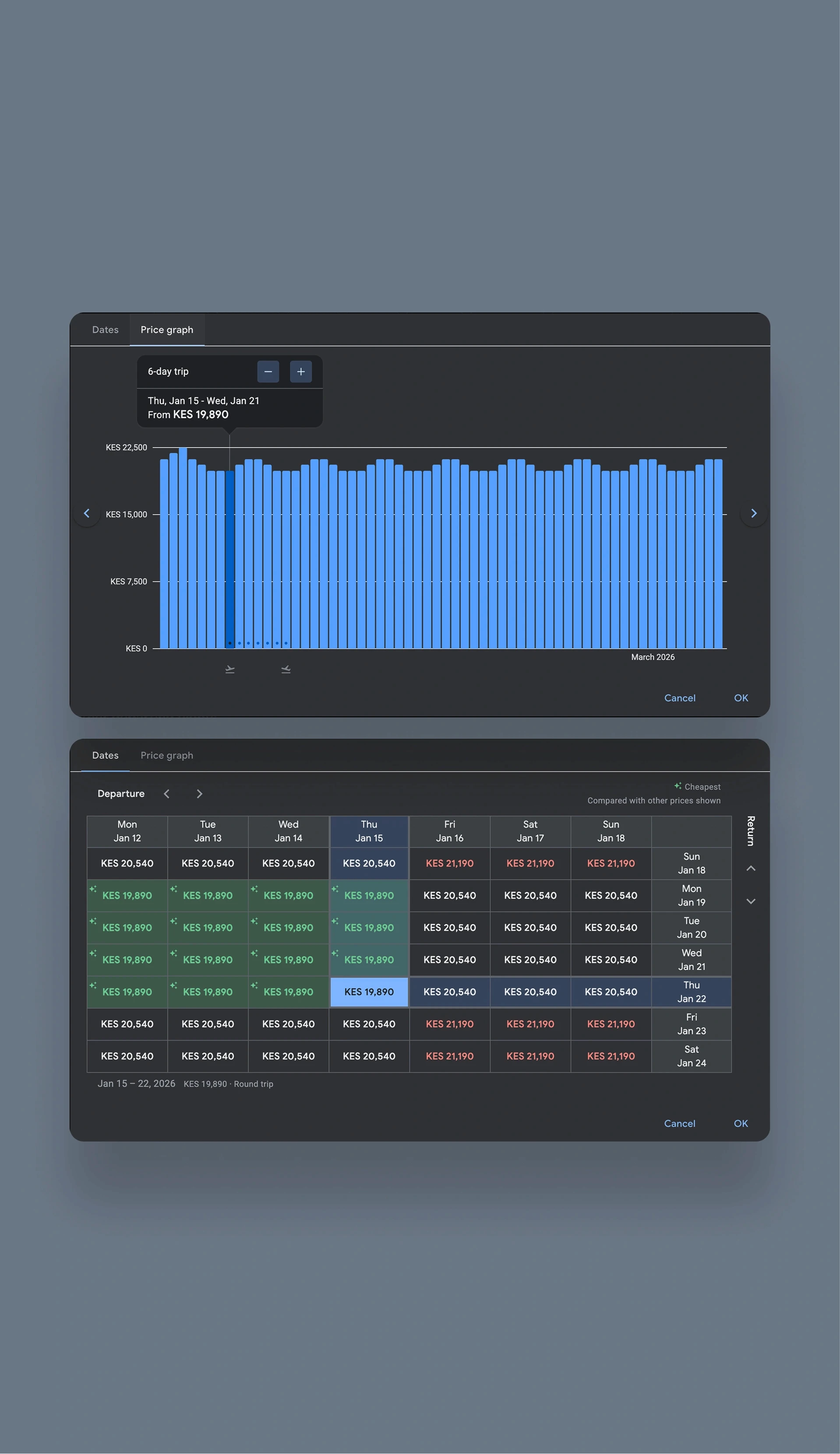
This project was driven primarily by self-observation, competitive analysis, and pattern recognition rather than large-scale user studies. We closely examined existing flight-tracking platforms, with Google Flights as the dominant reference point, to understand how travelers currently monitor prices and make booking decisions.
Across these platforms, price tracking is largely built around historical graphs, trend lines, and algorithmic predictions. While informative, this approach requires users to repeatedly check prices and interpret data themselves. Alerts, when available, tend to be generic and disconnected from personal price expectations. Interfaces are optimized for data density and accuracy, but offer little emotional engagement or sense of progress, despite travel being an inherently aspirational activity.
From these observations, we inferred that travelers don’t just need better predictions—they need clearer signals that tell them when to act. Repeatedly analyzing charts increases decision fatigue, especially for users tracking multiple routes over time. The absence of personalized triggers forces users into a passive monitoring loop, which delays decisions and adds cognitive load.
This led to a key insight: the core problem wasn’t a lack of price data, but a lack of timely, personalized action cues paired with an engaging experience. Reframing the problem this way shifted the opportunity from building better forecasts to designing for better decision timing and a more human, emotionally
How it was solved
The solution focused on two parallel goals: decision clarity and experiential delight.
Price Threshold Alerts
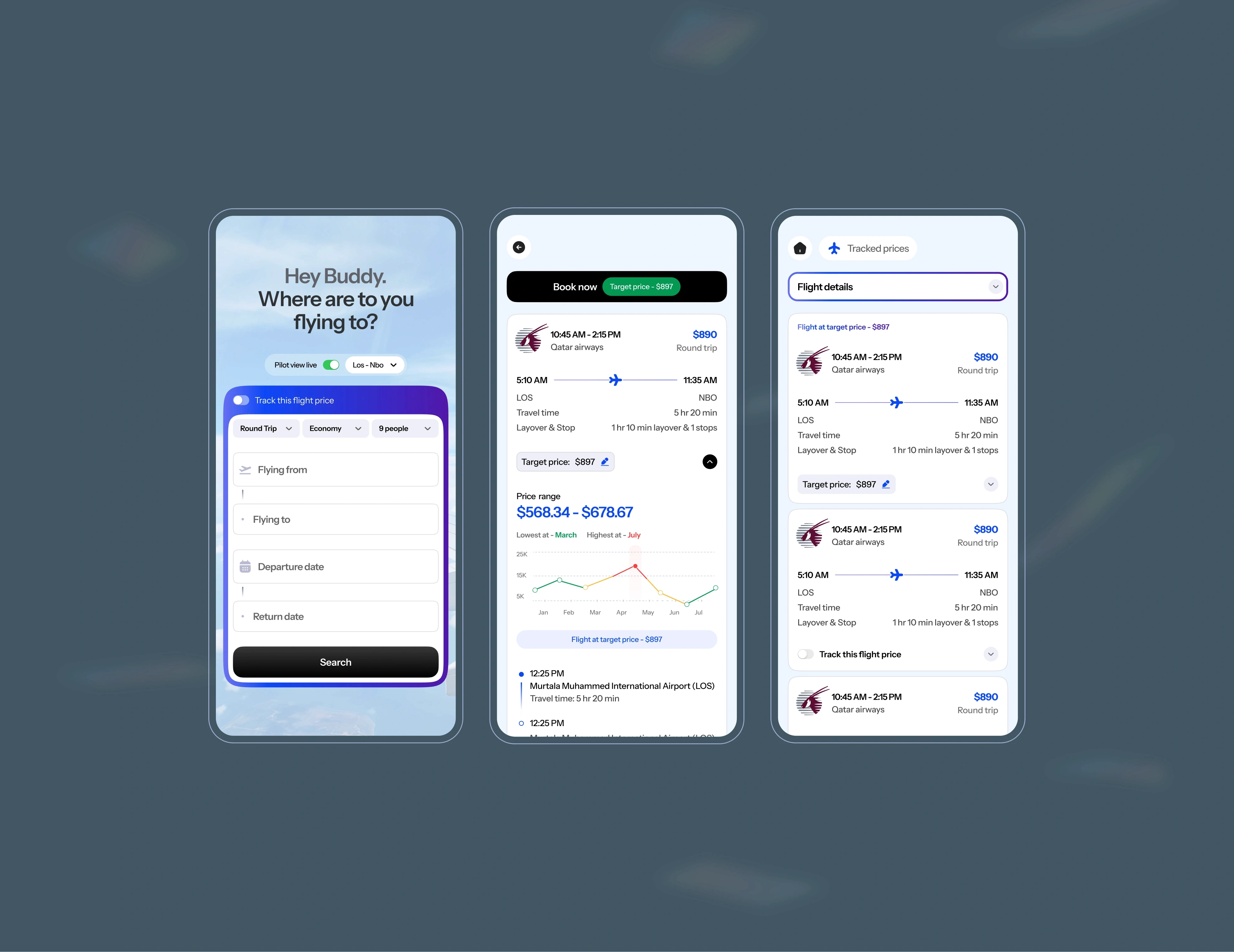
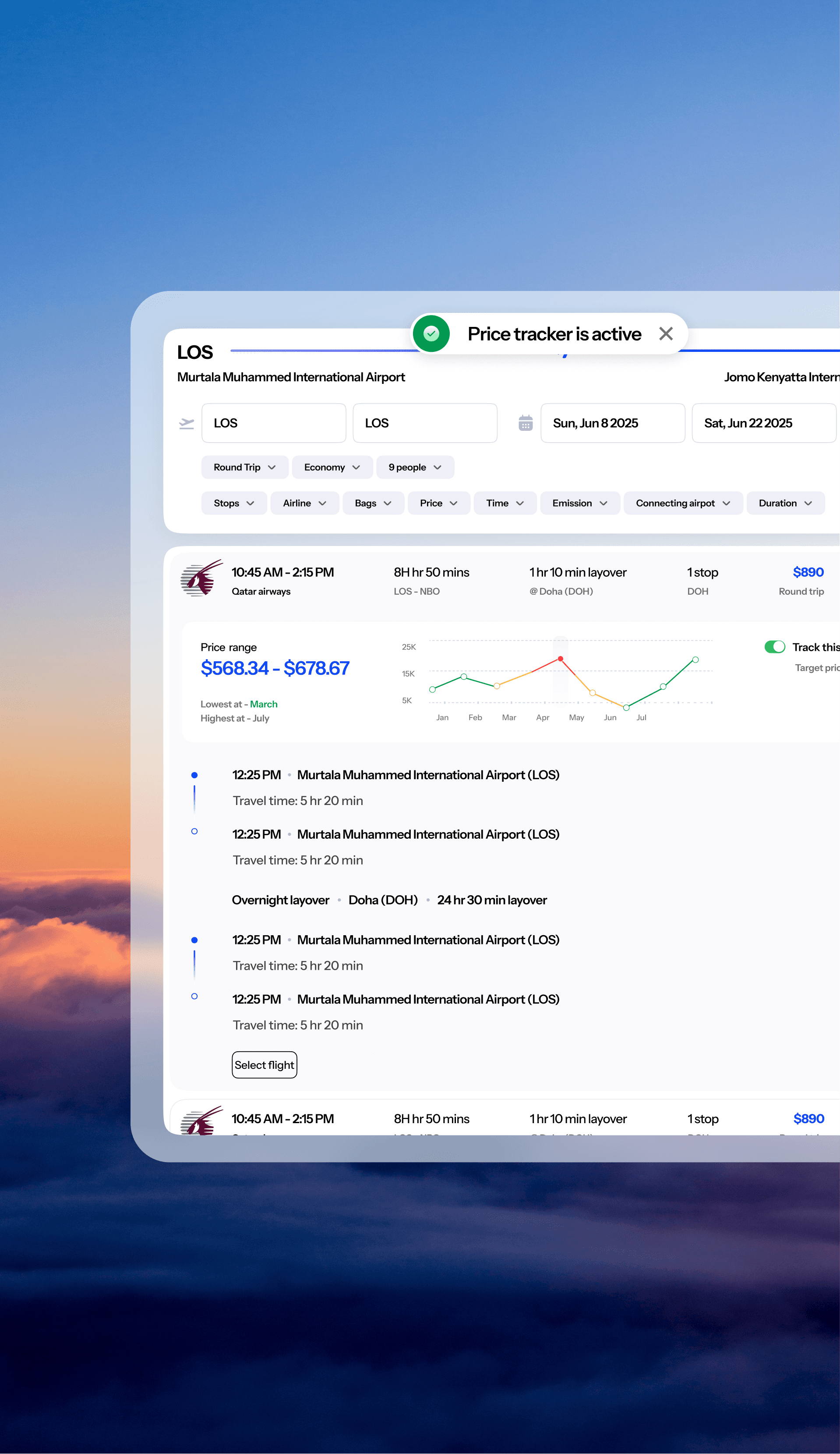
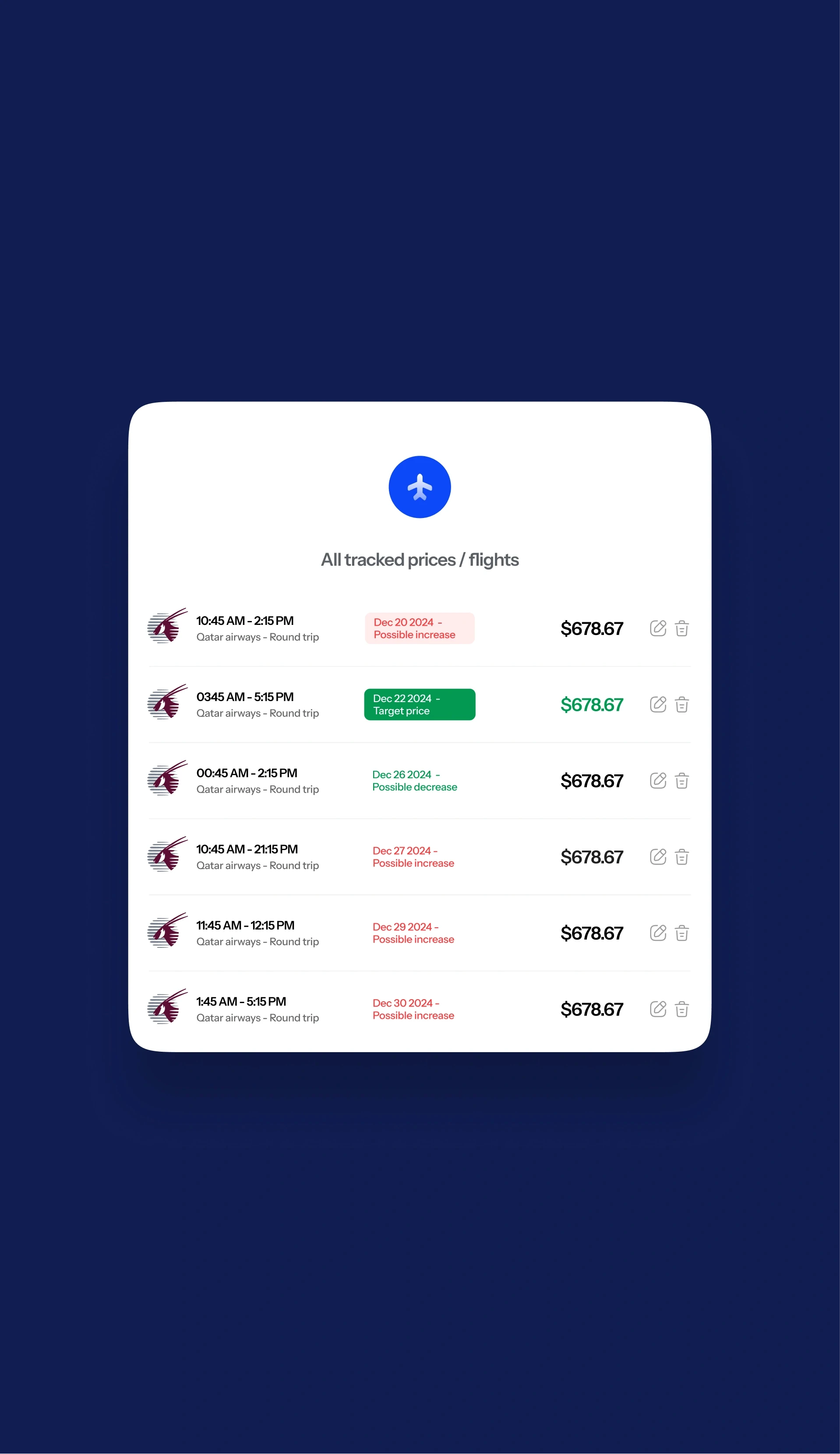
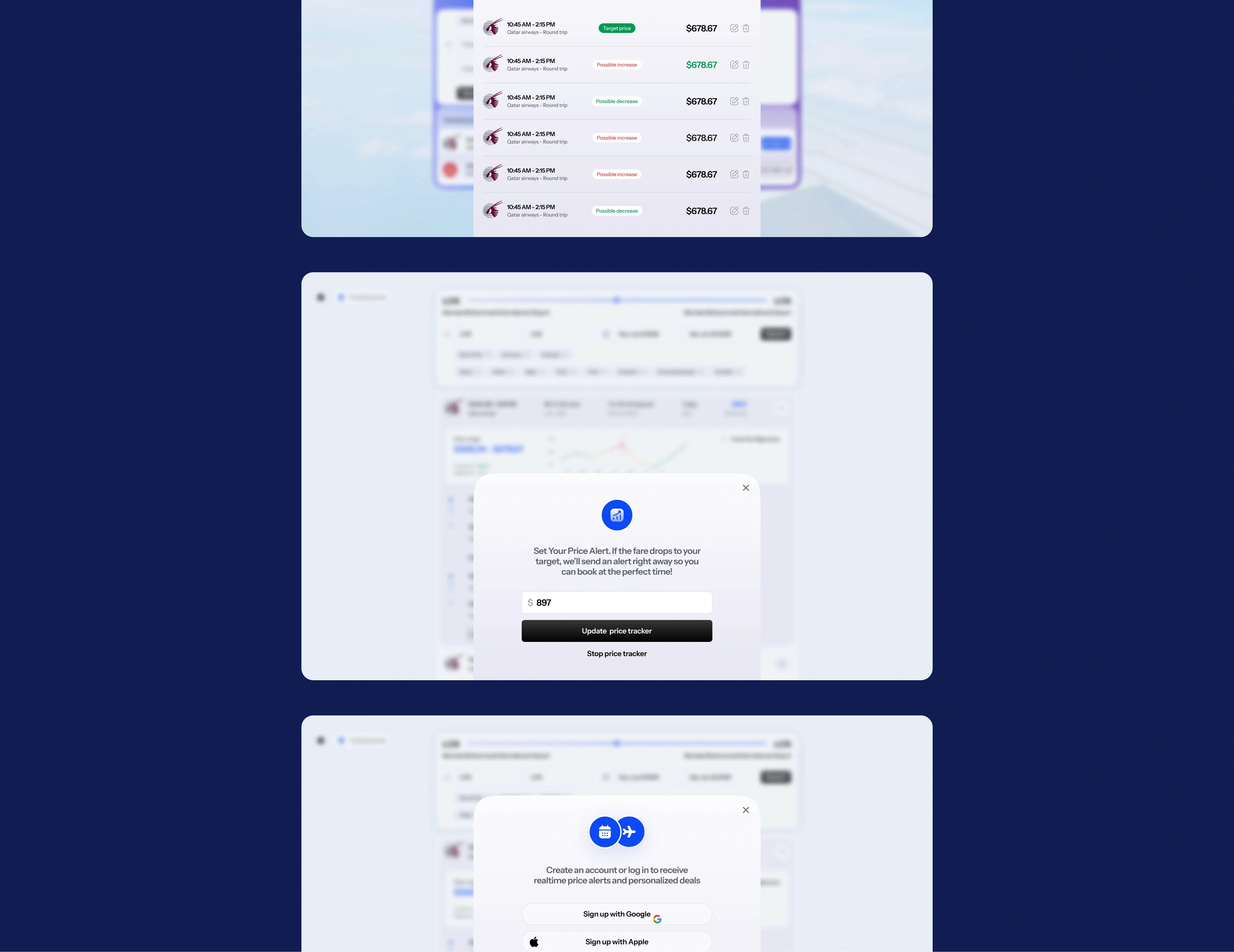
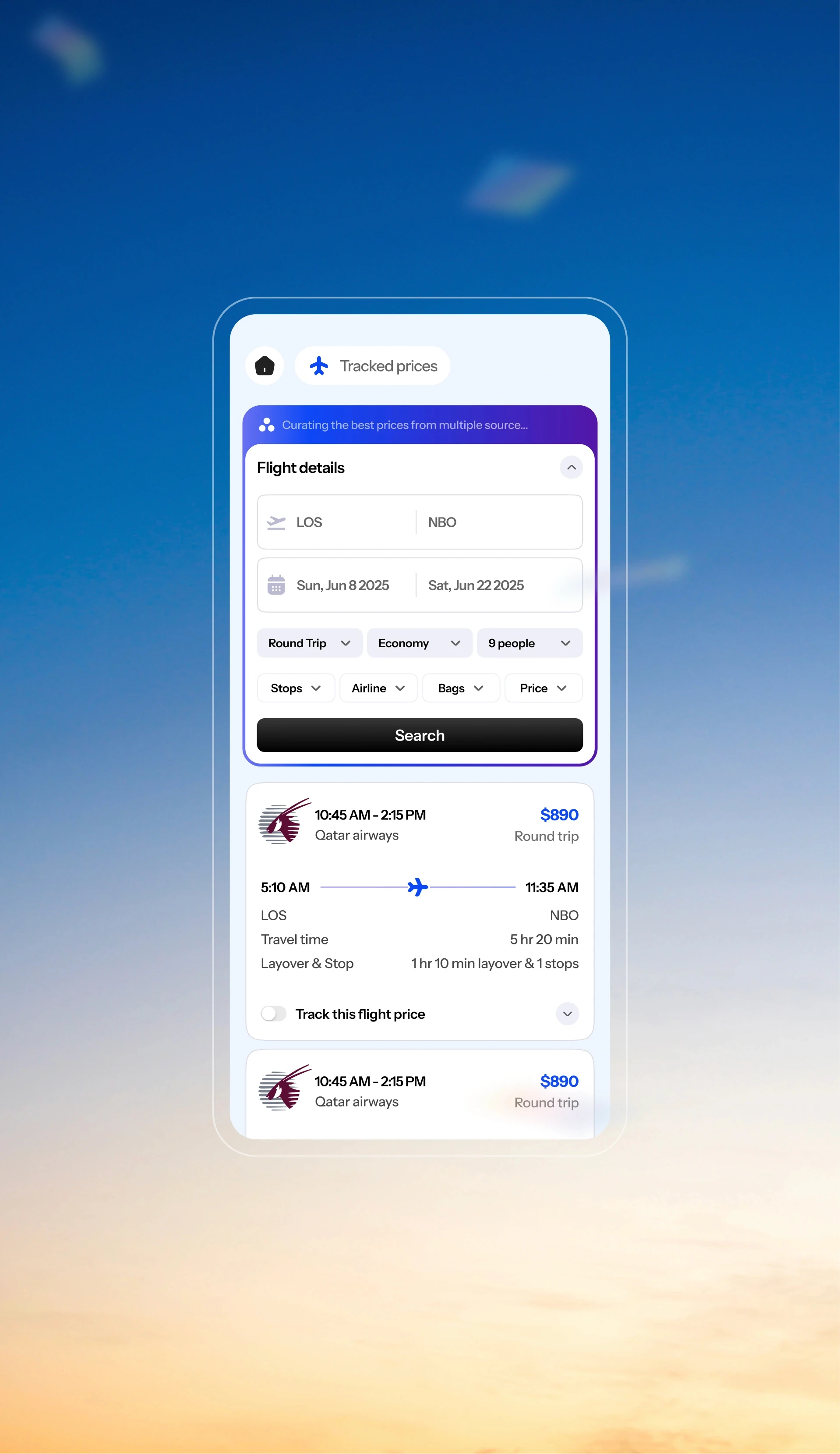
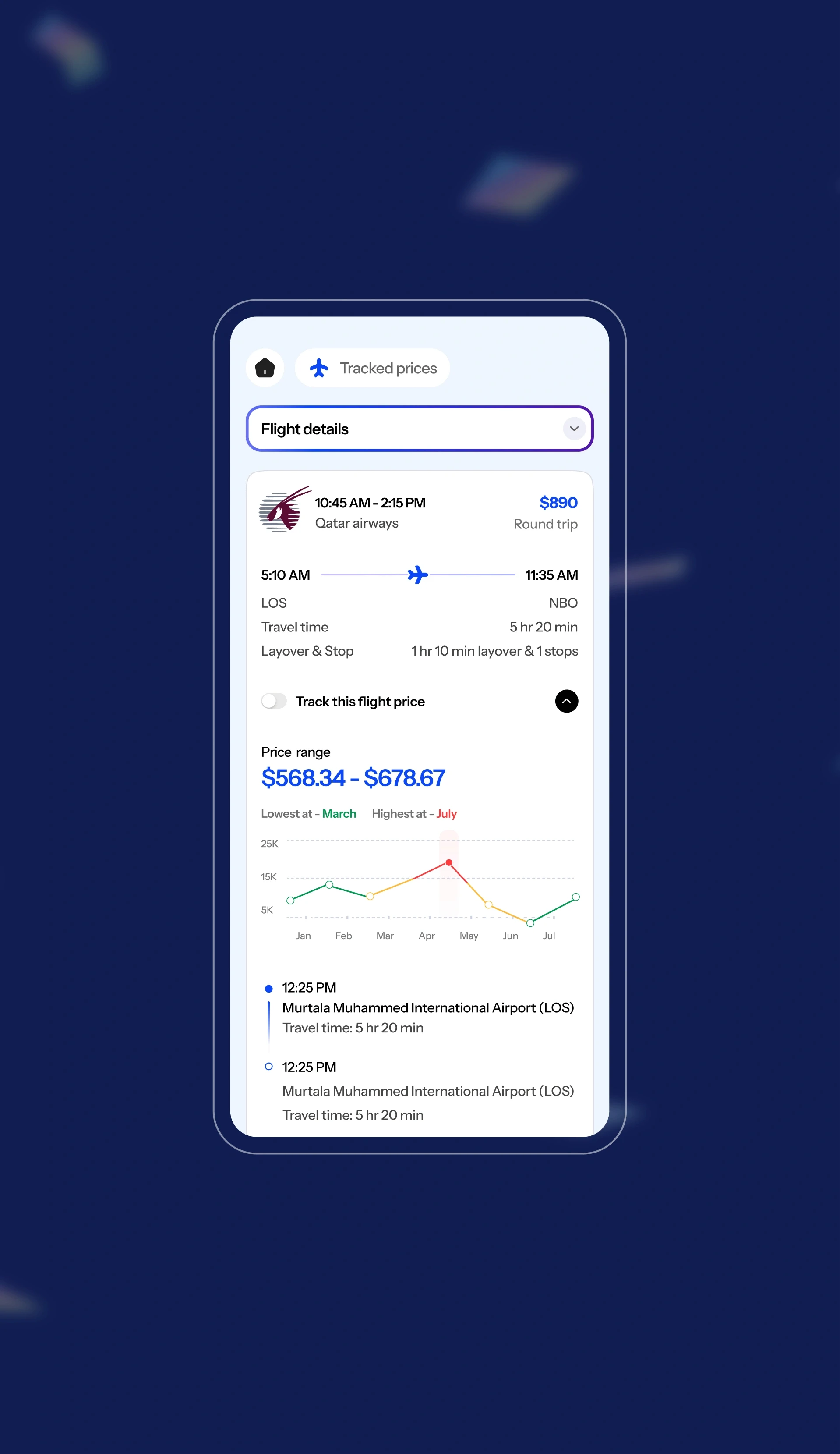
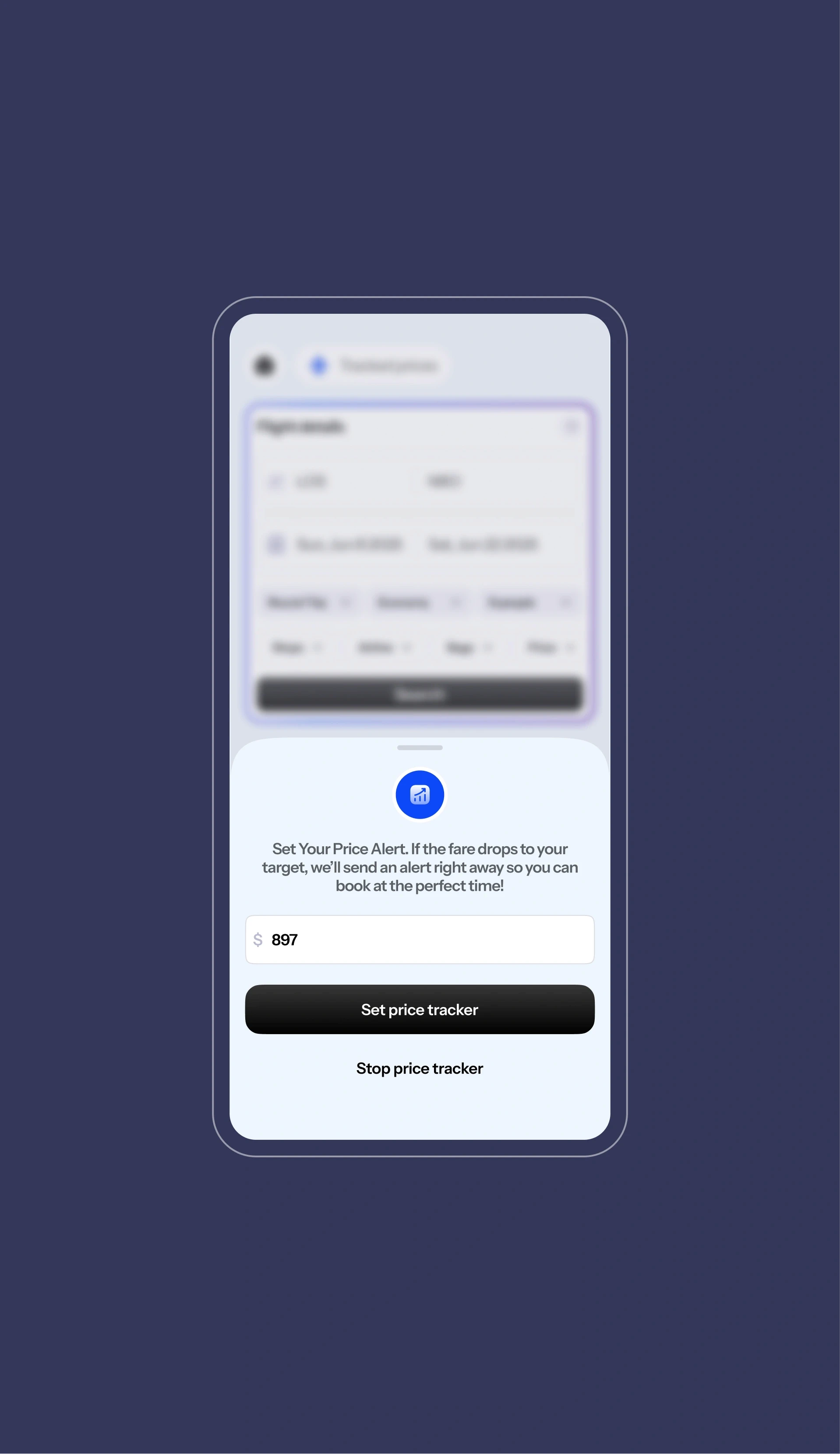
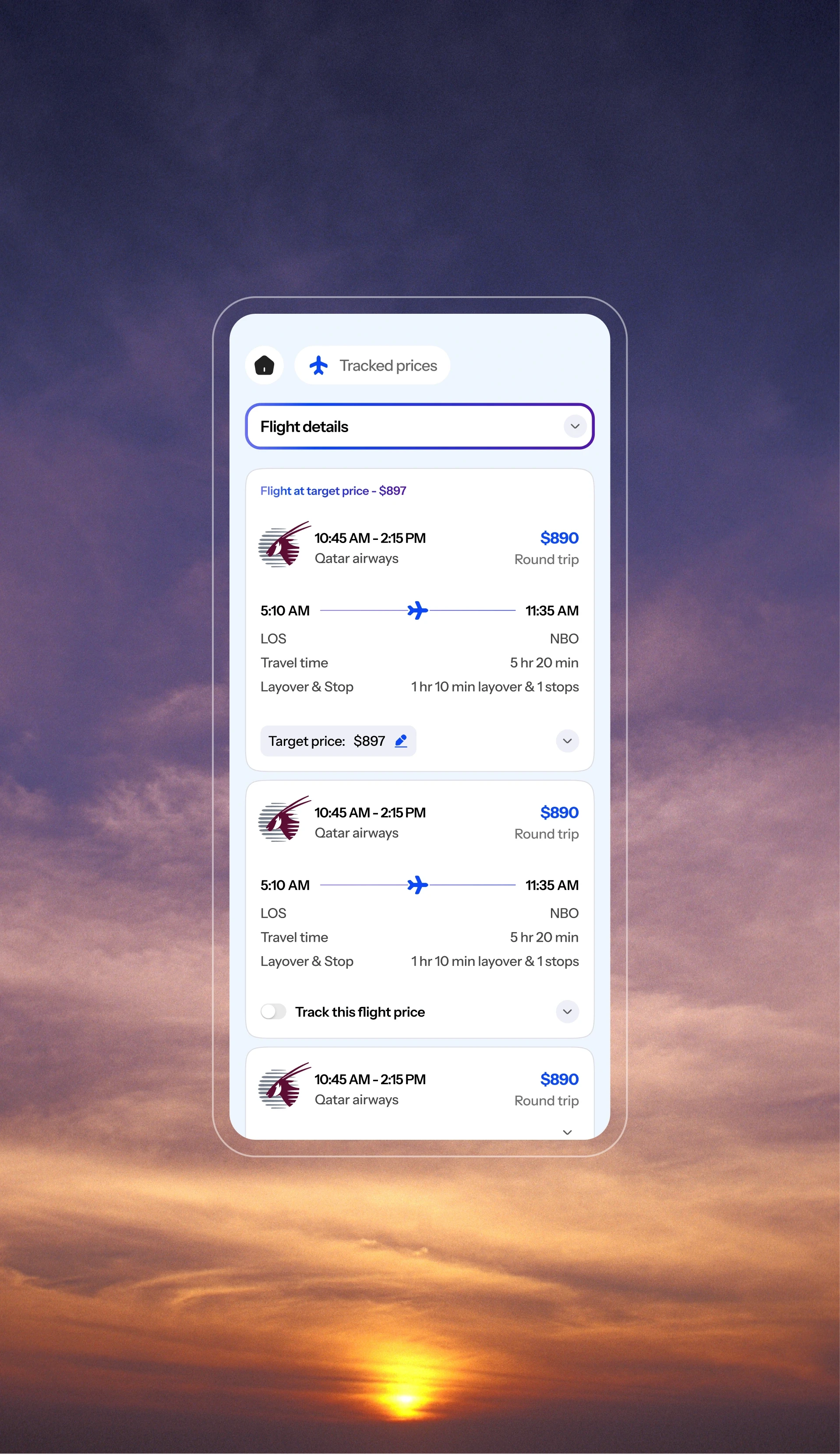
Instead of relying on abstract predictions, users set a specific price range. The system actively monitors prices and alerts users when fares move above or below their defined threshold, turning price tracking into a proactive system rather than a passive one.
Action-Oriented Tracking
The experience is designed around readiness, not observation. Alerts are framed to support planning decisions rather than raw data consumption.
Playful, Immersive Experience
To break away from static lists and graphs, the product introduces a visual flight experience:
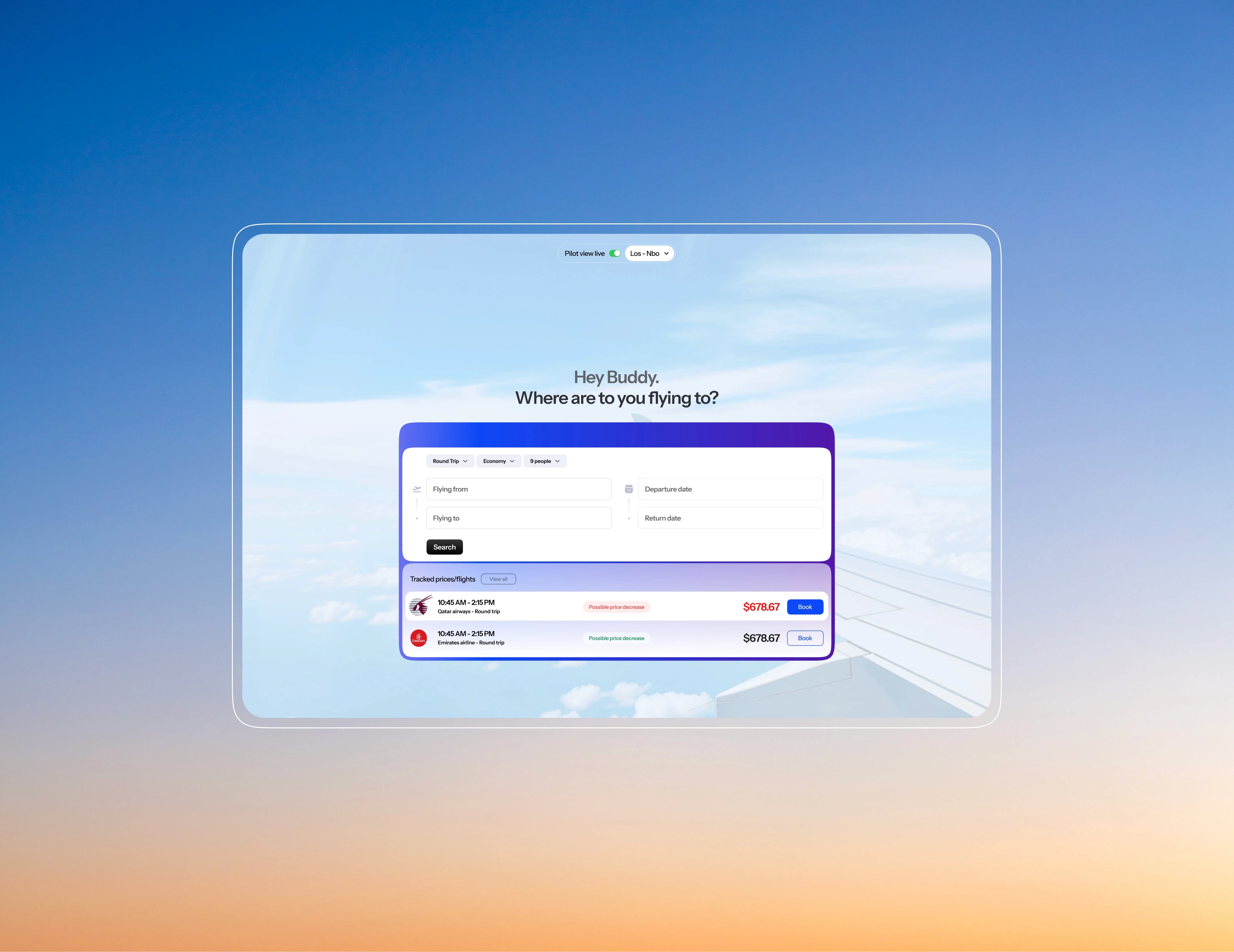
A live flight path view
A pilot-seat perspective that simulates being in transit
This reframes tracking from “waiting for prices” to “being on the journey,” making the product emotionally engaging without sacrificing utility.
Learnings
Data alone doesn’t drive decisions; users need clear, action-oriented signals tied to their own thresholds.
Passive price prediction increases cognitive load and decision fatigue over time.
Alert-driven systems shift responsibility from constant monitoring to timely action.
Emotional context matters even in utilitarian products like travel tools.
Experiential elements can increase engagement without reducing clarity or trust.
Reframing the problem creates stronger differentiation than competing on feature parity.
Other Projects


Flight tracker
Making Flight Price Tracking Predictable and Fun
About Project
Flight Tracker started as a personal travel problem: existing tools like Google Flights are powerful but overly analytical, passive, and emotionally flat. While they predict prices, they don’t help travelers act at the right moment or enjoy the experience of planning. This project explored how price tracking could become more proactive, more human, and more engaging by combining alert-based decision support with a playful, immersive flight experience.
Motion design
UX/UI Design
Website
Prototyping
The Problem
Travelers who want to plan trips around price fluctuations rely heavily on tools like Google Flights, which provide graphs, predictions, and historical data. However, these tools are largely passive: users must repeatedly check prices, interpret graphs, and decide for themselves when to act. There is no clear, user-defined trigger that says “now is the moment.”
Additionally, the experience of tracking flights is purely functional. It’s reduced to charts and lists, offering no sense of movement, progress, or excitement despite travel being an emotional, aspirational activity. This creates a gap between powerful data and meaningful user engagement, especially for frequent travelers who want both control and clarity.
Research & Insights
This project was driven primarily by self-observation, competitive analysis, and pattern recognition rather than large-scale user studies. We closely examined existing flight-tracking platforms, with Google Flights as the dominant reference point, to understand how travelers currently monitor prices and make booking decisions.
Across these platforms, price tracking is largely built around historical graphs, trend lines, and algorithmic predictions. While informative, this approach requires users to repeatedly check prices and interpret data themselves. Alerts, when available, tend to be generic and disconnected from personal price expectations. Interfaces are optimized for data density and accuracy, but offer little emotional engagement or sense of progress, despite travel being an inherently aspirational activity.
From these observations, we inferred that travelers don’t just need better predictions—they need clearer signals that tell them when to act. Repeatedly analyzing charts increases decision fatigue, especially for users tracking multiple routes over time. The absence of personalized triggers forces users into a passive monitoring loop, which delays decisions and adds cognitive load.
This led to a key insight: the core problem wasn’t a lack of price data, but a lack of timely, personalized action cues paired with an engaging experience. Reframing the problem this way shifted the opportunity from building better forecasts to designing for better decision timing and a more human, emotionally
How it was solved
The solution focused on two parallel goals: decision clarity and experiential delight.
Price Threshold Alerts
Instead of relying on abstract predictions, users set a specific price range. The system actively monitors prices and alerts users when fares move above or below their defined threshold, turning price tracking into a proactive system rather than a passive one.
Action-Oriented Tracking
The experience is designed around readiness, not observation. Alerts are framed to support planning decisions rather than raw data consumption.
Playful, Immersive Experience
To break away from static lists and graphs, the product introduces a visual flight experience:
A live flight path view
A pilot-seat perspective that simulates being in transit
This reframes tracking from “waiting for prices” to “being on the journey,” making the product emotionally engaging without sacrificing utility.