Discreet
Creators platform with built-in monetization.
About Project
Discreet explored a different model for creator monetization—one that feels more private, conversational, and community-driven than traditional social platforms. Instead of public feeds and algorithm-driven exposure, the product focused on direct creator–fan interaction through chat, gated content, and a credit-based economy, with Discord acting as the primary identity layer.
The Problem
Existing creator platforms prioritize visibility and scale, but neglect privacy, intimacy, and frictionless monetization.Platforms like OnlyFans and Twitch offer powerful monetization tools, but they are optimized for public performance and mass audiences. For many creators, especially those building niche or private communities, these models introduce friction: public discovery pressure, complex payout structures, and limited control over how audiences access content.
At the same time, fans who already engage with creators on platforms like Discord lacked a seamless way to support creators financially without leaving the environments they were already active in. Monetization often felt bolted on rather than native to conversation, creating a disconnect between interaction and value exchange.
The challenge was to design a platform that supports creator income while preserving discretion, intimacy, and ease of use—without requiring creators to rebuild their audience from scratch.
Research & Insights
By studying platforms like OnlyFans and Twitch, a clear contrast emerged between scale-driven platforms and community-driven behavior. Twitch thrives on live performance and visibility, while OnlyFans centers on gated access—but both rely heavily on platform-native discovery and external traffic.
Observing Discord-based communities revealed a different dynamic: creators already had highly engaged audiences, but lacked simple tools to monetize interactions like chats, exclusive drops, or ongoing access. Users were comfortable with credits, tipping, and subscriptions—as long as the experience felt lightweight and private.
A key insight was that monetization works best when it’s embedded directly into interaction, not separated into storefronts or external payment flows.
How it was solved
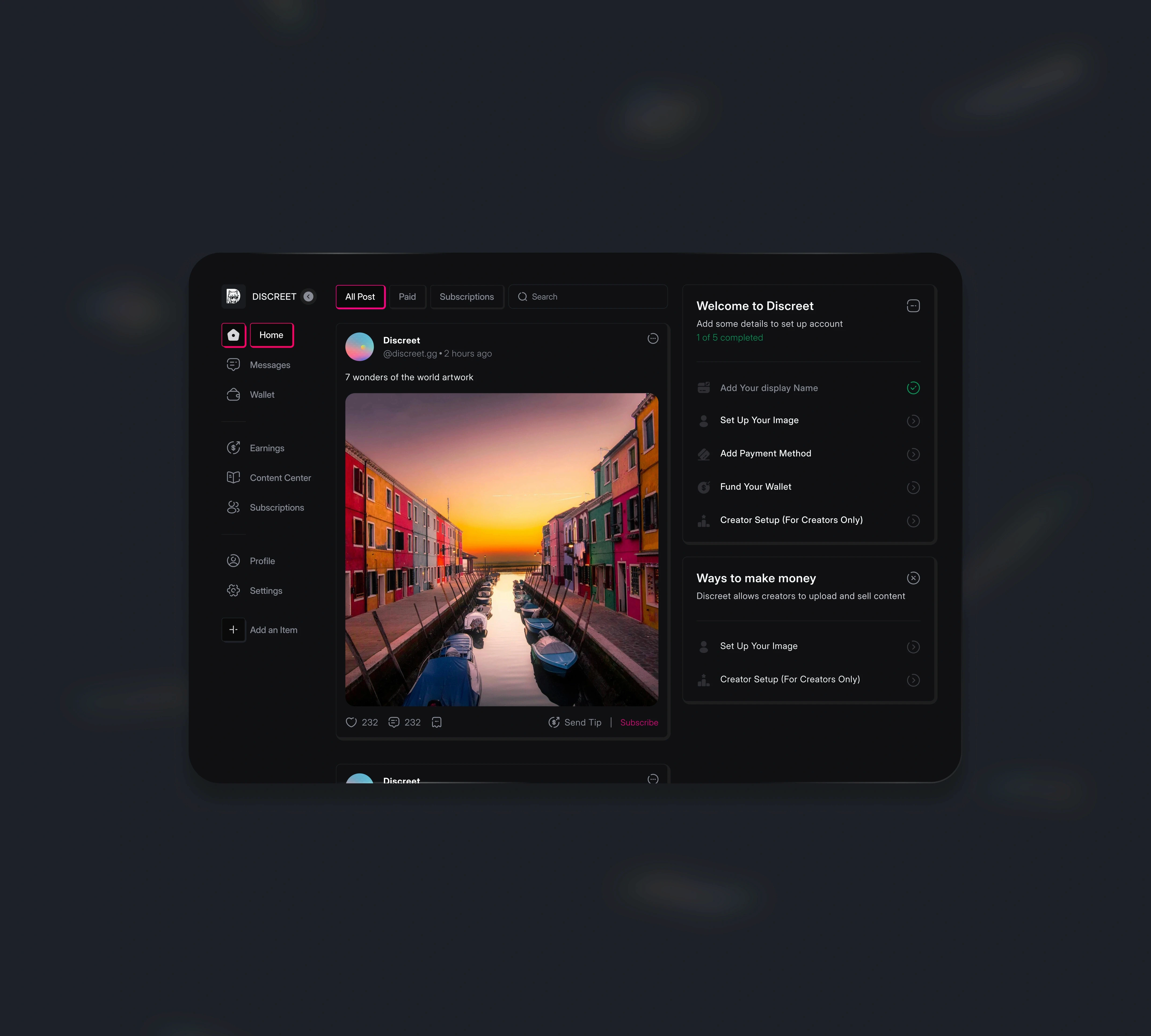
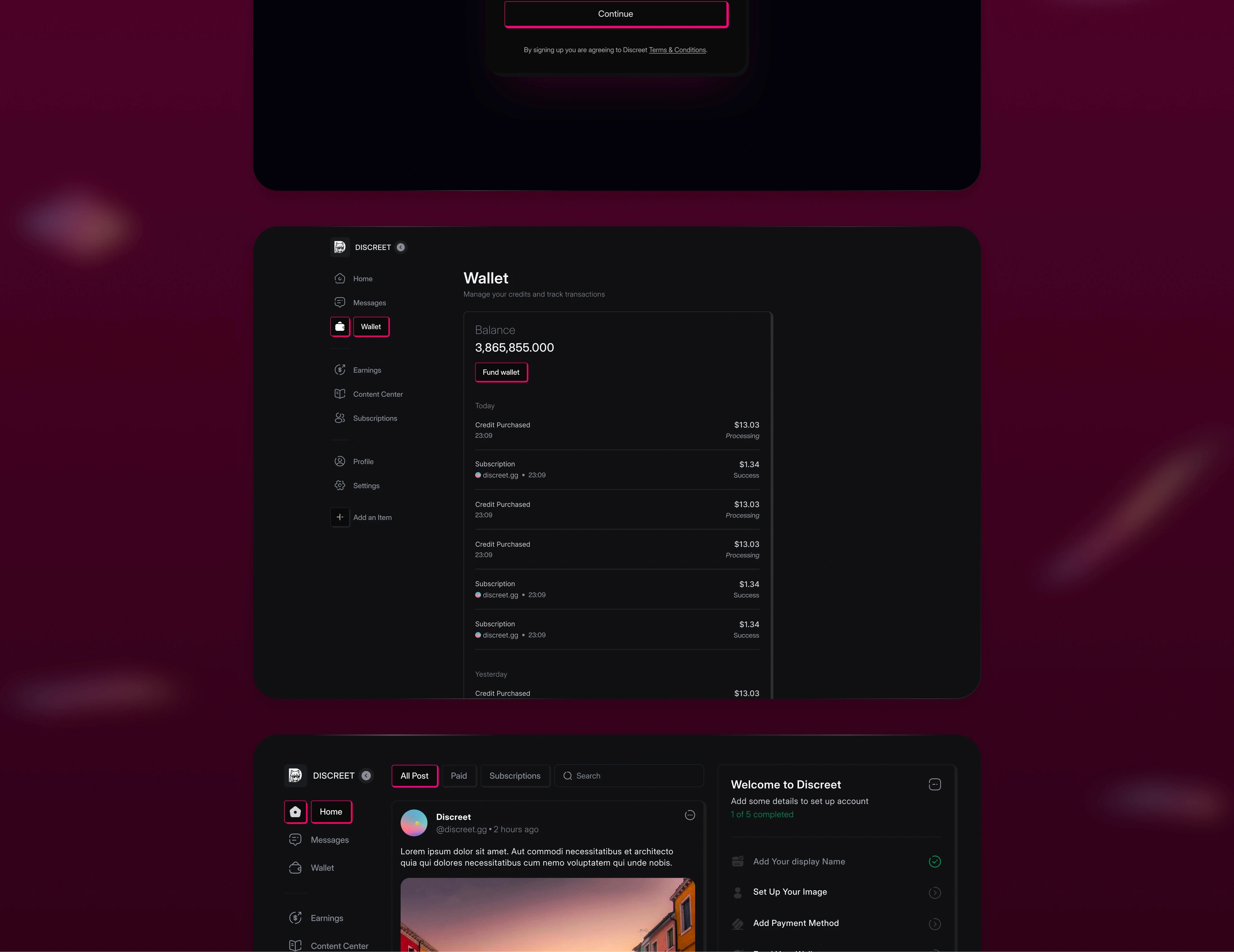
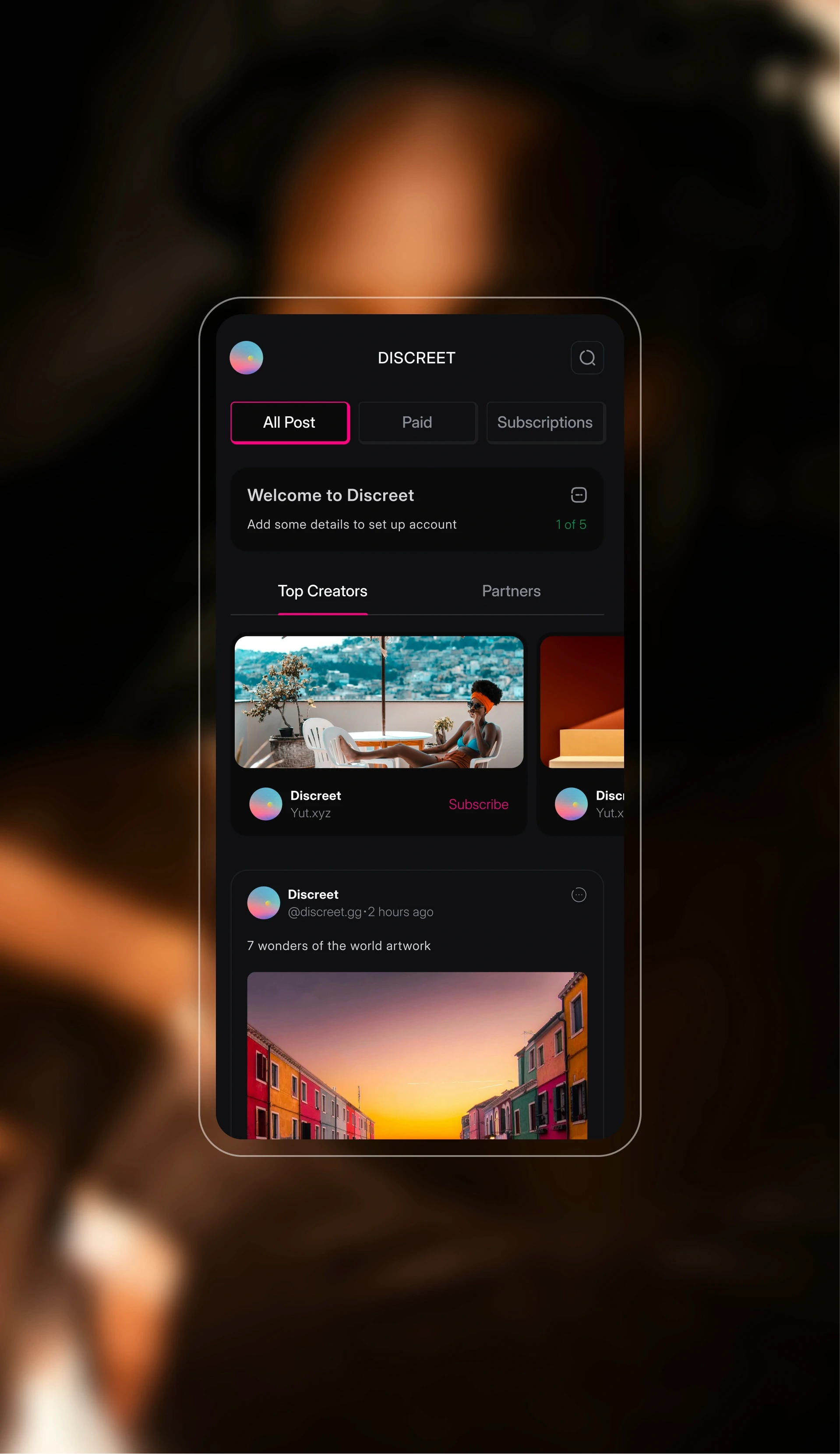
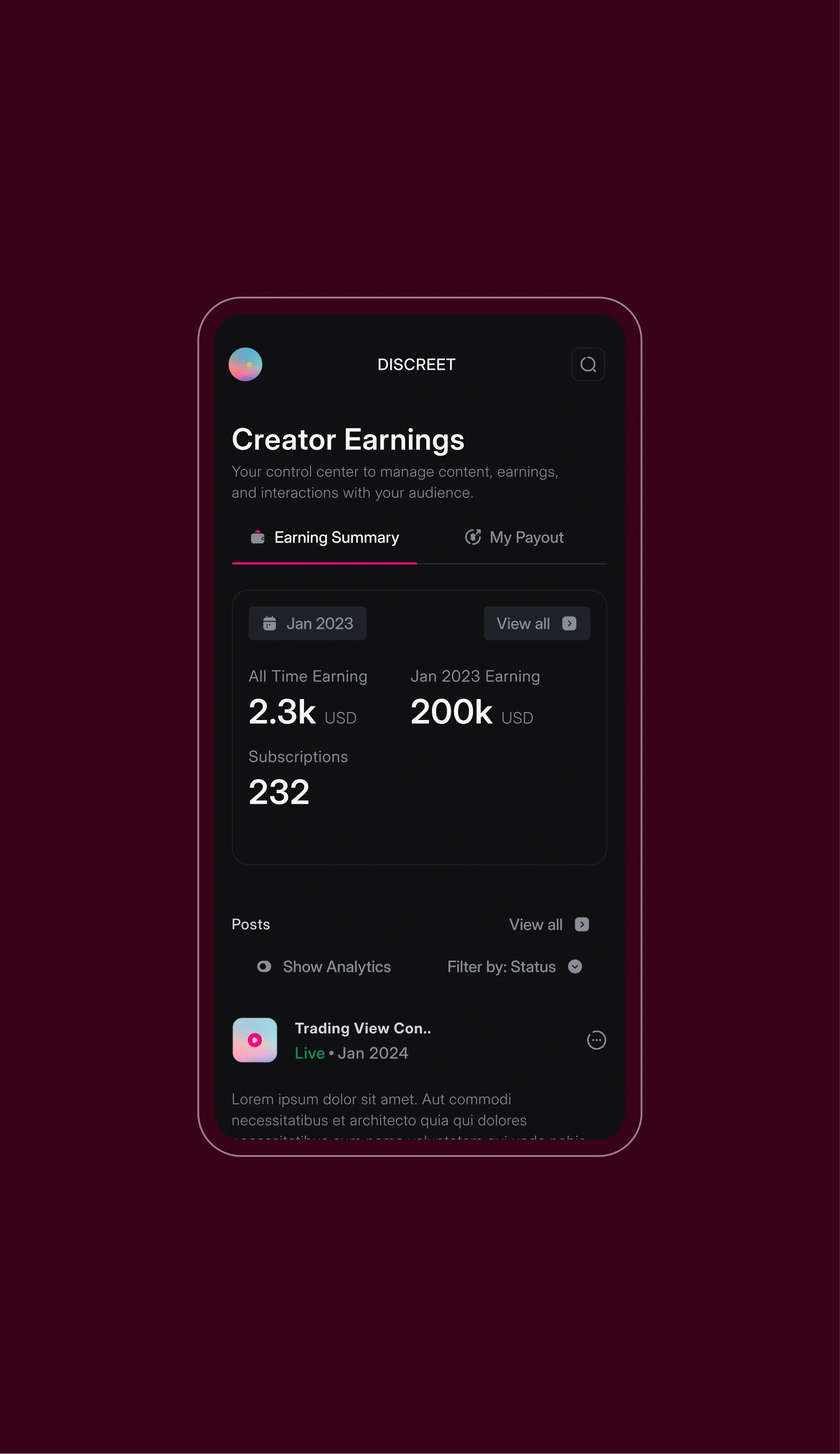
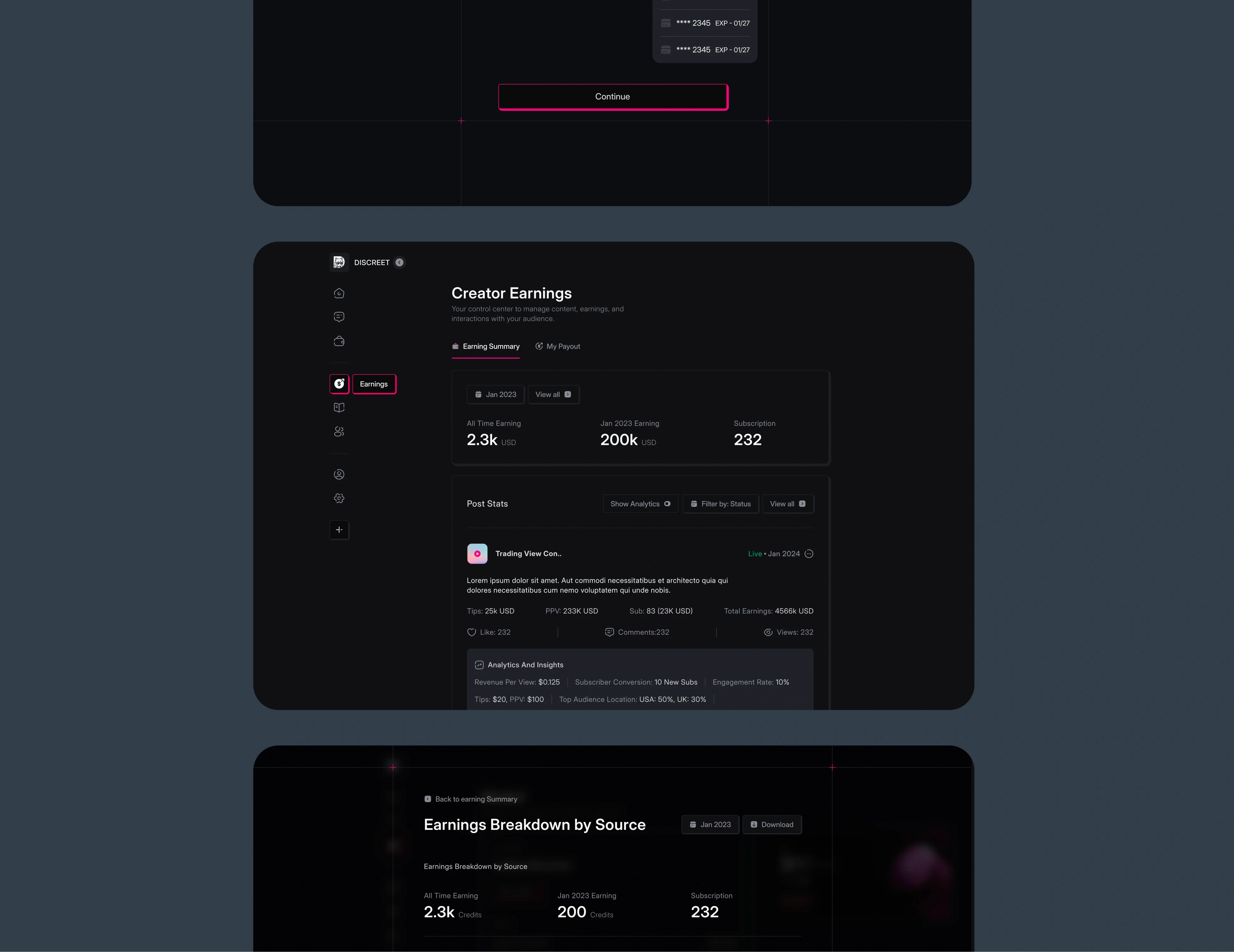
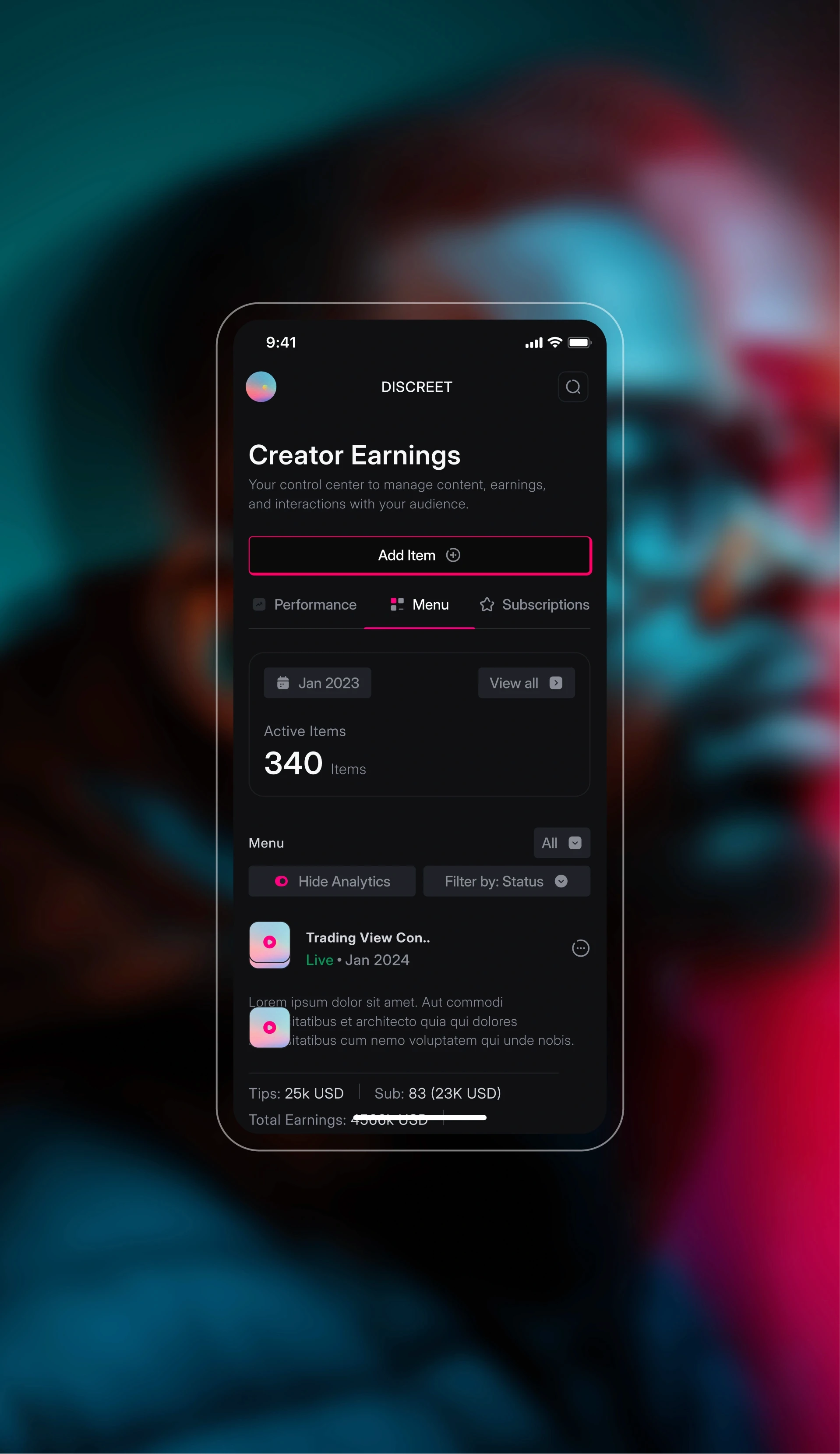
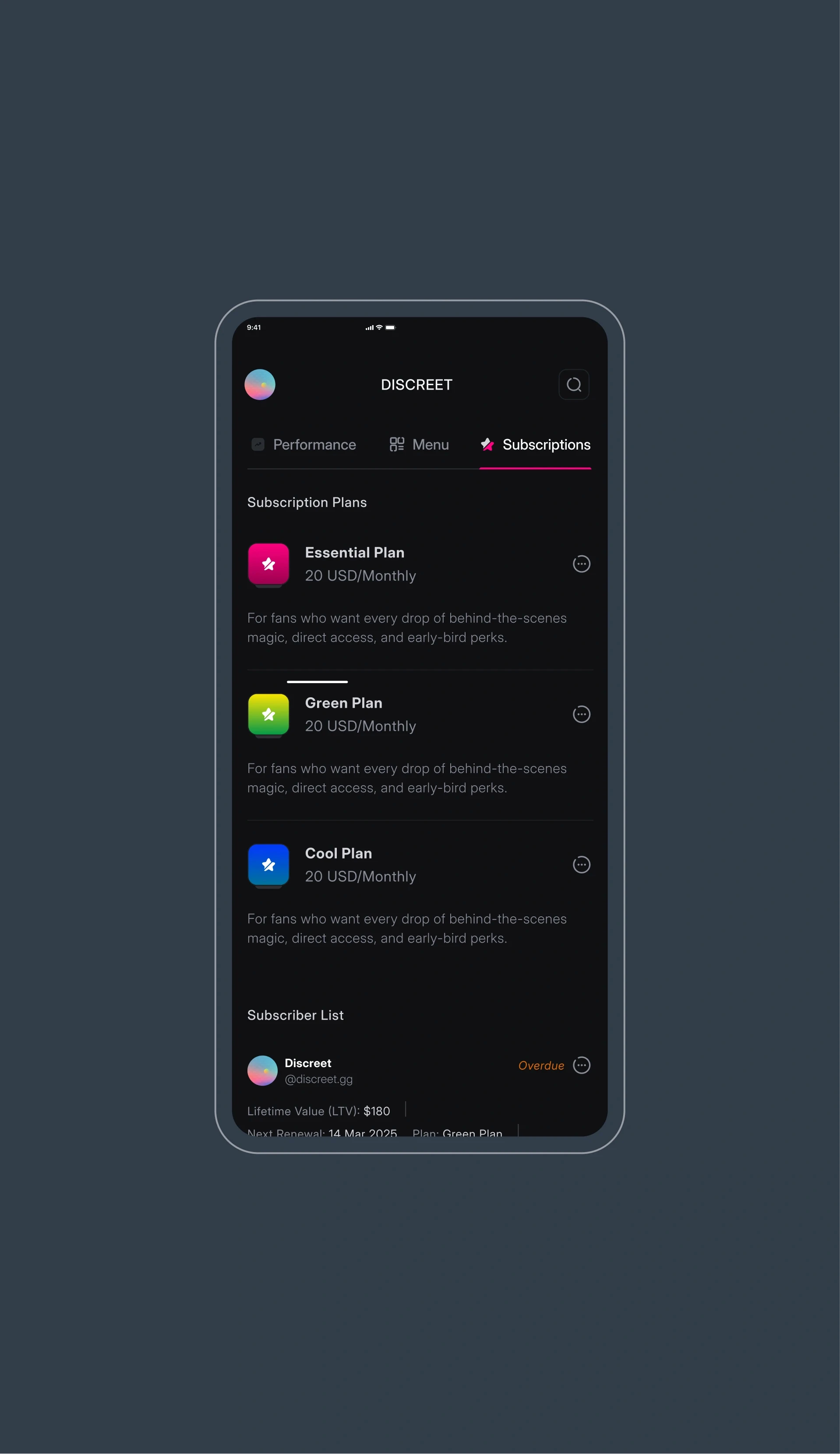
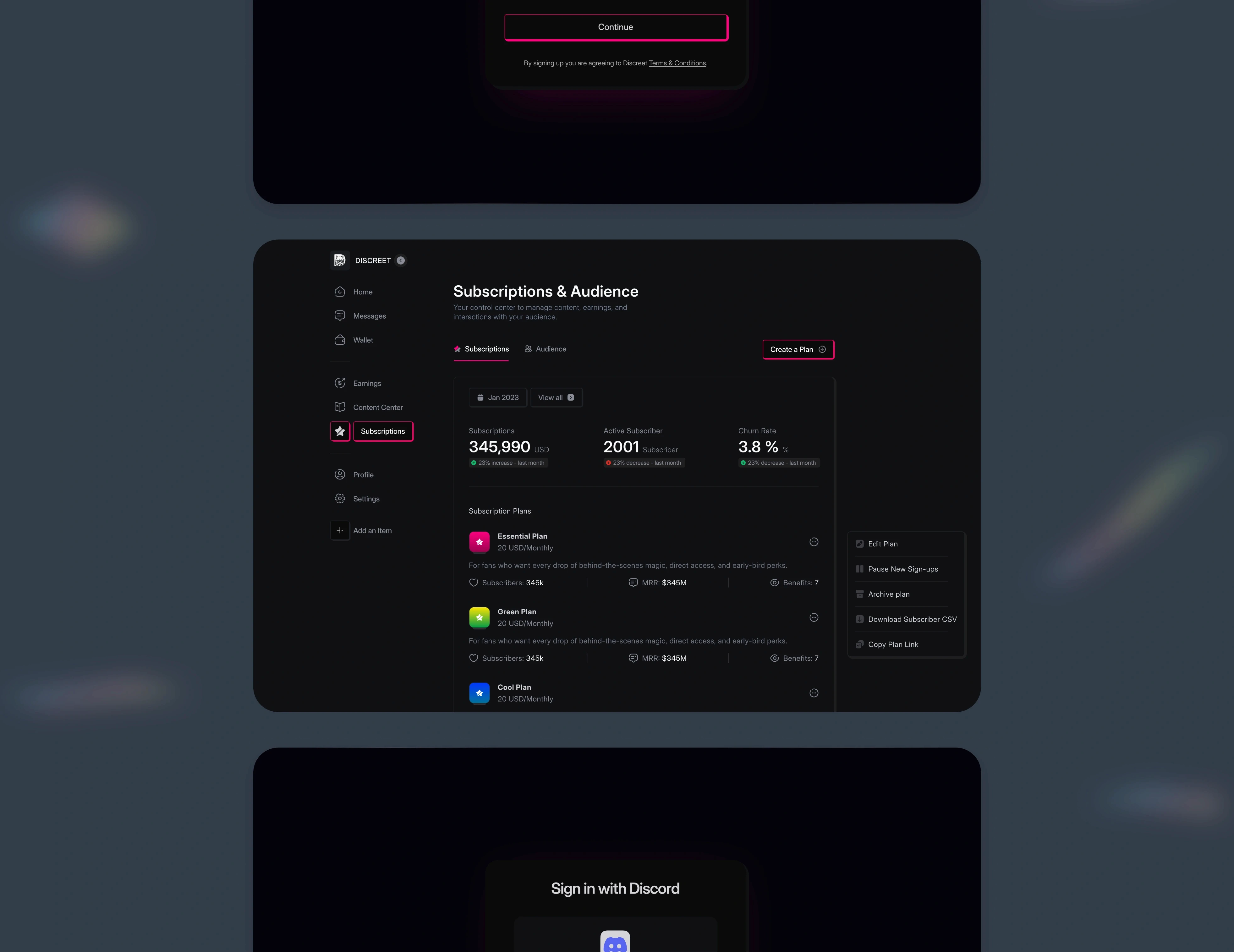
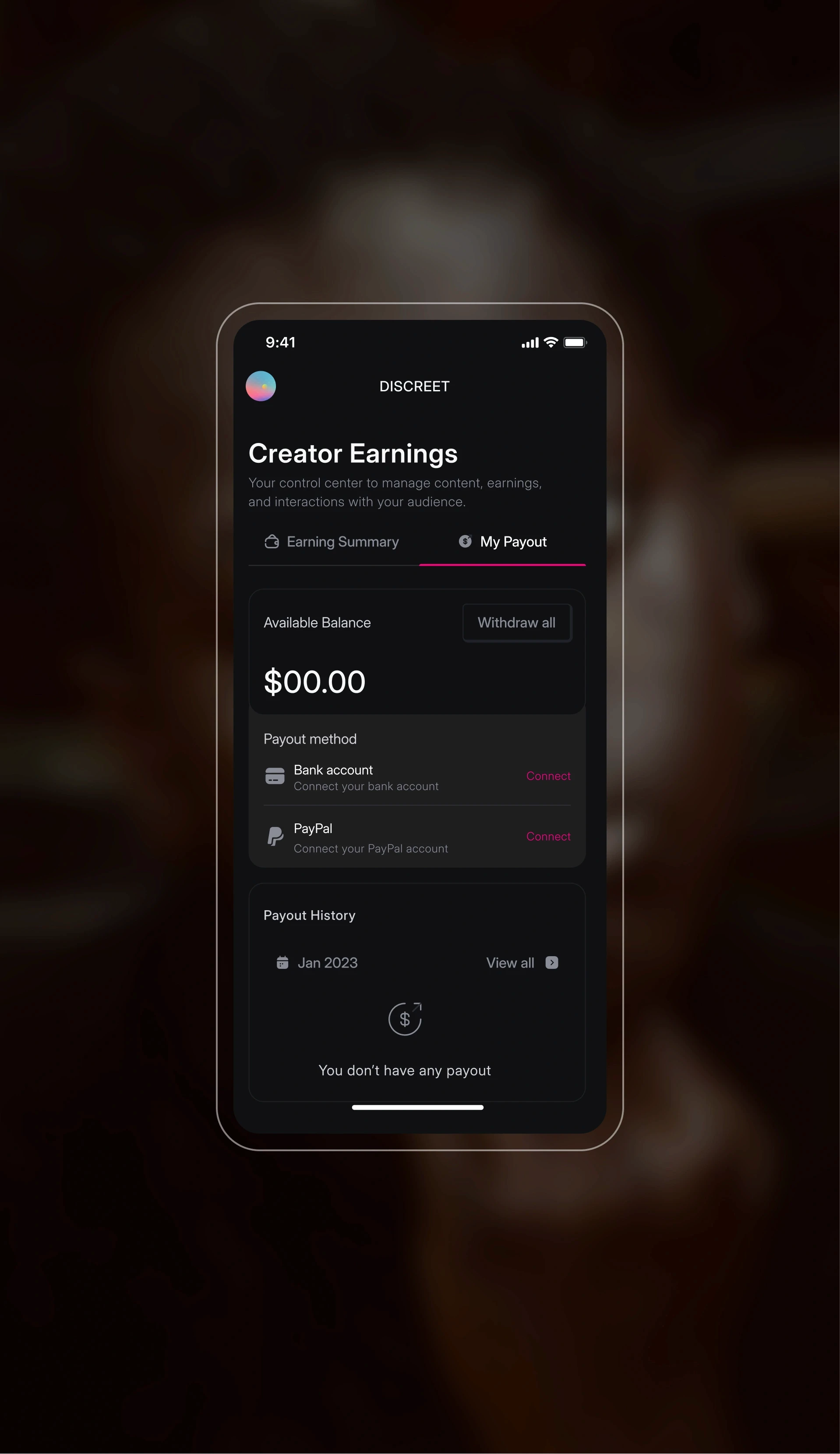
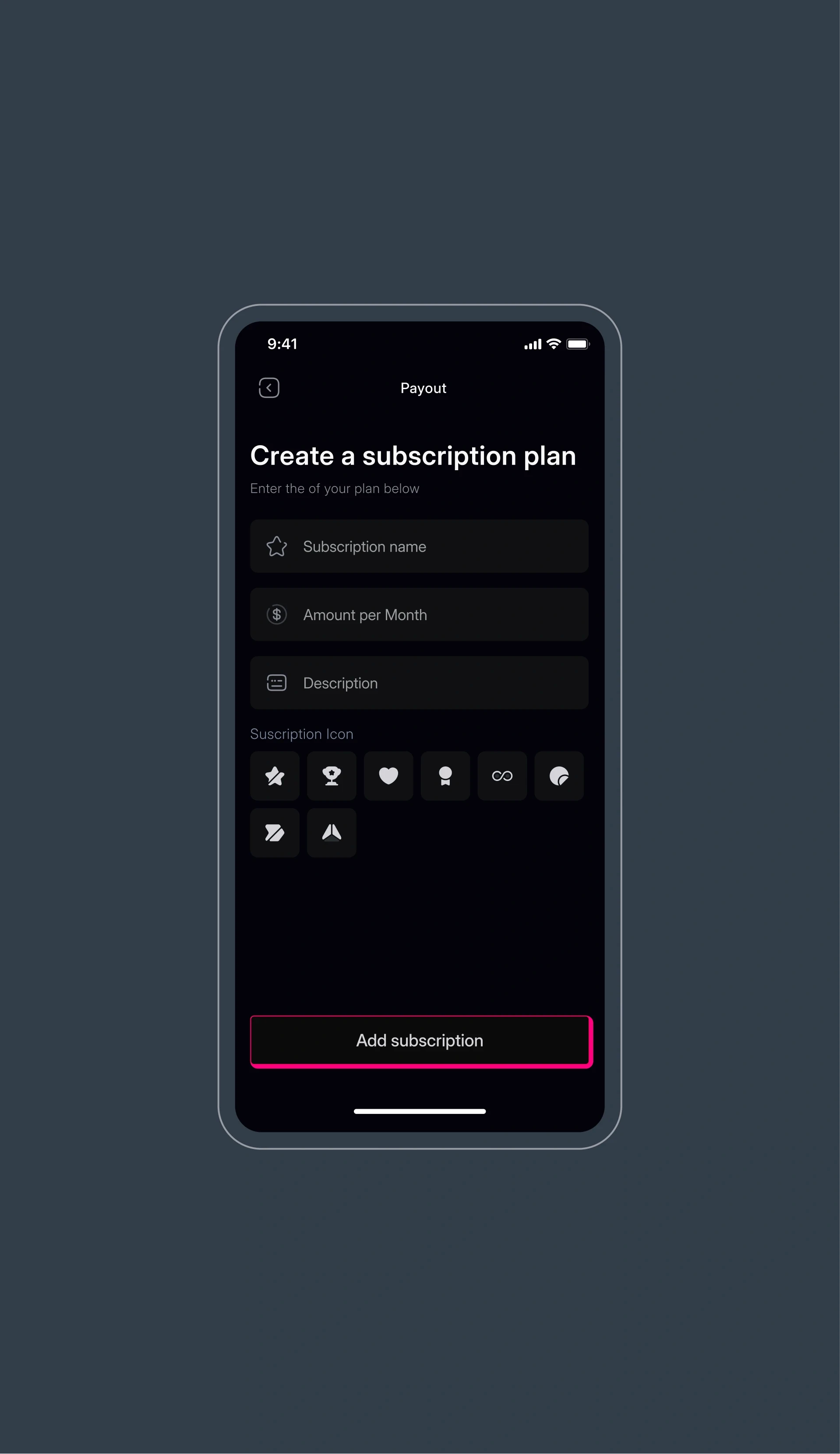
Discreet was designed as a chat-first social platform where monetization is woven directly into conversation. Users sign in with Discord, preserving existing identities and lowering onboarding friction. Creators can gate content, enable tipping, and offer subscriptions through a simple credit-based system that feels familiar to gaming and community-driven audiences.
The UI prioritizes clarity and speed—credits are always visible, purchase actions are one step away, and creator interactions remain the central focus. A referral system supports organic growth, allowing creators to expand their audience without relying on algorithmic feeds.
The overall experience balances creator control with user simplicity, ensuring that monetization feels like a natural extension of engagement rather than a transactional interruption.
Other Projects


Discreet
Creators platform with built-in monetization.
About Project
Discreet explored a different model for creator monetization—one that feels more private, conversational, and community-driven than traditional social platforms. Instead of public feeds and algorithm-driven exposure, the product focused on direct creator–fan interaction through chat, gated content, and a credit-based economy, with Discord acting as the primary identity layer.
The Problem
Existing creator platforms prioritize visibility and scale, but neglect privacy, intimacy, and frictionless monetization.Platforms like OnlyFans and Twitch offer powerful monetization tools, but they are optimized for public performance and mass audiences. For many creators, especially those building niche or private communities, these models introduce friction: public discovery pressure, complex payout structures, and limited control over how audiences access content.
At the same time, fans who already engage with creators on platforms like Discord lacked a seamless way to support creators financially without leaving the environments they were already active in. Monetization often felt bolted on rather than native to conversation, creating a disconnect between interaction and value exchange.
The challenge was to design a platform that supports creator income while preserving discretion, intimacy, and ease of use—without requiring creators to rebuild their audience from scratch.
Research & Insights
By studying platforms like OnlyFans and Twitch, a clear contrast emerged between scale-driven platforms and community-driven behavior. Twitch thrives on live performance and visibility, while OnlyFans centers on gated access—but both rely heavily on platform-native discovery and external traffic.
Observing Discord-based communities revealed a different dynamic: creators already had highly engaged audiences, but lacked simple tools to monetize interactions like chats, exclusive drops, or ongoing access. Users were comfortable with credits, tipping, and subscriptions—as long as the experience felt lightweight and private.
A key insight was that monetization works best when it’s embedded directly into interaction, not separated into storefronts or external payment flows.
How it was solved
Discreet was designed as a chat-first social platform where monetization is woven directly into conversation. Users sign in with Discord, preserving existing identities and lowering onboarding friction. Creators can gate content, enable tipping, and offer subscriptions through a simple credit-based system that feels familiar to gaming and community-driven audiences.
The UI prioritizes clarity and speed—credits are always visible, purchase actions are one step away, and creator interactions remain the central focus. A referral system supports organic growth, allowing creators to expand their audience without relying on algorithmic feeds.
The overall experience balances creator control with user simplicity, ensuring that monetization feels like a natural extension of engagement rather than a transactional interruption.